
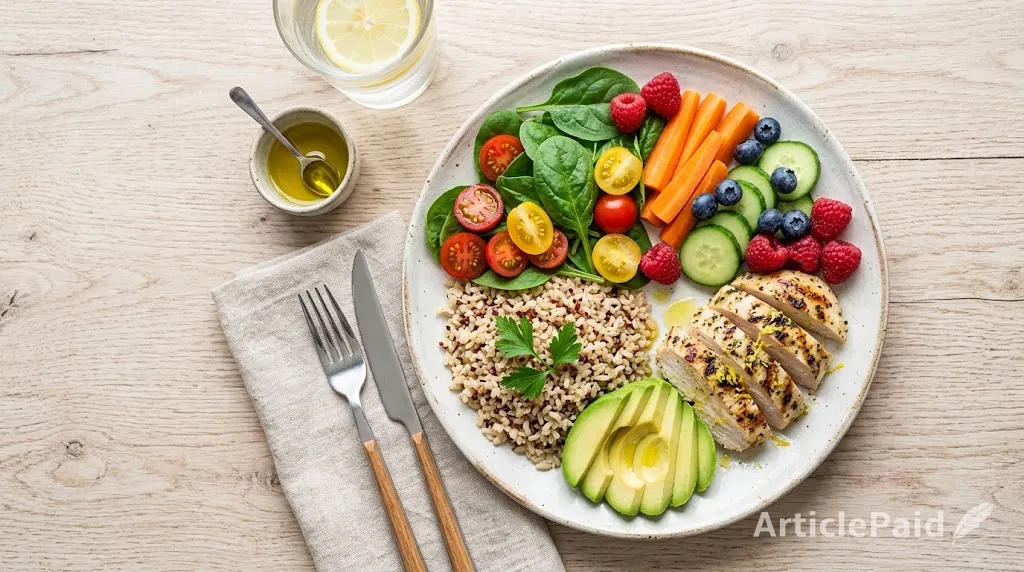
If you've ever scrolled through diet advice and ended up more confused than when you started, you're not alone. One week carbs are the enemy, the next it's fat, and then someone tells you to eat like a caveman. The truth is that a balanced diet doesn't need a rulebook. It needs a few simple habits you can keep for years. Here's how to build one that fits real life.
What Does a Balanced Diet Actually Mean?
A balanced diet means getting a good mix of the nutrients your body needs: carbohydrates for energy, protein for repair, healthy fats for brain and hormone function, and vitamins, minerals, and fiber to keep everything running smoothly. No single food provides all of these, which is why variety is the whole idea.
Balance doesn't mean perfection, either. One slice of cake or a late-night takeaway won't undo your progress. What matters is the pattern over weeks and months, not a single meal.
Start With the Plate Method
The easiest way to skip the math is to picture your plate. This simple visual guide takes the guesswork out of healthy eating.
Fill Half Your Plate With Vegetables and Fruit
Colorful produce delivers fiber, vitamins, and antioxidants. Try to eat a range of colors through the week, such as leafy greens, carrots, tomatoes, peppers, and berries. Frozen and canned options count too, and they're often cheaper and just as nutritious.
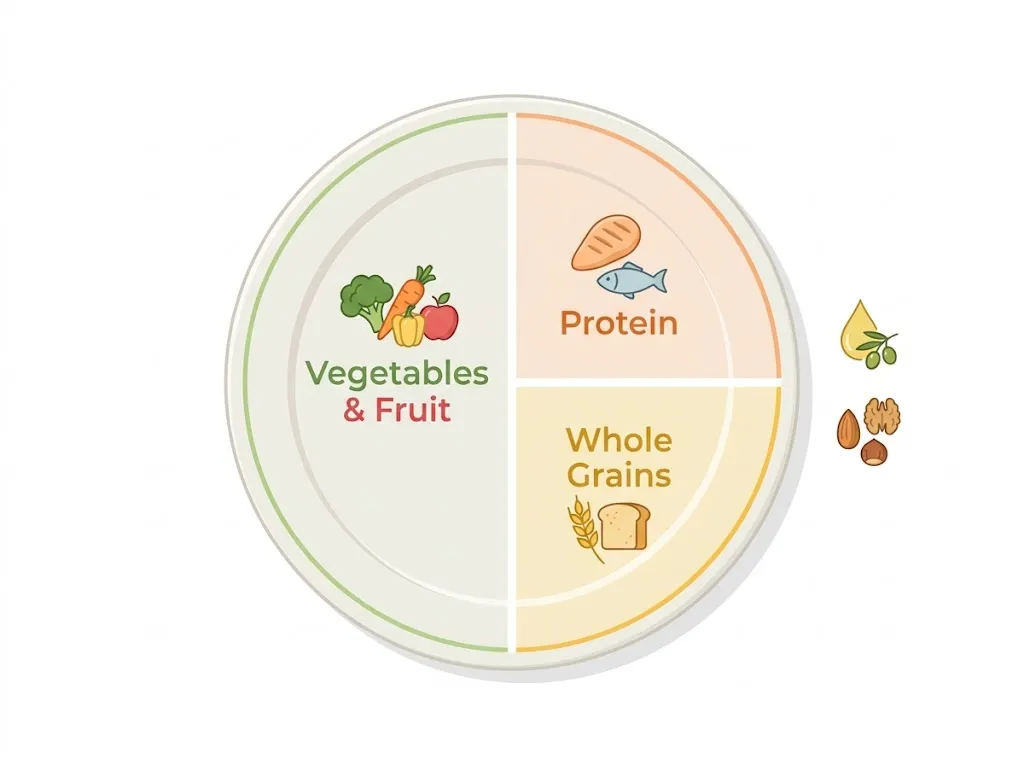
Add a Quarter of Protein
Eggs, fish, chicken, beans, lentils, chickpeas, tofu, and yogurt all work. Protein keeps you full for longer and helps maintain muscle. Mixing animal and plant sources gives you the widest range of nutrients.
Add a Quarter of Whole Grains or Starchy Foods
Oats, brown rice, whole wheat bread, potatoes, and quinoa provide steady energy. Whole grains also contain more fiber than refined ones, which is good for digestion and keeps you satisfied.
Include a Little Healthy Fat
A drizzle of olive oil, a handful of nuts, some seeds, or a few slices of avocado is plenty. Fat helps your body absorb certain vitamins and makes meals more satisfying.
Simple Habits That Make Healthy Eating Stick
Knowing what to eat is only half the battle. These habits help you actually do it.
Plan Loosely, Not Strictly
You don't need a rigid meal plan. Just decide on two or three go-to breakfasts, lunches, and dinners you enjoy and rotate them. When you have a few easy options in mind, you're far less likely to grab whatever is convenient.
Choose Whole Foods Most of the Time
Foods close to their natural form, like vegetables, fruit, beans, eggs, and plain grains, are generally more filling and nutrient-rich than heavily processed ones. You don't have to avoid packaged food completely. Just let whole foods be the foundation.
Stay Hydrated
Water supports digestion, energy, and concentration. Keep a bottle nearby and drink regularly. Tea, coffee, and water-rich foods like cucumber and oranges also contribute.
Listen to Hunger and Fullness
Your body gives useful signals. Eat when you're hungry, slow down while you eat, and stop when you feel comfortably full. Eating without distractions makes these cues easier to notice.
Common Mistakes to Avoid
Many people make balanced eating harder than it needs to be. Cutting out whole food groups, such as all carbs or all fats, usually backfires and can leave you short on key nutrients. All-or-nothing thinking is another trap: one "bad" meal doesn't mean the day is ruined, so simply carry on with your next meal. Skipping meals can also lead to overeating later, and relying on supplements instead of real food misses the benefits of fiber and variety.
A Sample Day of Balanced Eating
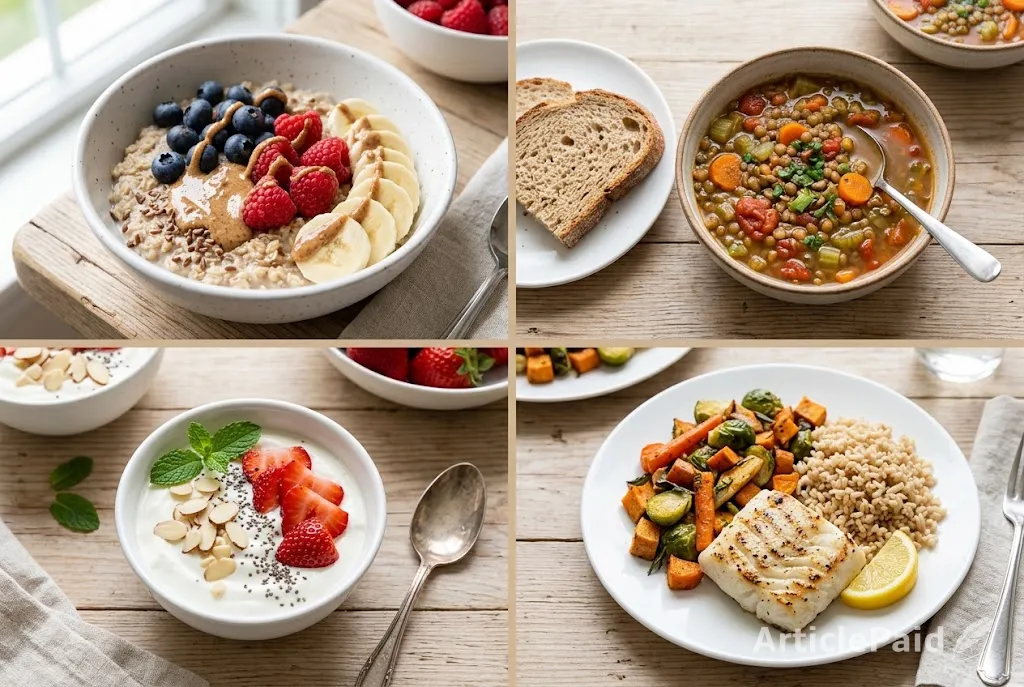
Here's what an easy, realistic day might look like:
- Breakfast: Oatmeal topped with berries and a spoonful of nut butter
- Lunch: Lentil and vegetable soup with whole wheat bread and a side salad
- Snack: Yogurt with a handful of almonds, or an apple with peanut butter
- Dinner: Grilled fish or chicken, roasted vegetables, and brown rice
Nothing fancy, no special products, and every food group is covered.
Final Thoughts
Building a balanced diet isn't about memorizing rules or chasing the latest trend. Fill your plate with a variety of foods, lean on whole ingredients, drink enough water, and listen to your body. Start with one small change this week, such as adding a vegetable to dinner, and build from there. Small, steady habits beat strict plans every time.




















Responses (0)
Sign in to share your thoughts.
Sign in