
Cryptocurrency has opened new doors for investing and sending money across borders. But it has also attracted scammers who know that crypto transactions are fast, irreversible, and often anonymous. If you're new to digital assets, learning how to avoid cryptocurrency scams is the most important skill you can build. This beginner's guide walks you through the most common frauds and the simple habits that keep your money safe.
Why Cryptocurrency Scams Are So Common
Unlike a bank transfer, a crypto transaction can't be reversed. Once your coins leave your wallet, there is usually no customer service line to call and no chargeback to request. Scammers love this. Add the hype around quick profits, and beginners become easy targets.
The Role of Hype and Fear of Missing Out
Scammers rely on emotion. Stories of people turning a small investment into a fortune create FOMO (fear of missing out), which makes people act before they think. If a deal pressures you to decide right now, treat that pressure itself as a warning sign.
Common Types of Crypto Scams to Watch For
Knowing what scams look like is half the battle. Here are the ones beginners run into most often.
Fake Investment Platforms
These websites look professional, show impressive dashboards, and even let you "withdraw" a small amount at first to build trust. Once you deposit a larger sum, withdrawals suddenly require extra "fees" or "taxes," and eventually the site disappears.
Giveaway and Impersonation Scams
You may see a post claiming a famous entrepreneur will double any crypto you send. This never happens. Scammers hack or imitate verified accounts on social media and YouTube to make these offers look real. No legitimate person or company will ask you to send crypto in order to receive more.
Romance and "Pig Butchering" Scams
In these long-con schemes, a stranger builds a friendship or romance online over weeks or months, then introduces a "can't-miss" crypto investment. The relationship is fake, and so is the profit. Be cautious of anyone you've never met in person who steers conversations toward investing.
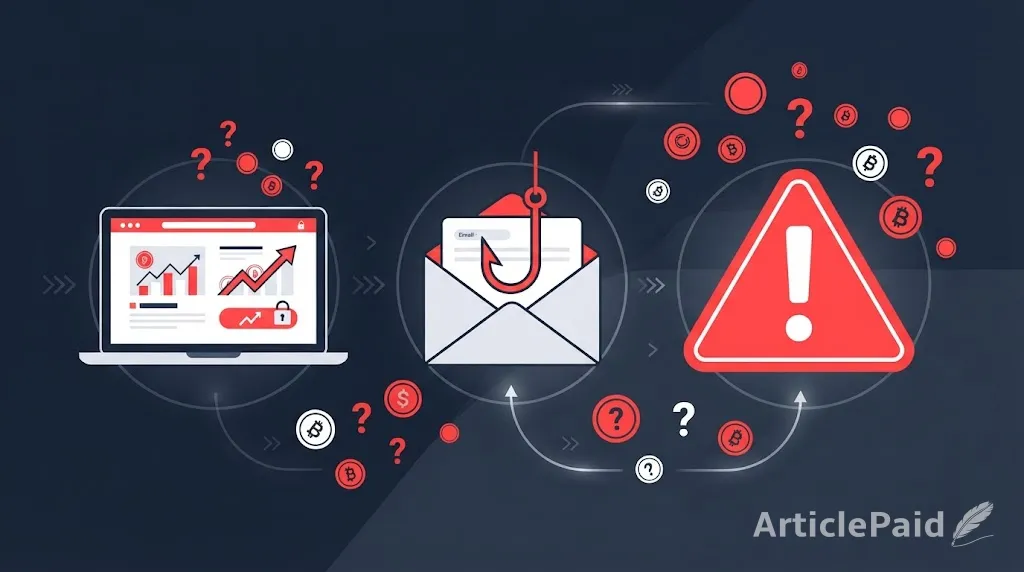
Phishing Emails and Fake Websites
Phishing messages imitate exchanges or wallet providers and urge you to "verify your account" through a link. The link leads to a lookalike site that steals your login details or seed phrase. Always type the exchange's web address yourself or use a saved bookmark.
Rug Pulls and Fake Tokens
In a rug pull, developers launch a new coin or NFT project, attract investors, and then vanish with the funds. Brand-new tokens with anonymous teams, no audited code, and heavy social media promotion are especially risky.
Ponzi and Pyramid Schemes
Any platform promising guaranteed daily or monthly returns is almost certainly a Ponzi scheme. Real investments carry risk, and nobody can guarantee profit.
Red Flags That Signal a Scam
Keep this quick checklist in mind before you send any money:
- Guaranteed or unusually high returns. If it sounds too good to be true, it is.
- Pressure to act fast. Countdown timers and "limited spots" are manipulation tactics.
- Requests for your seed phrase or private keys. No honest service will ever ask for these.
- Unsolicited messages. Be wary of DMs, texts, or calls from strangers offering crypto opportunities.
- Payment in crypto only. Scammers prefer it because it's hard to trace.
- Anonymous teams and vague details. Legitimate projects publish who is behind them.
Practical Steps to Protect Your Crypto
You don't need to be technical to stay safe. These habits make a big difference.
Use Reputable, Regulated Exchanges
Stick with well-known platforms that have a track record, clear fee structures, and strong security features. Search for independent reviews and check whether the exchange is registered or licensed in your region.
Secure Your Accounts With Two-Factor Authentication
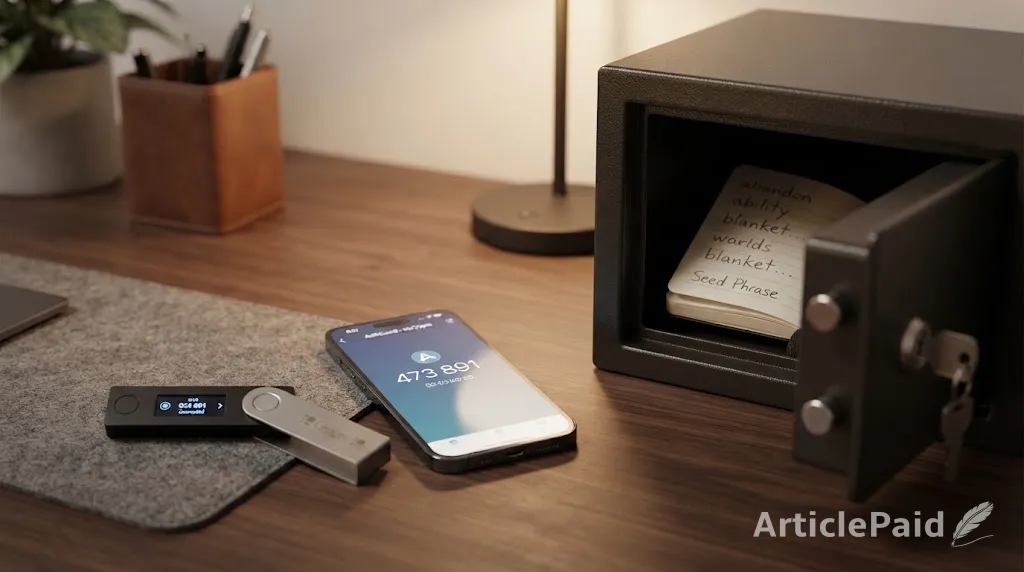
Turn on two-factor authentication (2FA) using an authenticator app rather than SMS, which can be hijacked through SIM swapping. Use a unique, strong password for every account, ideally managed with a password manager.
Protect Your Seed Phrase
Your seed phrase is the master key to your wallet. Write it on paper, store it somewhere safe and offline, and never photograph it, email it, or save it in cloud storage. Anyone who has it controls your funds.
Consider a Hardware Wallet.
If you hold a meaningful amount of crypto, a hardware wallet keeps your private keys offline, away from hackers and malware. Buy it only from the manufacturer's official website, never from a third-party seller.
Do Your Own Research
Before investing in any coin, read the project's whitepaper, check its team, look at its trading volume, and search the project name alongside words like "scam" or "complaints." Never rely only on influencers or social media hype.
Start Small
Test any new platform with a small amount first, and only invest money you can afford to lose. This limits the damage if something goes wrong.
What to Do If You've Been Scammed
If you suspect you've fallen victim to a scam, act quickly:
- Stop sending money. Scammers often ask for more fees to "release" your funds.
- Document everything. Save wallet addresses, transaction IDs, screenshots, and messages.
- Contact your exchange. They may be able to flag or freeze related accounts.
- Report it. File a report with your local cybercrime unit or financial regulator and with relevant consumer protection agencies.
- Beware of recovery scams. Fraudsters often target victims again, offering to recover lost funds for an upfront fee. Treat these offers with suspicion.
Final Thoughts
Cryptocurrency can be rewarding, but safety comes first. Slow down, question every offer that sounds too good to be true, and never share your seed phrase or private keys with anyone. By learning the common scams, spotting the red flags, and building strong security habits, you can enjoy the benefits of crypto with far less risk. When in doubt, walk away. Your money is worth the extra minute of caution.



















Responses (0)
Sign in to share your thoughts.
Sign in