
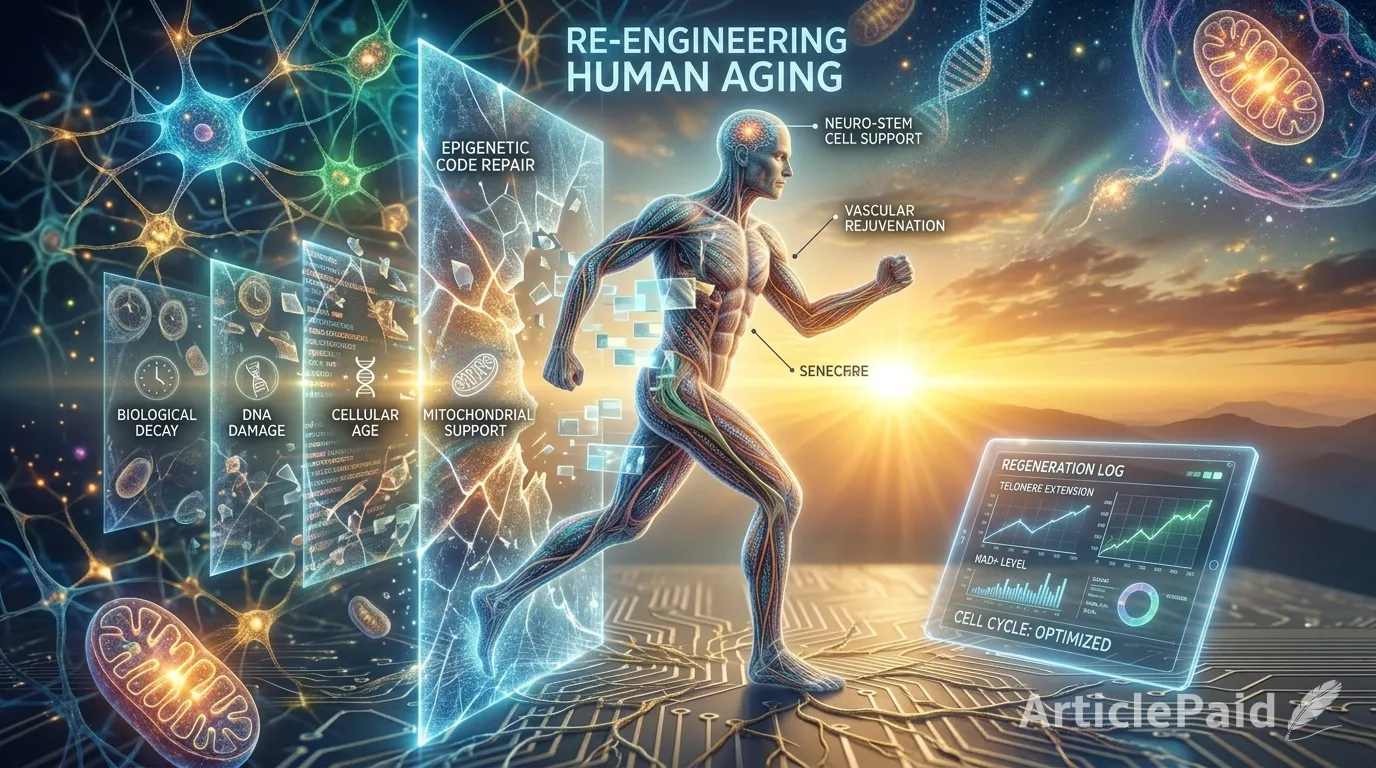
For centuries, aging was accepted as an unyielding biological tax on existence. Modern biogerontology, however, is orchestrating a fundamental shift in medical philosophy: aging is no longer viewed as an inevitable natural decline, but as a complex, malleable biological disease mechanism that can be targeted, delayed, or even partially reversed. The overarching goal of longevity science is not merely extending total lifespan (the overall number of years lived), but maximizing healthspan—the period of life spent free from chronic disease, frailty, and cognitive decay.
The Cellular Machinery Behind Aging
To manipulate aging, researchers first had to map its underlying causes. Biogerontologists generally categorize aging into several core interconnected mechanisms:
- Cellular Senescence:
DNA damage forces stressed cells to stop dividing. Rather than undergoing normal cell death (apoptosis), these "zombie cells" persist in tissue, continuously secreting inflammatory signals (SASP) that damage neighboring cells and drive systemic decline.
- Epigenetic Scrambling:
While your underlying DNA sequence remains constant throughout life, the "software" that dictates which genes are read—the epigenome—drifts over time. Chemical tags accumulate, turning off essential youthful genes and activating dormant, harmful ones, leading to cellular identity loss.- Mitochondrial Decay:
As cellular powerplants age, they lose efficiency, yielding less energy while producing higher amounts of reactive oxygen species (free radicals) that damage cellular structures.- Telomere Shortening:
Each time a somatic cell divides, the protective caps at the ends of its chromosomes—telomeres—shorten slightly. Eventually, critical length limits are reached, triggering permanent cell arrest or death.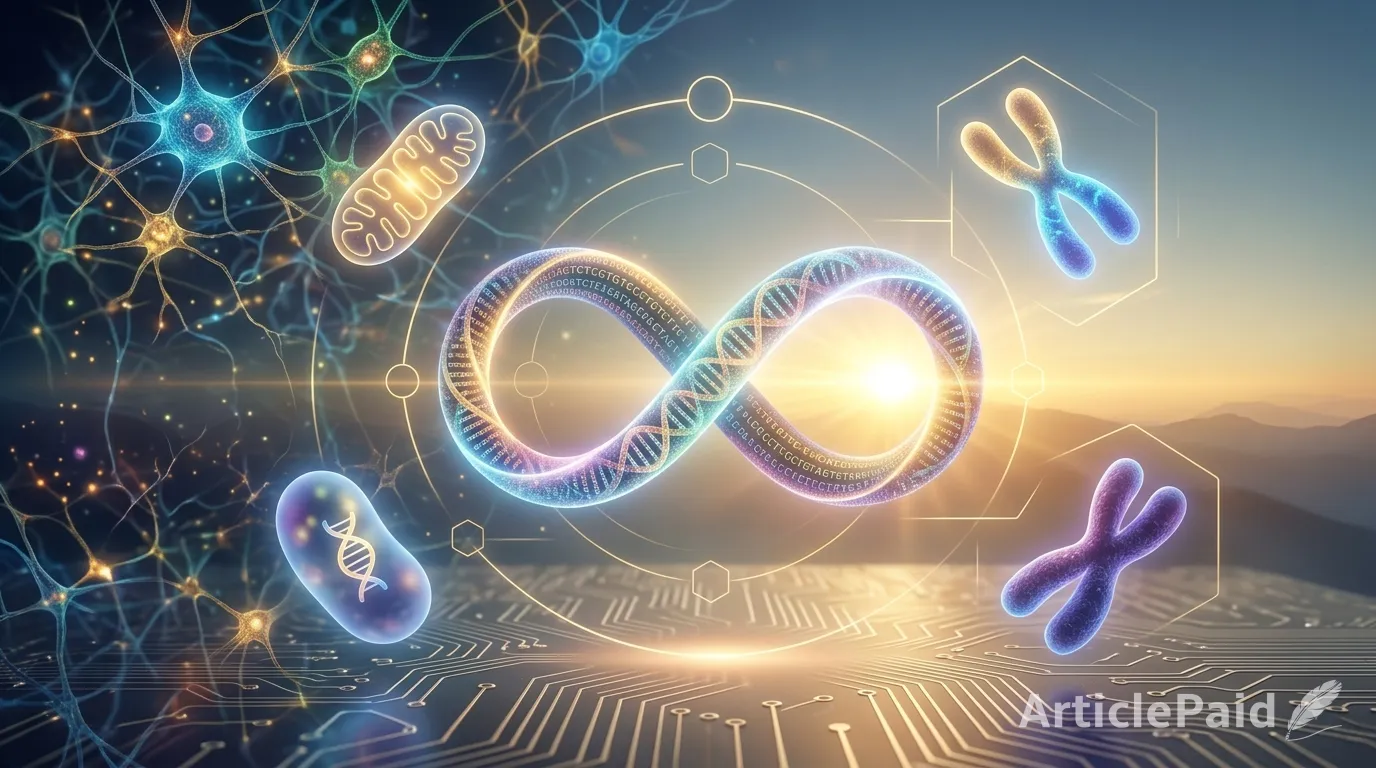
Key Interventions and Therapies
Translating these biological insights into actionable therapies has led to a flurry of promising scientific developments:1. Senolytics:
Clearing the DebrisSenolytics are a novel class of small molecules designed to selectively destroy senescent cells while leaving healthy cells intact. Early pre-clinical trials in mice demonstrated that flushing out these zombie cells improved cardiovascular function, increased endurance, and extended healthspan. Early human Phase I/II clinical trials are actively testing senolytics for conditions like osteoarthritis and idiopathic pulmonary fibrosis.2. Cellular ReprogrammingPerhaps the most radical frontier involves Yamanaka factors—a set of four transcription factors capable of resetting a cell's epigenetic state back to an embryonic-like state.
Researchers have demonstrated that short, controlled bursts of partial cellular reprogramming can turn back the biological clock of human cells and restore vision in aging mice without wiping away cellular identity or causing tumor growth.3. Nutrient Sensing PathwaysOrganisms possess ancient evolutionary pathways that shift cellular resources from growth and reproduction toward stress resistance and DNA repair when energy is scarce. Pharmacological interventions aim to mimic these benefits:Metformin: Long used as a frontline type-2 diabetes drug, metformin suppresses hepatic glucose production and triggers protective metabolic responses.Rapamycin: By inhibiting the mechanistic target of rapamycin (mTOR), rapamycin triggers autophagy—the process by which cells clear out damaged proteins and recycle worn-out organelles.The transition from extending life by treating late-stage chronic diseases individually (like cancer or heart disease) to targeting the single greatest risk factor for all of them—aging itself—represents a paradigm shift. If longevity science fulfills its potential, the future of human health won't just offer longer lives, but vibrant, functional longevity well into old age.
- Epigenetic Scrambling:
While your underlying DNA sequence remains constant throughout life, the "software" that dictates which genes are read—the epigenome—drifts over time. Chemical tags accumulate, turning off essential youthful genes and activating dormant, harmful ones, leading to cellular identity loss.
- Mitochondrial Decay:
As cellular powerplants age, they lose efficiency, yielding less energy while producing higher amounts of reactive oxygen species (free radicals) that damage cellular structures.- Telomere Shortening:
Each time a somatic cell divides, the protective caps at the ends of its chromosomes—telomeres—shorten slightly. Eventually, critical length limits are reached, triggering permanent cell arrest or death.
Key Interventions and Therapies
Translating these biological insights into actionable therapies has led to a flurry of promising scientific developments:1. Senolytics:
Clearing the DebrisSenolytics are a novel class of small molecules designed to selectively destroy senescent cells while leaving healthy cells intact. Early pre-clinical trials in mice demonstrated that flushing out these zombie cells improved cardiovascular function, increased endurance, and extended healthspan. Early human Phase I/II clinical trials are actively testing senolytics for conditions like osteoarthritis and idiopathic pulmonary fibrosis.2. Cellular ReprogrammingPerhaps the most radical frontier involves Yamanaka factors—a set of four transcription factors capable of resetting a cell's epigenetic state back to an embryonic-like state.
Researchers have demonstrated that short, controlled bursts of partial cellular reprogramming can turn back the biological clock of human cells and restore vision in aging mice without wiping away cellular identity or causing tumor growth.3. Nutrient Sensing PathwaysOrganisms possess ancient evolutionary pathways that shift cellular resources from growth and reproduction toward stress resistance and DNA repair when energy is scarce. Pharmacological interventions aim to mimic these benefits:Metformin: Long used as a frontline type-2 diabetes drug, metformin suppresses hepatic glucose production and triggers protective metabolic responses.Rapamycin: By inhibiting the mechanistic target of rapamycin (mTOR), rapamycin triggers autophagy—the process by which cells clear out damaged proteins and recycle worn-out organelles.The transition from extending life by treating late-stage chronic diseases individually (like cancer or heart disease) to targeting the single greatest risk factor for all of them—aging itself—represents a paradigm shift. If longevity science fulfills its potential, the future of human health won't just offer longer lives, but vibrant, functional longevity well into old age.
- Telomere Shortening:
Each time a somatic cell divides, the protective caps at the ends of its chromosomes—telomeres—shorten slightly. Eventually, critical length limits are reached, triggering permanent cell arrest or death.
Key Interventions and Therapies
Translating these biological insights into actionable therapies has led to a flurry of promising scientific developments:
1. Senolytics:
Clearing the Debris
Senolytics are a novel class of small molecules designed to selectively destroy senescent cells while leaving healthy cells intact. Early pre-clinical trials in mice demonstrated that flushing out these zombie cells improved cardiovascular function, increased endurance, and extended healthspan. Early human Phase I/II clinical trials are actively testing senolytics for conditions like osteoarthritis and idiopathic pulmonary fibrosis.
2. Cellular Reprogramming
Perhaps the most radical frontier involves Yamanaka factors—a set of four transcription factors capable of resetting a cell's epigenetic state back to an embryonic-like state.
Researchers have demonstrated that short, controlled bursts of partial cellular reprogramming can turn back the biological clock of human cells and restore vision in aging mice without wiping away cellular identity or causing tumor growth.
3. Nutrient Sensing Pathways
Organisms possess ancient evolutionary pathways that shift cellular resources from growth and reproduction toward stress resistance and DNA repair when energy is scarce. Pharmacological interventions aim to mimic these benefits:
Metformin:
Long used as a frontline type-2 diabetes drug, metformin suppresses hepatic glucose production and triggers protective metabolic responses.
Rapamycin:
By inhibiting the mechanistic target of rapamycin (mTOR), rapamycin triggers autophagy—the process by which cells clear out damaged proteins and recycle worn-out organelles.
The transition from extending life by treating late-stage chronic diseases individually (like cancer or heart disease) to targeting the single greatest risk factor for all of them—aging itself—represents a paradigm shift. If longevity science fulfills its potential, the future of human health won't just offer longer lives, but vibrant, functional longevity well into old age.























Responses (0)
Sign in to share your thoughts.
Sign in