
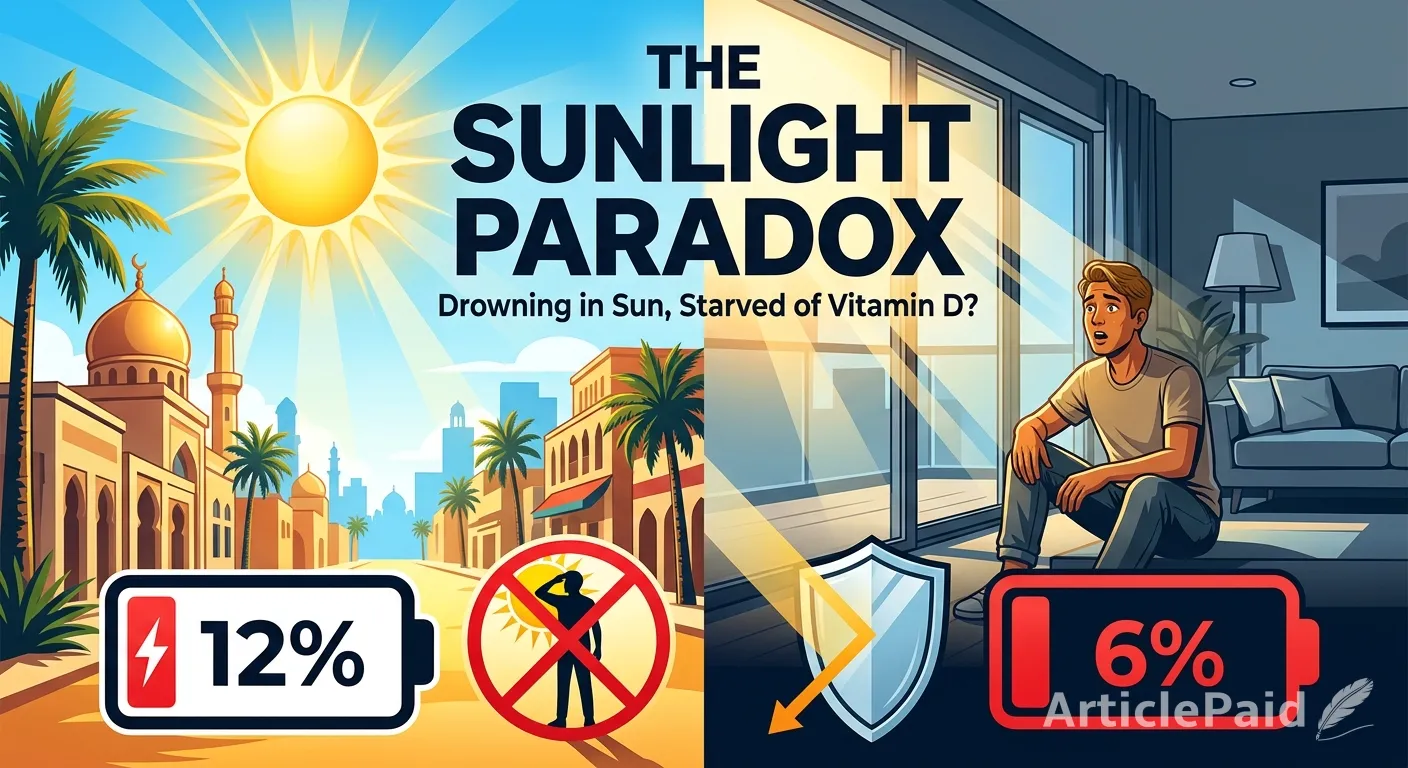
It sounds like a joke.
You live in a region blessed with intense, year-round sunshine. Yet, your doctor runs a routine blood test and delivers surprising news: you are severely deficient in Vitamin D.
Welcome to the Sunlight Paradox.
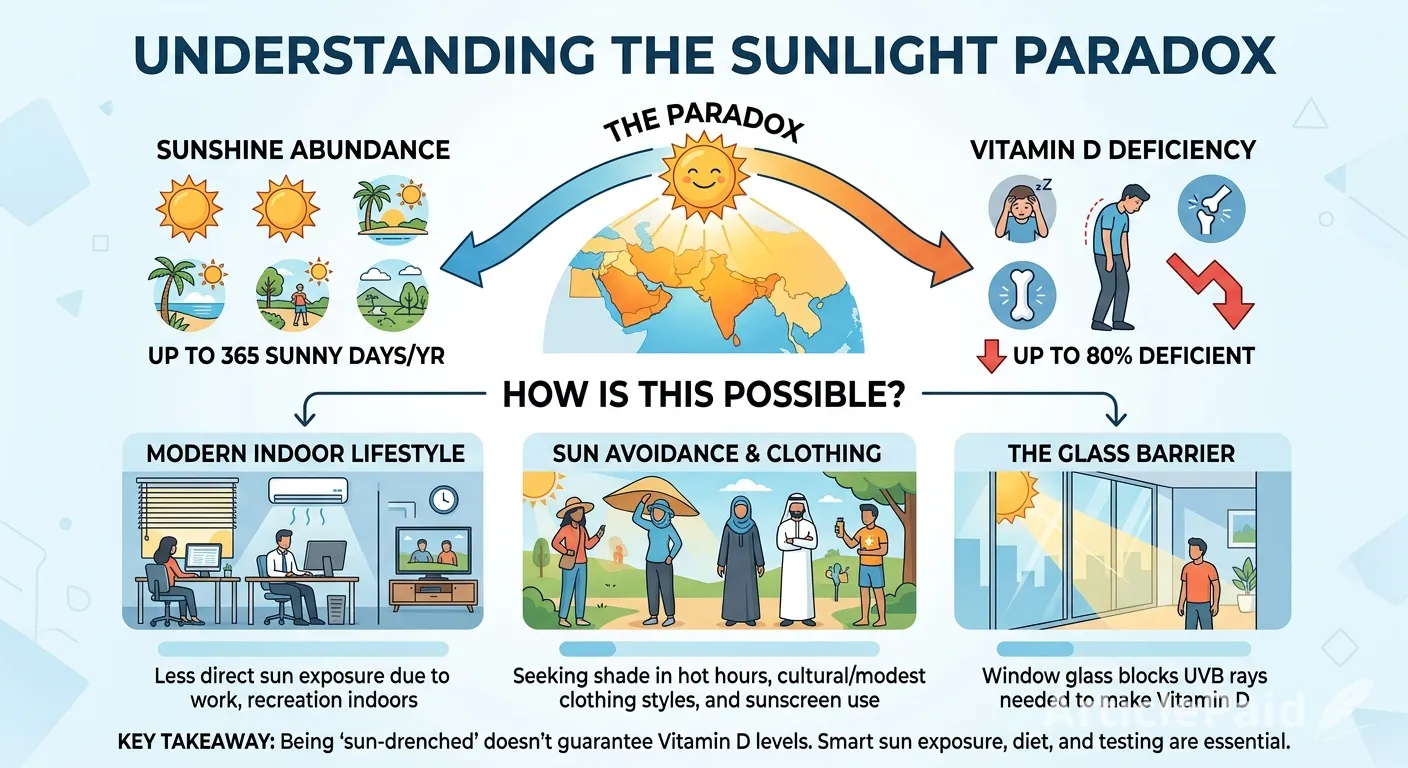
Across South Asia, the Middle East, and Mediterranean regions, sunshine is abundant. Yet, studies show that up to 70% to 80% of populations in these sunny nations suffer from low Vitamin D levels.
How can a population drowning in sunlight be starved of the "sunshine vitamin"?
Here is the hidden truth behind this global health paradox.
1. The Glass Shield: Modern Indoor Lifestyles
Most of us spend our days indoors. We move from air-conditioned homes to air-conditioned cars, offices, and classrooms.
Sitting by a sunny window does not help. Window glass blocks UVB rays—the exact ultraviolet wavelength your skin needs to synthesize Vitamin D. You might feel the warmth of the sun, but your body gets zero Vitamin D from it.
2. Heat Avoidance and Cultural Dress
In hot climates, sunshine is often treated as something to avoid, not celebrate.
- People naturally seek shade during peak daylight hours.
- Outdoor activities are shifted to late evening or night.
- Clothing styles often emphasize full coverage for sun protection, modesty, or religious reasons.When skin exposure is limited, natural Vitamin D production drops to almost zero.
3. The Melanin Factor
Melanin is the natural pigment that gives skin its color. It acts as a built-in biological sunscreen, protecting skin from harsh ultraviolet damage.However, higher melanin levels slow down Vitamin D synthesis. A person with darker skin requires significantly more time in the sun to produce the same amount of Vitamin D as someone with pale skin. In tropical and subtropical regions, high melanin combined with brief sun exposure creates a major gap.4. Pollution Filters Out UVB Rays
In many rapidly developing sunny regions, smog and atmospheric pollution pose an invisible barrier. Air pollution absorbs and scatters UVB rays before they ever reach the ground, reducing the quality of sunlight available for your skin.5. The Fear of Tanning and UV Damage
Skincare awareness has surged. Sunscreen usage and sun avoidance are at an all-time high to prevent premature aging, hyperpigmentation, and skin damage. While protecting your skin is vital, total sun avoidance shuts down your primary natural source of Vitamin D.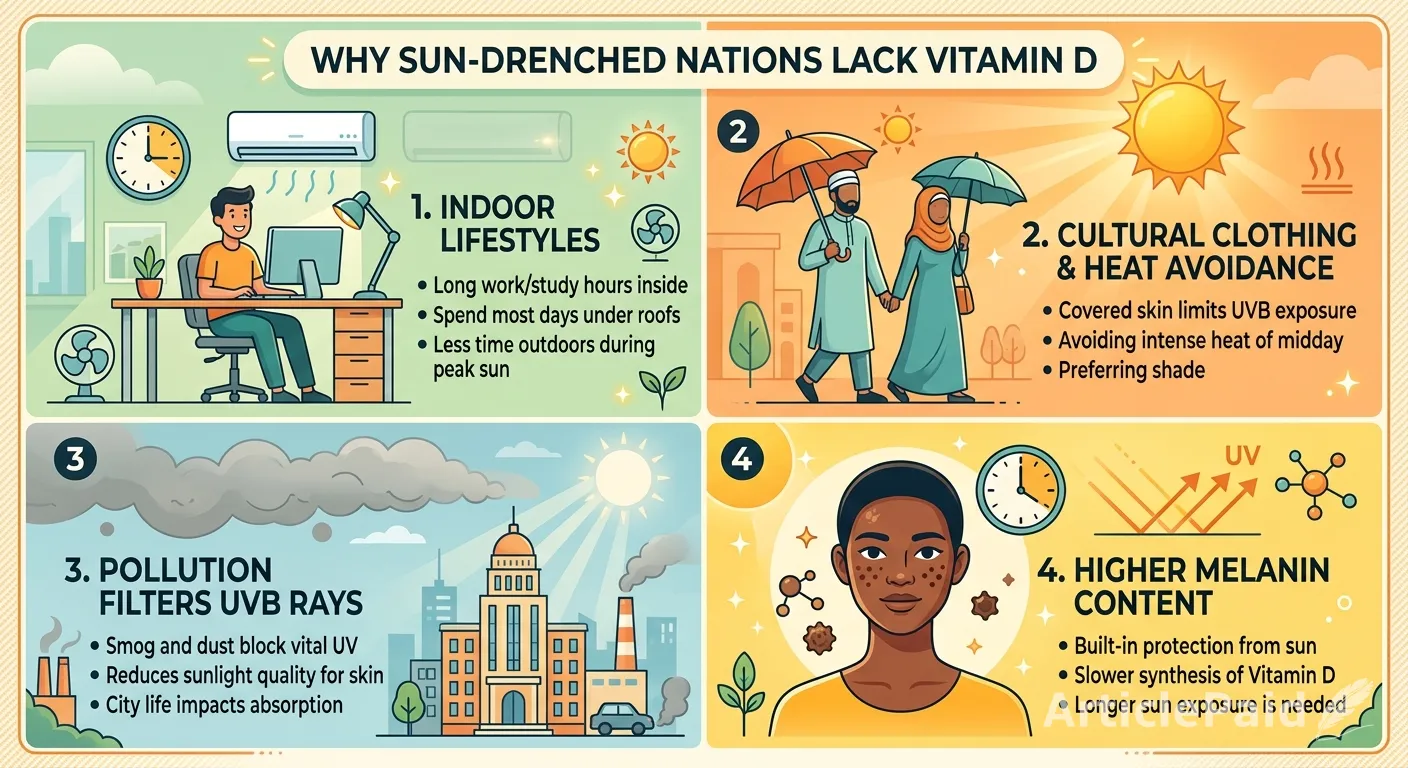
Breaking the Paradox: What You Can Do
You do not need to roast in the heat to fix your levels. Small, smart changes make a big difference:- Get Midday Exposure: 10 to 15 minutes of direct sunlight on hands, arms, or face during mid-morning or early afternoon (without glass blocking the way) is often enough.
- Optimize Your Diet: Eat fatty fish (like salmon or mackerel), egg yolks, and fortified milk or cereals.
- Get Tested: A simple blood test (25-hydroxy Vitamin D) will tell you exactly where you stand.
- Supplement Wisely: If your deficiency is severe, oral Vitamin D3 supplements are a safe, quick, and effective fix recommended by doctors.




















Responses (0)
Sign in to share your thoughts.
Sign in