
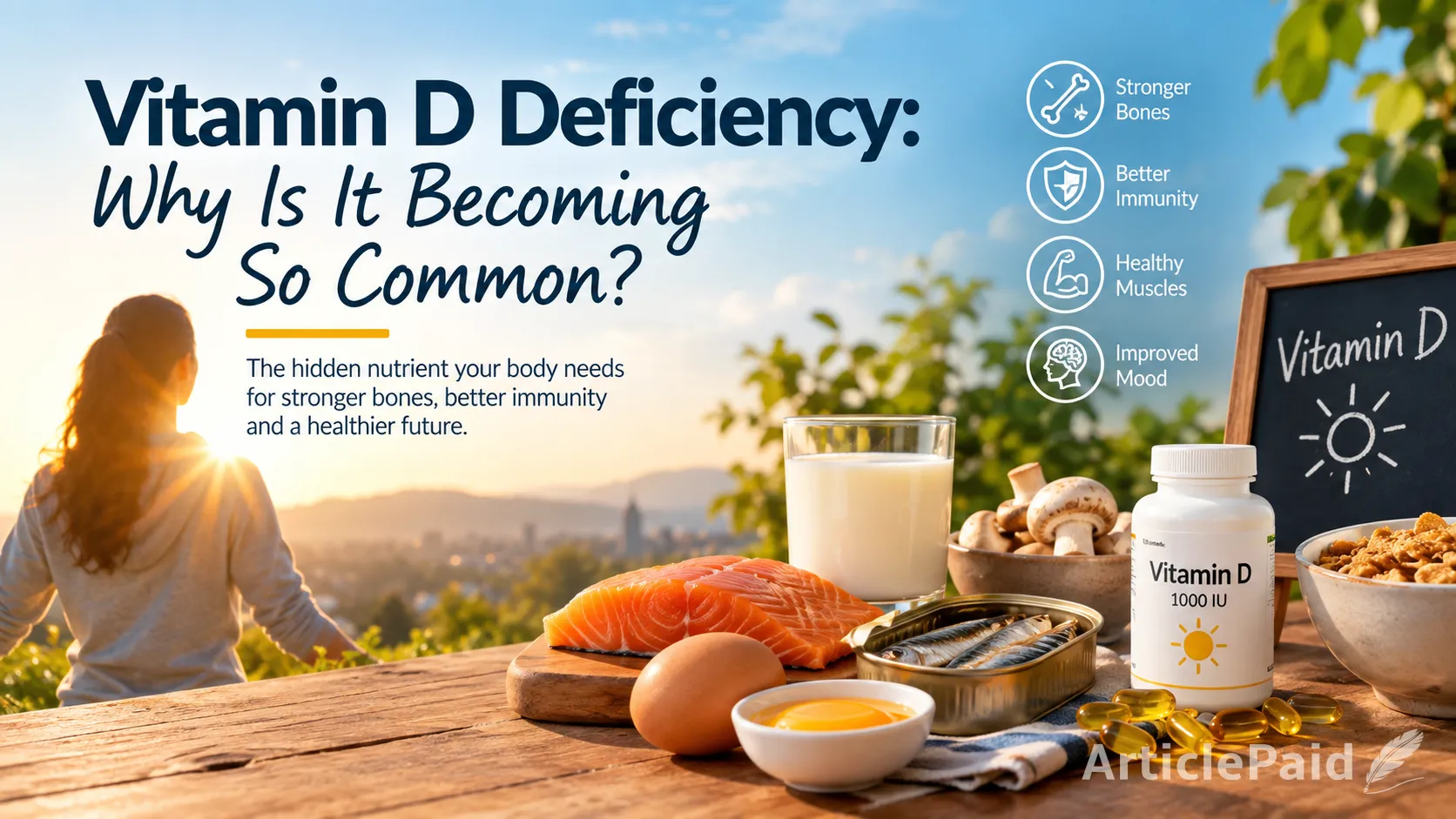
Vitamin D Deficiency: Why Is It Becoming So Common?
We often hear that sunlight is good for our health, but did you know that it can help our bodies produce an essential vitamin?
Vitamin D plays an important role in keeping our bones, muscles and immune system healthy. Yet, vitamin D deficiency has become surprisingly common around the world.
Modern lifestyles, indoor living and limited exposure to sunlight are among the factors that can contribute to low vitamin D levels.
What Does Vitamin D Do?
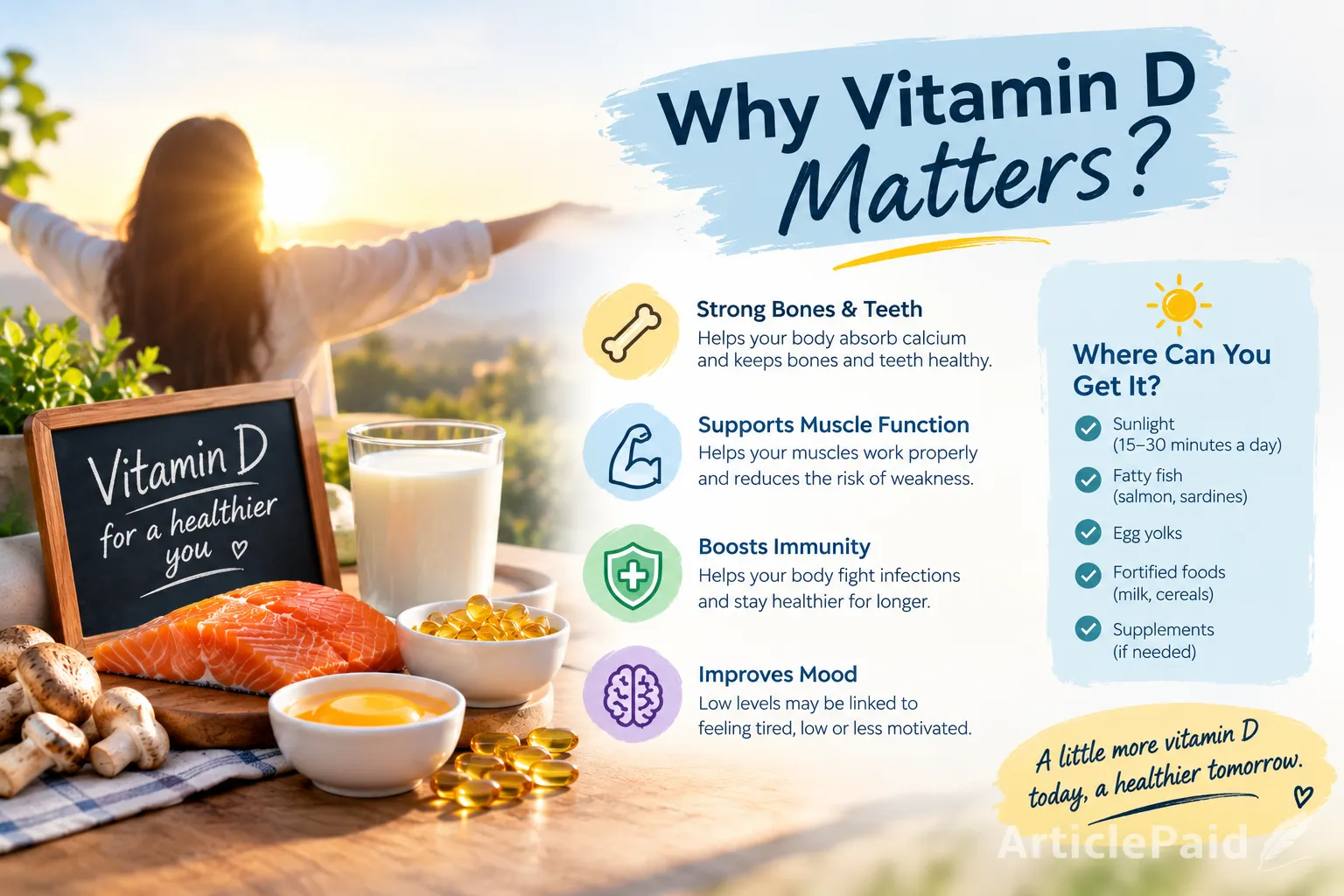
Vitamin D helps the body absorb calcium, which is essential for strong bones and teeth.
It also supports normal muscle function and plays a role in the immune system.
When vitamin D levels remain low for a long time, the body may struggle to maintain healthy bones.
In children, severe deficiency can cause rickets, a condition that affects bone development.
In adults, severe deficiency can contribute to weak or soft bones and may increase the risk of fractures.
Why Are People Becoming Deficient?
One major reason is our increasingly indoor lifestyle. Many people spend hours at school, work or home and very little time outdoors.
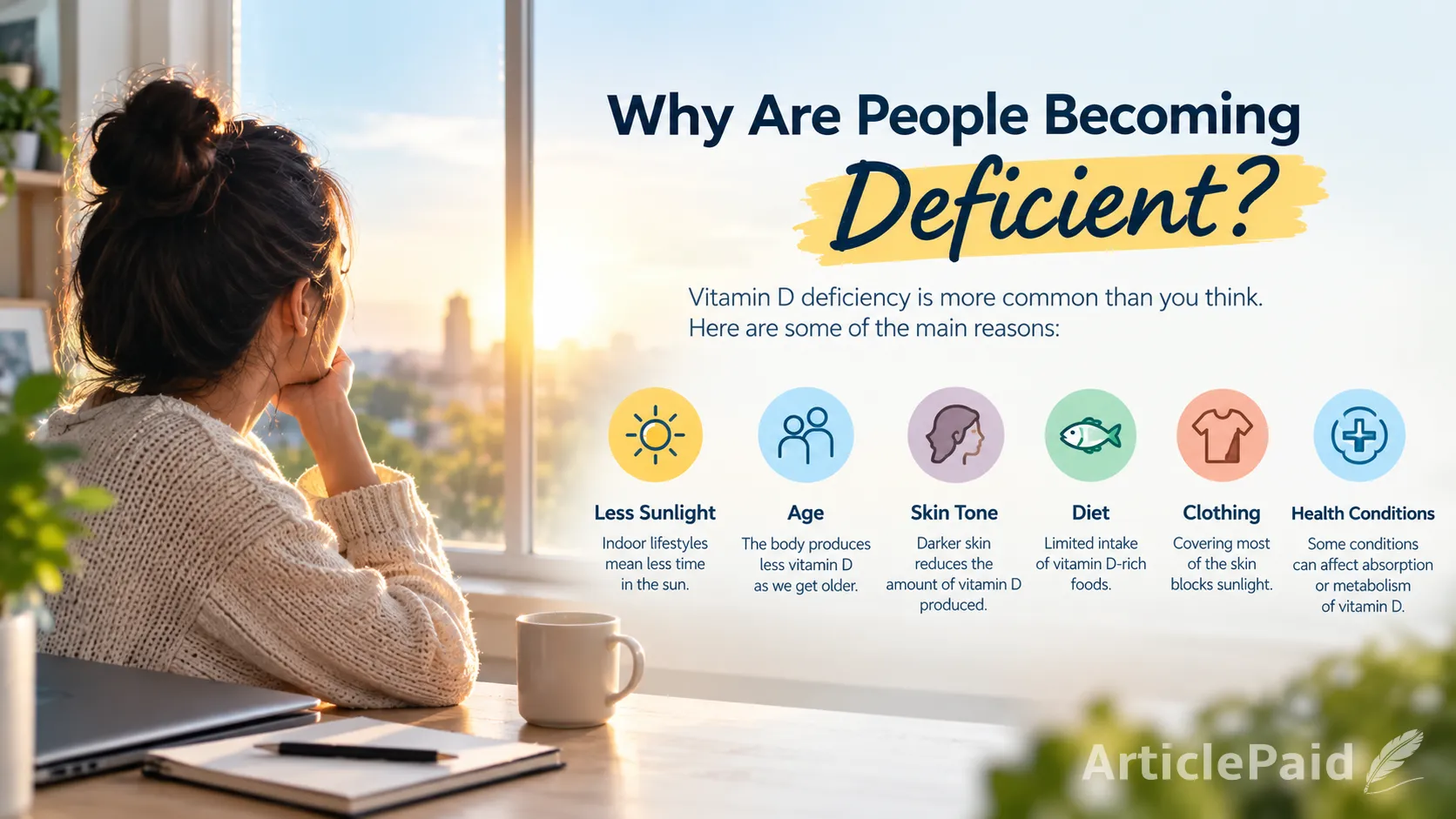
When skin is exposed to sunlight, particularly ultraviolet B (UVB) radiation, the body can produce vitamin D.
However, sunlight is not the only factor. Age, darker skin, limited dietary sources, covering most of the skin, and living in regions with limited UVB exposure during certain seasons can also affect vitamin D production.
Certain health conditions can also interfere with vitamin D absorption or metabolism. Therefore, deficiency is not simply a matter of “not getting enough sunshine.”
Food Can Help Too
Although sunlight is an important source, some foods contain vitamin D. These include fatty fish such as salmon and sardines, egg yolks, and some fortified foods.
Fortification means vitamin D has been added to a food, such as certain milks or cereals.
For people who cannot get enough vitamin D from sunlight and food, a healthcare professional may recommend a supplement.
It is important not to take very high doses without medical advice because excessive vitamin D can also be harmful.
How Can We Protect Our Health?
The best approach is balance. Spending appropriate time outdoors, eating a varied diet and maintaining healthy habits can support overall health.
People who are at higher risk of deficiency should discuss testing with a healthcare professional rather than assuming they need supplements.
Vitamin D may be just one nutrient, but its importance is difficult to ignore. As modern life keeps us increasingly indoors, understanding our vitamin D needs can help us make smarter choices about our health.
Sometimes, improving our health begins with something as simple as stepping outside, eating well and paying attention to what our bodies need.





















Responses (1)
Sign in to share your thoughts.
Sign inThese days, our diet and lifestyle often don’t provide enough vitamin D, which is why deficiency has become increasingly common.