

. Vibe Coding: Letting AI Lead the Way
In early 2025, AI researcher Andrej Karpathy introduced vibe coding, a radical shift where developers rely on large language models (LLMs) to generate code directly from natural-language prompts. Instead of meticulously writing code, developers act as directors—prompting, refining, and testing AI-generated blocks.
As Karpathy put it: “fully giving in to the vibes, embracing exponentials, and forgetting that the code even exists.”
Within months, 25% of YC startups adopted this method, creating nearly their entire codebases via AI. That’s not just innovation—it’s a paradigm shift.
The advantages are clear: speed, accessibility for non-coders, and iterative creativity. But critics warn of risks—bugs, security loopholes, and lack of long-term maintainability.
Takeaway: Vibe coding might redefine software creation—but we must tread carefully.
2. Quantum Computing Breaks Through the Lab
Quantum computing is no longer futuristic—it’s here. With 2025 declared the International Year of Quantum Science and Technology, UNESCO and the UN aim to both educate the public and accelerate innovation in areas like cryptography and materials science. Microsoft even launched a "Quantum Ready" program for businesses.
Investments and breakthroughs abound: companies like Google and IBM are advancing hardware; the UK and US are pumping millions into skills and infrastructure. Full-scale quantum systems may emerge before the decade ends, potentially by 2033.
Why it matters: Traditional encryption could become obsolete, but quantum-safe cryptography and optimization innovations could redefine cybersecurity, pharma, finance, and more.
3. Ambient Intelligence & Spatial Computing: The Invisible Tech
Imagine technology so seamless it feels invisible. Gartner predicts massive adoption of ambient computing, where environments respond naturally—lights dim when you're sleepy, coffee starts when you're cold.
Spatial computing—merging digital overlays with the real world via AR/MR—is on the rise too. Thanks to devices like Apple Vision Pro and Meta's Quest 3, immersive experiences are becoming mainstream in gaming, healthcare, and e-commerce.
Use cases: Imagine remote team meetings with 3D virtual avatars, surgeons using AR overlays mid-operation, or shoppers virtually trying clothes before buying. These aren’t sci-fi—they’re already taking shape.
4. AI-Powered Cybersecurity: Fighting Fire with Fire
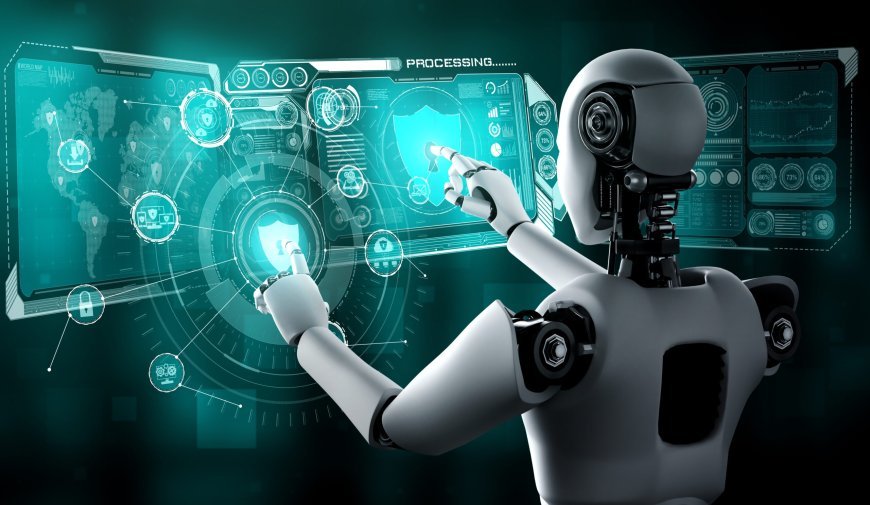
Cyber threats are evolving—fast. The answer? AI fighting back with real-time detection, anomaly prediction, and automated defenses. AI-based cybersecurity isn’t optional—it’s essential.
With quantum threats looming, post-quantum cryptography is gaining traction to protect against future decryption.
Bottom line: The cybersecurity battlefield is changing; AI-based defenses and quantum-aware strategies are vital shields.
5. Edge Computing & 5G-Advanced: Bringing Power Closer
Rather than routing everything through distant data centers, edge computing brings processing closer to users—whether in factories, stores, or remote sites. Analysts expect over 50% of data to be handled at the edge by 2025.
At the same time, 5G-Advanced (5.5G) and early 6G developments promise speeds of up to 10 Gbps, ultra-low latency, and reliable support for holographic, XR, and autonomous applications.
Result: Faster, smarter, secure interactions—critical for real-time AI, AR, and IoT ecosystems.
6. Green Tech & Sustainable Infrastructure
Eco-conscious tech isn't a buzzword—it’s a business imperative. Companies are prioritizing green IT, sustainable data centers, and carbon-aware computing. Metrics like PUE (Power Usage Effectiveness) are becoming industry standards.
From biodegradable electronics to solar-powered microdevices and energy-efficient AI chips, the green transformation is underway.
Impact: Cleaner tech means better for your bottom line—and the planet.
Why It All Matters to You
We’re shifting into a realm where technology:
- Codes itself via AI,
- Computes with quantum precision,
- Disappears into our surroundings,
- Defends with intelligent security,
- Operates at the edge with ultra-speed, and
- Respects environmental boundaries.
For innovators, creators, and businesses—this is more than buzz; it’s a multi-dimensional transformation demanding awareness and adaptation.
Conclusion
Welcome to the post-phone, post-code era. As vibe coding democratizes software creation, quantum computing dismantles old limitations, ambient intelligence fades tech into invisibility, and edge + 5G power real-time integration—all under the watchful eyes of AI-driven security and sustainable infrastructure—you’re not just witnessing an update. You’re part of a revolution.
Challenge for you: What piece of this emerging tech will you leverage next?














Responses (0)
Sign in to share your thoughts.
Sign in