
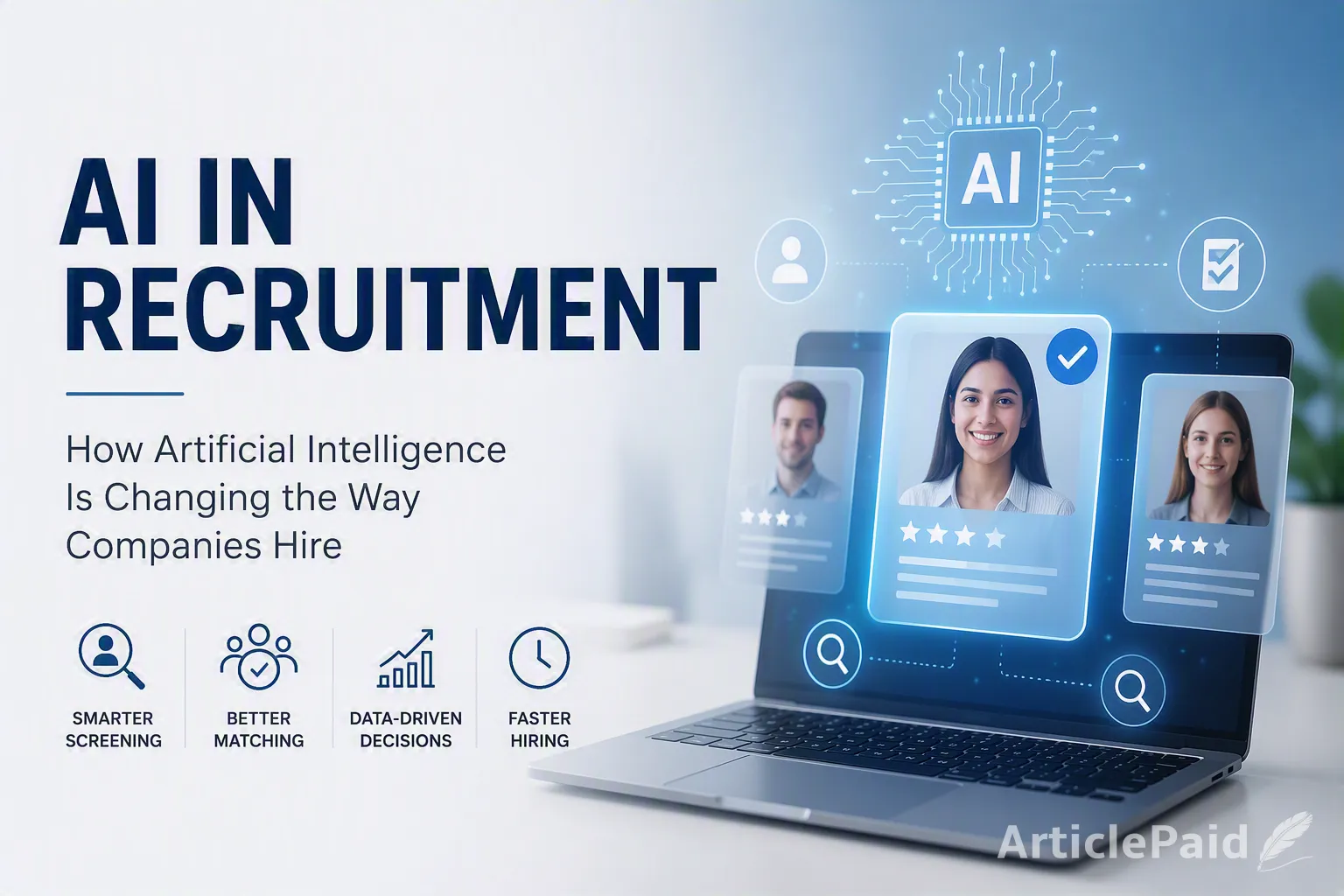
Hiring has never been a simple process.
A recruiter may receive hundreds of applications for a single position, spend hours going through resumes, schedule interviews across different time zones, answer repetitive candidate questions, and still worry that a good candidate was overlooked somewhere along the way.
This is where artificial intelligence is beginning to make a real difference.
AI in recruitment is no longer just a futuristic idea discussed by technology companies. Recruitment teams are already using AI-powered tools to find candidates, screen applications, write job descriptions, communicate with applicants, schedule interviews, and analyse hiring data.
But there is an important point that often gets missed: AI is not replacing recruitment; it is changing how recruitment is done.
The real question for businesses is not whether they should use AI, but how they can use it without losing the human side of hiring.
What Does AI in Recruitment Actually Mean?
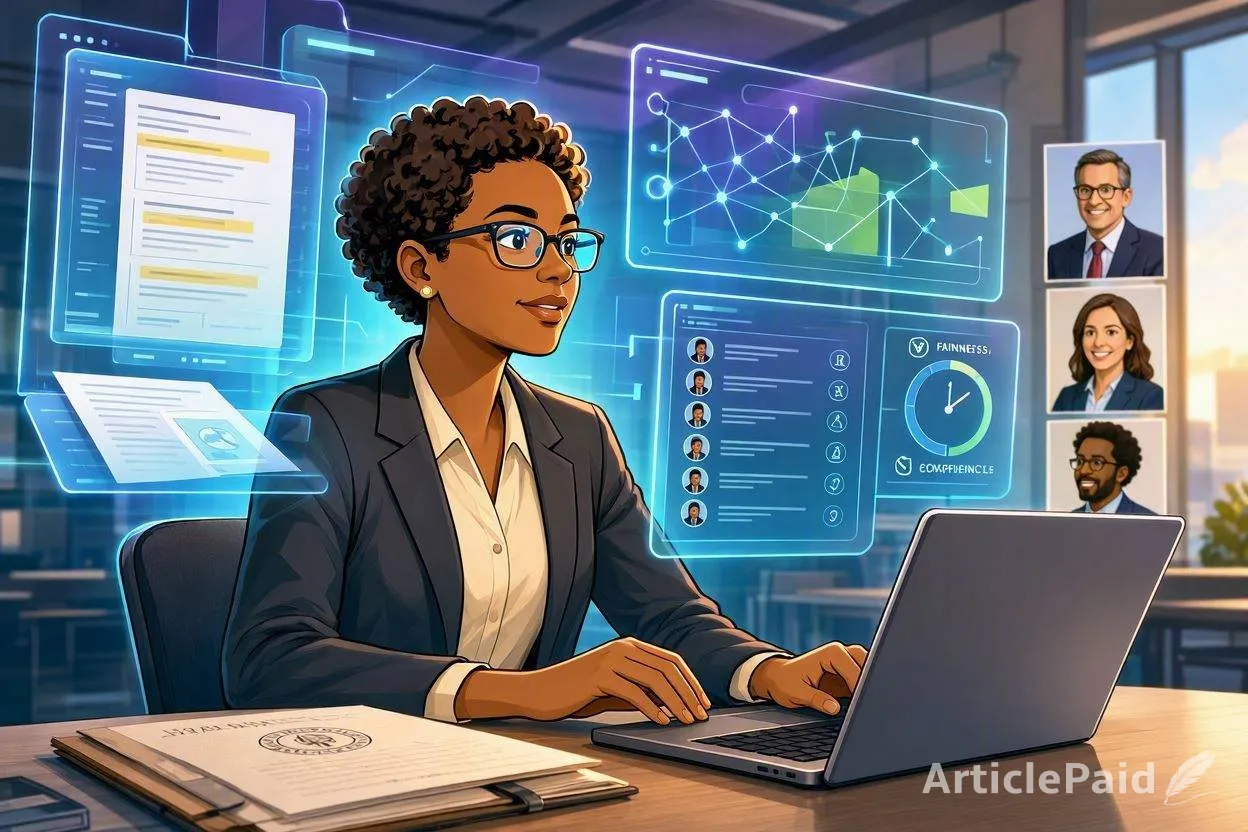
AI in recruitment refers to the use of artificial intelligence technologies to support different stages of the hiring process.
Traditional recruitment depends heavily on manual work. A recruiter might read resumes one by one, search job portals for suitable profiles, send individual emails, and maintain spreadsheets to track candidates.
AI can automate many of these repetitive activities.
For example, an AI-powered recruitment platform can analyse resumes based on predefined criteria, identify relevant skills, match candidates with suitable roles, and help recruiters organise large applicant pools.
Some systems can also assist with candidate communication. A chatbot, for instance, can answer common questions about a job, collect basic information from applicants, or help candidates schedule an interview.
The goal is not necessarily to remove recruiters from the process. Instead, it is to give them more time to focus on the parts of hiring where human judgement matters most.
Why Are Companies Turning to AI for Hiring?
One of the biggest reasons is simple: recruitment generates a huge amount of information.
Every open position can attract dozens, hundreds, or even thousands of applications. Going through all of them manually can be slow and exhausting.
AI can process large amounts of candidate information much faster than a person can.
This can be particularly useful for organisations that hire frequently or operate across multiple locations.
There is also the issue of time.
Recruiters often spend a significant portion of their working day on administrative tasks. Interview scheduling, candidate follow-ups, resume sorting and answering basic questions may be necessary, but they do not always require a human recruiter.
Automating some of these tasks can allow recruitment professionals to spend more time talking to candidates, understanding hiring managers' requirements and evaluating whether someone is genuinely suited to the organisation.
AI Can Make Resume Screening Faster
Resume screening is probably one of the most obvious areas where AI can help.
Imagine a company receives 1,000 applications for a software engineering position. A recruiter cannot realistically give every resume the same amount of attention.
AI-based recruitment software can scan applications and identify information such as skills, experience, qualifications and previous job roles.
Depending on how the system is designed, it can then help rank or organise candidates according to the requirements of the position.
This can save recruiters considerable time.
However, there is a catch.
A resume does not always tell the complete story.
Someone may have excellent potential but lack a particular keyword on their resume. Another candidate may have a resume that matches the job description perfectly but perform poorly during an actual interview.
That is why AI-generated rankings should be treated as decision-support information, not a final hiring decision.
AI Is Changing the Candidate Experience
Recruitment is not only about finding the right employee. It is also about creating a positive experience for people applying for the job.
Candidates often become frustrated when they submit an application and hear nothing for weeks.
AI can help companies communicate more consistently.
Automated systems can acknowledge applications, provide basic updates, answer frequently asked questions and help candidates schedule interviews.
This does not mean every candidate interaction should be handled by a chatbot.
There are moments in recruitment when people want to speak to another person, especially when discussing salary, career expectations, interview feedback or sensitive concerns.
The strongest recruitment strategies will probably combine automation for routine communication with genuine human interaction at important stages of the candidate journey.
AI Can Help Recruiters Find Candidates They Might Otherwise Miss
Recruitment has traditionally relied on job boards, referrals, professional networks and recruiters' own databases.
AI can expand this search.
Modern recruitment platforms can analyse large candidate databases and identify people whose skills and experience appear relevant to a particular position.
This can be particularly useful for difficult-to-fill roles.
For example, a company looking for a specialised cybersecurity professional may have a relatively small pool of suitable candidates. Instead of relying entirely on applications, recruiters can use technology to identify potential candidates based on relevant experience and skills.
In other words, recruitment can become more proactive rather than simply waiting for people to apply.
The Problem With AI in Recruitment
Despite its advantages, AI should not be treated as a perfect solution.
One of the biggest concerns is bias.
AI systems learn from data. If the historical data used to develop or train a system contains biases, those patterns can potentially influence the technology's recommendations.
This creates a serious problem in recruitment.
A system designed to make hiring more objective could unintentionally reproduce the same inequalities that existed in previous hiring decisions.
There are other concerns as well.
Candidates may not know when AI is being used to evaluate their applications. Recruiters may not fully understand why an algorithm has ranked one candidate above another. Organisations may also collect large amounts of personal information during recruitment, raising questions about privacy and data security.
These issues cannot be solved simply by purchasing better software.
Companies need clear policies, regular monitoring and human oversight.
The Human Recruiter Still Matters

There is a common fear that AI will eventually eliminate recruitment jobs.
That may be an oversimplification.
Recruitment involves much more than matching keywords to job descriptions.
A recruiter needs to understand a company's culture, communicate with hiring managers, build relationships with candidates, recognise potential and sometimes make difficult judgement calls.
Consider an experienced candidate who has changed careers. An automated system might see an unconventional career history as a weakness.
A good recruiter might see something different: transferable skills, adaptability and motivation.
That difference matters.
AI is good at processing information at scale. Humans are better equipped to understand context, emotion, motivation and circumstances.
The future of recruitment is therefore likely to involve people working with AI rather than people competing against AI.
AI Could Change the Recruiter's Role
As more administrative work becomes automated, the role of the recruiter may evolve.
Recruiters could spend less time searching through resumes and more time building relationships.
They may become more involved in workforce planning, employer branding, candidate engagement and strategic hiring decisions.
This shift could actually make recruitment more human.
If technology takes care of repetitive tasks, recruiters have more time to speak with candidates and understand what they are looking for in their careers.
That is potentially one of the biggest benefits of AI in recruitment.
What Companies Should Consider Before Adopting AI
Companies should not adopt AI simply because competitors are doing it.
Before introducing an AI recruitment system, organisations should ask a few basic questions.
What problem are we trying to solve?
If recruiters are spending too much time scheduling interviews, automation may help. If the company struggles to identify suitable candidates, AI-based sourcing might be more useful.
How is the system making decisions?
Recruiters should understand what information the technology uses and how its recommendations are generated.
Where does human judgement remain necessary?
There should be clear points in the recruitment process where a human can review and challenge an automated recommendation.
How is candidate data protected?
Recruitment involves sensitive personal information. Companies need to understand how that information is stored, processed and protected.
Is the system being monitored for bias?
AI should be evaluated regularly rather than being treated as automatically fair simply because it is software.
The Future of AI in Recruitment
The recruitment industry is likely to become increasingly technology-driven, but that does not mean hiring will become completely automated.
Instead, we may see a hybrid model.
AI could handle the high-volume, repetitive and data-heavy parts of recruitment, while recruiters focus on relationships, judgement and decision-making.
The technology may also become more personalised. Instead of simply filtering resumes, AI systems could help recruiters understand candidate skills, identify transferable experience and predict where additional assessment may be useful.
At the same time, organisations will need to become more transparent about how AI is being used.
Candidates deserve to know when technology plays a role in evaluating them, particularly when automated systems have a meaningful influence on hiring decisions.
Final Thoughts
AI is changing recruitment, but the technology itself is not the most important part of the transformation.
The bigger change is how companies think about the hiring process.
Recruitment has traditionally involved a lot of manual work, fragmented information and repetitive communication. AI has the potential to remove some of that friction and help recruiters work more efficiently.
But hiring is ultimately about people.
A candidate is more than a resume. A career is more than a collection of keywords. And a good employee cannot always be identified by an algorithm.
Companies that use AI responsibly will understand this distinction.
The winners in the future of recruitment may not be the organisations that automate the most. They may be the ones that use technology to become faster and more efficient while still keeping people at the centre of hiring.















Responses (0)
Sign in to share your thoughts.
Sign in