

Artificial intelligence is no longer a futuristic concept reserved for tech companies and research labs. By 2026, AI has become an everyday business tool that is transforming industries, redefining productivity, and changing the skills employers value most. Organizations of every size now rely on AI to automate repetitive work, improve customer experiences, analyze vast amounts of data, and support decision-making.
This shift does not necessarily mean that AI is replacing humans altogether. Instead, it is changing how work is performed. Some professions are experiencing significant disruption as routine tasks become automated, while others are evolving into more strategic, creative, and technology-focused roles. Employees who embrace continuous learning and develop complementary human skills are often finding new opportunities rather than becoming obsolete.
Understanding which careers face the greatest disruption—and which skills are becoming more valuable—is essential for professionals, business leaders, and students planning their future. In this guide, we'll explore the careers most affected by artificial intelligence in 2026, examine emerging job opportunities, and provide practical strategies for staying competitive in an AI-driven workforce.
Why AI Is Reshaping the Workforce Faster Than Ever
Artificial intelligence has reached a tipping point. Improvements in generative AI, machine learning, natural language processing, and automation platforms have made sophisticated technology accessible to businesses that previously could not afford it. Companies are increasingly integrating AI into daily operations because it reduces costs, improves efficiency, and allows employees to focus on higher-value work.
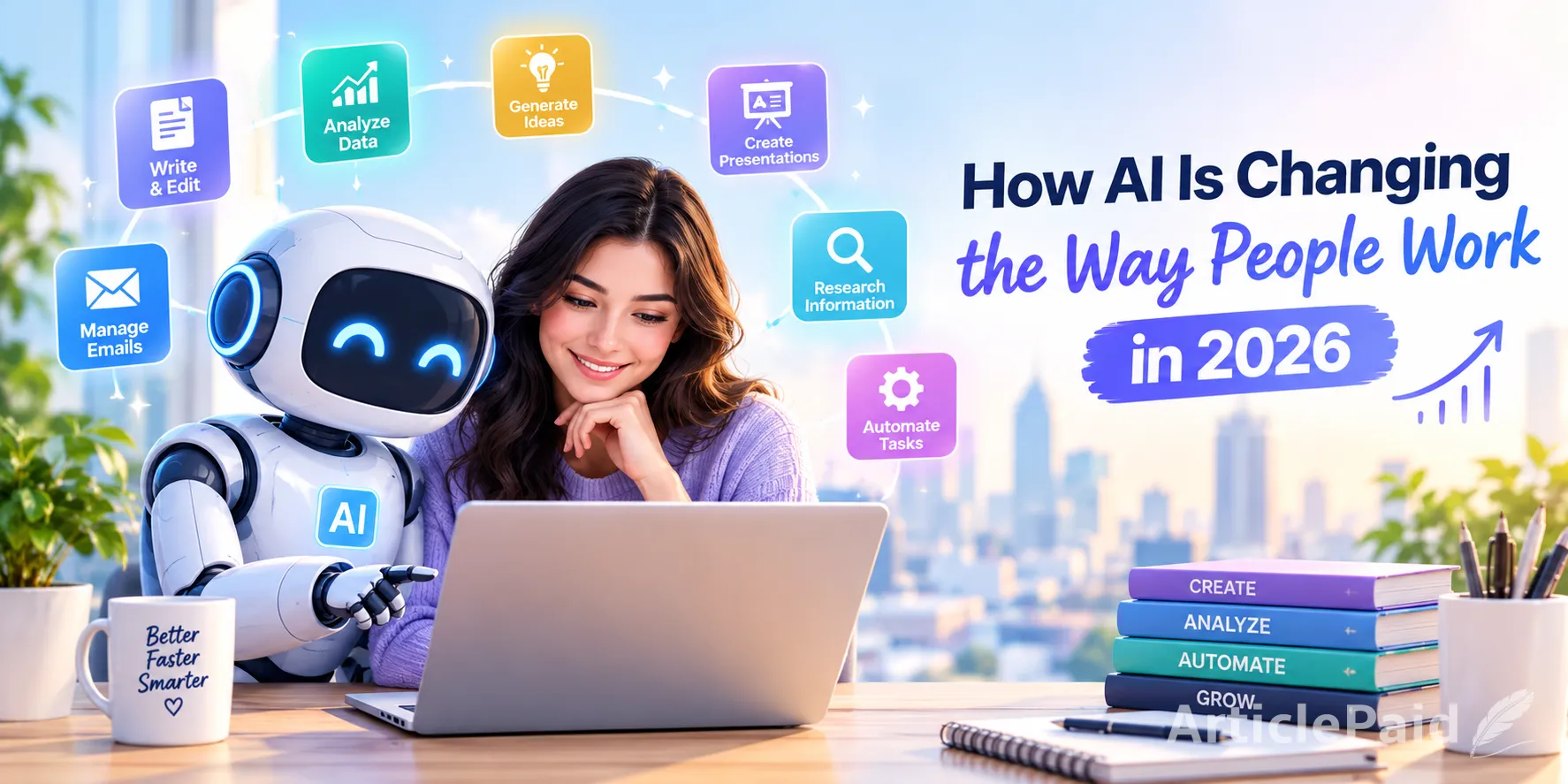
Rather than replacing entire professions overnight, AI is automating individual tasks. A marketing specialist, for example, may use AI to generate campaign ideas, summarize research, or analyze customer behavior in minutes instead of hours. An accountant can automate repetitive reconciliations while dedicating more time to financial planning and strategic analysis.
This task-based transformation explains why many occupations are changing instead of disappearing. Roles built primarily around repetitive, predictable activities face the greatest disruption because AI systems can perform these tasks quickly and consistently. Meanwhile, jobs requiring empathy, complex decision-making, leadership, creativity, negotiation, and interpersonal communication remain significantly more resilient.
Another major driver is the widespread adoption of AI copilots within workplace software. Employees across finance, healthcare, education, legal services, customer support, and software development increasingly work alongside AI assistants that help complete tasks more efficiently. As a result, employers are placing greater emphasis on digital literacy and AI proficiency when hiring new talent.
Businesses are also seeking professionals who understand how to evaluate AI-generated outputs, ensure quality, identify bias, and maintain ethical standards. Human oversight remains essential, particularly in industries where accuracy, privacy, and compliance are critical.
The Careers Most at Risk from AI in 2026
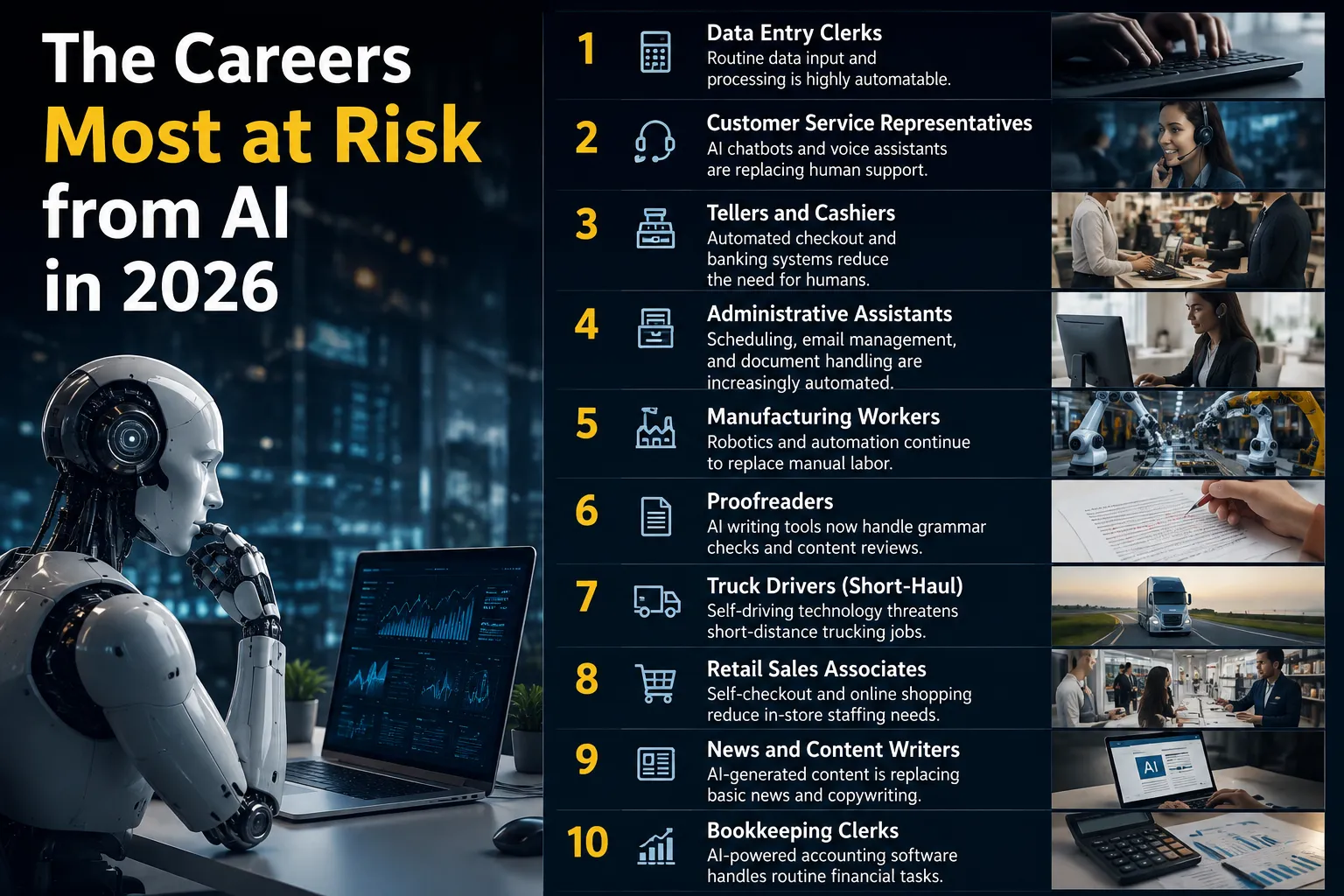
Not every profession faces the same level of disruption. The highest-risk roles generally involve repetitive, rules-based work with predictable workflows that AI systems can automate effectively.
Customer service representatives are among the most affected. Modern AI chatbots and voice assistants now resolve a large percentage of routine customer inquiries without human intervention. While complex cases still require human agents, companies often need fewer frontline support staff than before.
Administrative assistants are also experiencing significant change. AI scheduling tools, automated email management, meeting summarization, document generation, and workflow automation reduce many traditional administrative responsibilities. Professionals in these roles increasingly transition toward executive coordination, project management, or operations support.
Data entry specialists continue to see declining demand as intelligent document processing extracts information from invoices, forms, contracts, and spreadsheets automatically. Manual data handling is steadily being replaced by AI-powered automation platforms.
Basic content writers producing standardized articles, product descriptions, and repetitive marketing copy also face increased competition from generative AI. However, experienced writers who specialize in original research, storytelling, thought leadership, editorial strategy, technical expertise, or brand voice remain highly valuable because quality content still depends on human judgment and expertise.
Bookkeeping and entry-level accounting roles are changing as AI automates invoice processing, expense categorization, financial reconciliation, and reporting. Rather than eliminating accountants, the profession is shifting toward advisory services, financial strategy, forecasting, and business consulting.
Junior graphic designers creating simple layouts or social media graphics also encounter increased automation through AI image generation and design assistants. Nevertheless, branding, creative direction, visual identity development, and high-end design projects continue to require experienced professionals capable of understanding business goals and customer psychology.
Translation services focused on straightforward language conversion are increasingly supported by AI translation models. Human translators remain indispensable for legal documents, marketing campaigns, literary works, and culturally sensitive communication where nuance and context matter.
New Career Opportunities Created by Artificial Intelligence
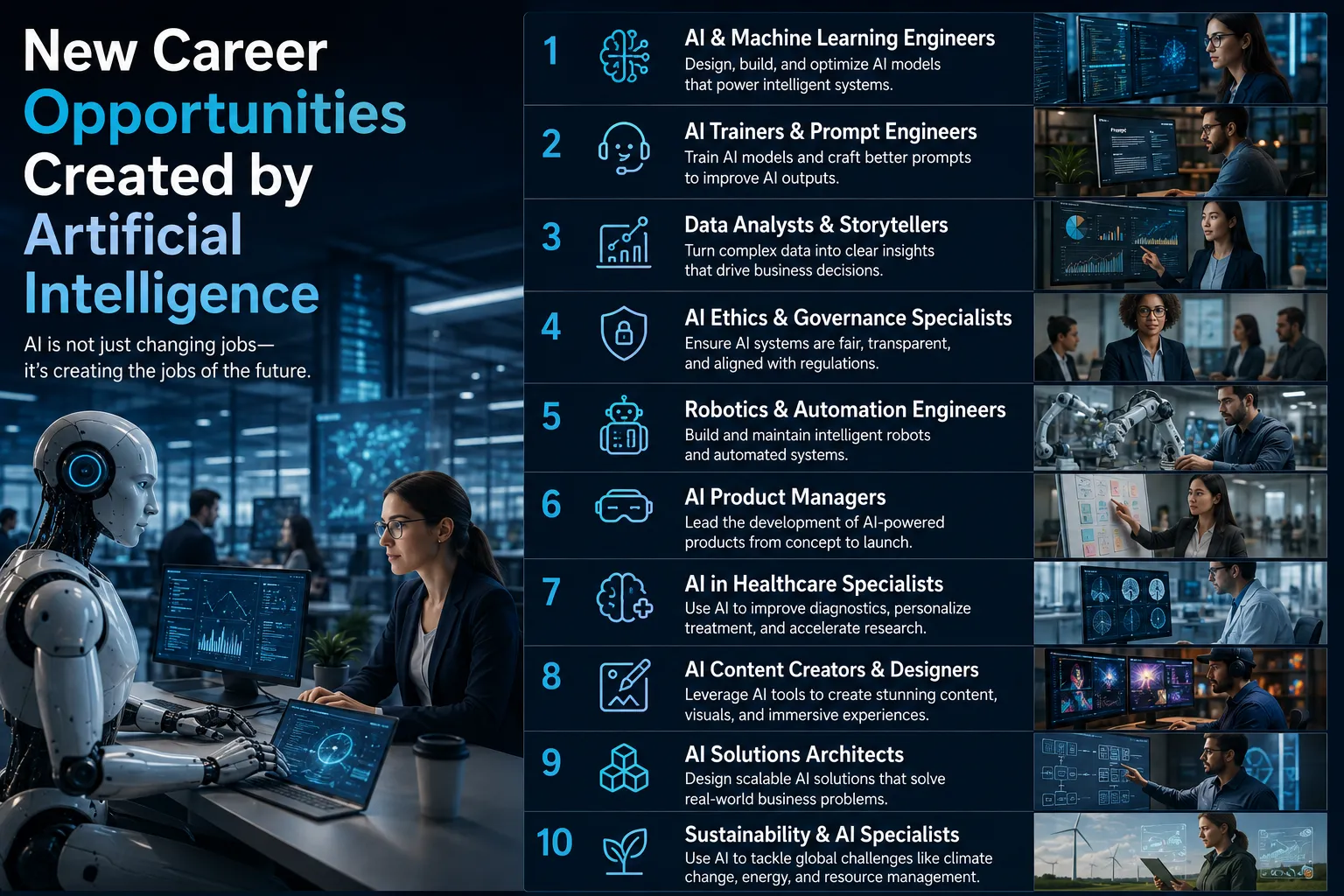
While headlines often focus on jobs at risk, AI is simultaneously creating entirely new career paths. Demand is growing rapidly for professionals who can build, manage, govern, and integrate AI into organizations responsibly.
AI specialists remain among the fastest-growing occupations. Machine learning engineers, AI developers, prompt engineers, AI integration consultants, and automation architects help organizations deploy intelligent systems that improve productivity while maintaining quality and compliance.
Cybersecurity professionals are becoming even more valuable as AI introduces new security challenges alongside new defensive capabilities. Organizations need experts who can protect AI infrastructure, detect sophisticated cyber threats, and secure sensitive business data.
Data professionals continue to enjoy strong demand. Data engineers, analytics specialists, business intelligence analysts, and data governance experts help organizations collect, organize, interpret, and protect information that powers AI systems.
AI ethics and governance roles are also expanding. Businesses increasingly require professionals who understand regulatory requirements, transparency, fairness, privacy, intellectual property, and responsible AI deployment. These specialists help organizations minimize legal and reputational risks.
Healthcare is seeing remarkable growth in AI-assisted careers. Medical professionals use AI for diagnostics, imaging analysis, treatment recommendations, and administrative support while remaining responsible for patient care and clinical decision-making. Technology enhances healthcare professionals rather than replacing them.
Education represents another evolving field. Teachers, instructional designers, and corporate trainers increasingly use AI to personalize learning, create educational materials, and monitor student progress. Human educators continue to provide mentorship, motivation, emotional intelligence, and critical thinking guidance that technology cannot replicate.
Businesses also need AI trainers who evaluate outputs, improve prompts, validate responses, identify hallucinations, and optimize AI performance for specific organizational needs. These hybrid roles combine domain expertise with AI literacy and are expected to grow significantly over the coming years.
The Human Skills That Will Matter Most in the AI Era
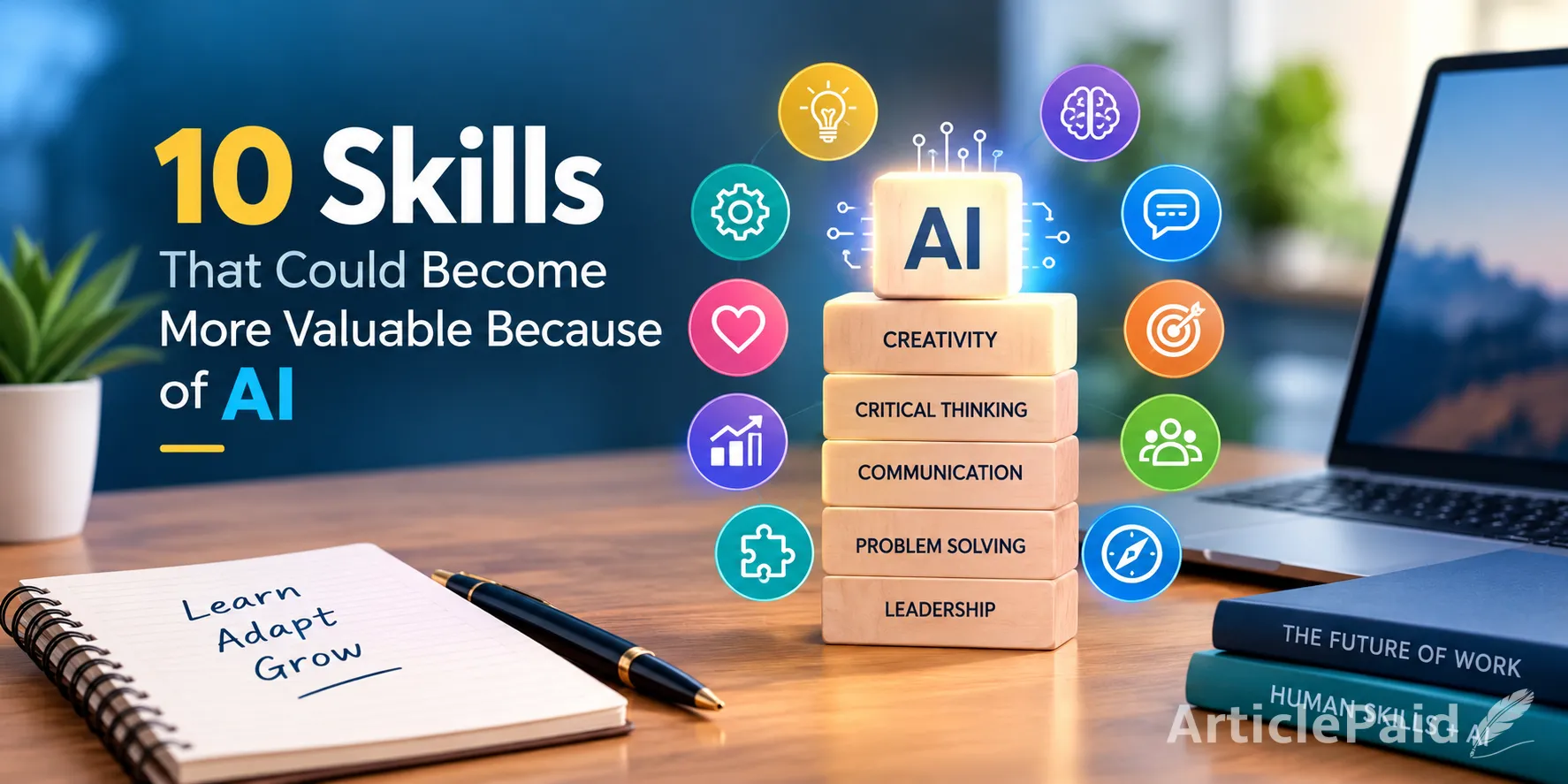
As automation expands, technical knowledge alone is no longer enough. Employers increasingly prioritize uniquely human capabilities that AI cannot easily reproduce.
Critical thinking is becoming one of the most valuable workplace skills. Professionals must evaluate AI-generated information, identify inaccuracies, question assumptions, and make informed decisions rather than accepting automated outputs without verification.
Creativity continues to distinguish successful professionals. While AI can generate ideas rapidly, human creativity involves original thinking, emotional resonance, strategic innovation, and cultural understanding. Organizations need people who can connect ideas, solve unfamiliar problems, and develop compelling solutions.
Communication skills remain essential across every industry. Explaining complex information, collaborating across teams, negotiating with stakeholders, managing clients, and building trust require emotional intelligence that technology cannot replace.
Adaptability has become a defining career advantage. AI tools evolve rapidly, meaning employees must continuously learn new platforms, workflows, and best practices. Professionals willing to embrace change typically outperform those who resist technological evolution.
Leadership is also growing in importance. Managers increasingly oversee hybrid teams where humans and AI work together. Effective leaders understand how to allocate responsibilities appropriately, maintain accountability, encourage innovation, and ensure ethical AI usage throughout the organization.
Digital literacy now extends beyond traditional computer skills. Employees should understand AI fundamentals, prompt engineering basics, data privacy, cybersecurity awareness, and responsible technology use regardless of their profession.
Continuous learning has effectively become a permanent job requirement. Online courses, professional certifications, industry conferences, and practical experimentation help workers remain competitive as workplace technology evolves.
Practical Advice for Future-Proofing Your Career
Preparing for an AI-driven future does not require becoming a software engineer. Most professionals can strengthen their long-term career prospects by combining industry expertise with AI literacy and human-centered skills.
Begin by identifying repetitive aspects of your current role. Instead of fearing automation, explore how AI can handle routine administrative work while allowing you to focus on strategic, creative, or relationship-based responsibilities. Employees who proactively adopt AI often become more productive and valuable to employers.
Invest time in learning popular AI tools relevant to your industry. Marketing professionals may benefit from mastering AI content platforms and analytics tools, while finance specialists can explore intelligent forecasting software. Practical experience is often more valuable than theoretical knowledge.
Develop expertise rather than remaining a generalist. Professionals with deep knowledge in healthcare, law, engineering, finance, manufacturing, or education are more difficult to replace because they combine specialized judgment with technological proficiency.
Strengthen your communication and collaboration abilities. As AI handles more technical execution, organizations increasingly rely on employees who can lead projects, build client relationships, facilitate teamwork, and solve complex business challenges.
Maintain a portfolio of measurable achievements instead of simply listing responsibilities on your résumé. Employers want evidence that you can create value, solve problems, improve efficiency, and adapt to new technologies.
Networking also becomes increasingly important. Building relationships within your industry provides access to emerging opportunities before they are publicly advertised and helps professionals stay informed about evolving skill requirements.
Finally, adopt a growth mindset. The history of technological innovation shows that while certain tasks disappear, new industries, professions, and opportunities consistently emerge. Professionals who remain curious, adaptable, and committed to lifelong learning are well positioned to thrive in the AI economy.
Conclusion
Artificial intelligence is fundamentally reshaping the global workforce in 2026, but its impact is more nuanced than simple job replacement. Most careers are evolving rather than disappearing, with routine tasks increasingly handled by AI while human professionals focus on creativity, strategic thinking, leadership, relationship-building, and complex decision-making.
The careers most at risk are those centered on repetitive, predictable work, including data entry, basic administrative support, routine customer service, and standardized content production. At the same time, demand is accelerating for AI specialists, cybersecurity professionals, data experts, healthcare practitioners, educators, consultants, and professionals who can successfully combine human expertise with intelligent technology.
The most successful workers will not be those who compete against AI but those who learn to work alongside it. Developing AI literacy, embracing continuous learning, strengthening interpersonal skills, and cultivating deep professional expertise will provide the greatest resilience in an increasingly automated world. As businesses continue integrating AI into everyday operations, adaptability—not automation—will become the defining factor for long-term career success.

















Responses (0)
Sign in to share your thoughts.
Sign in