
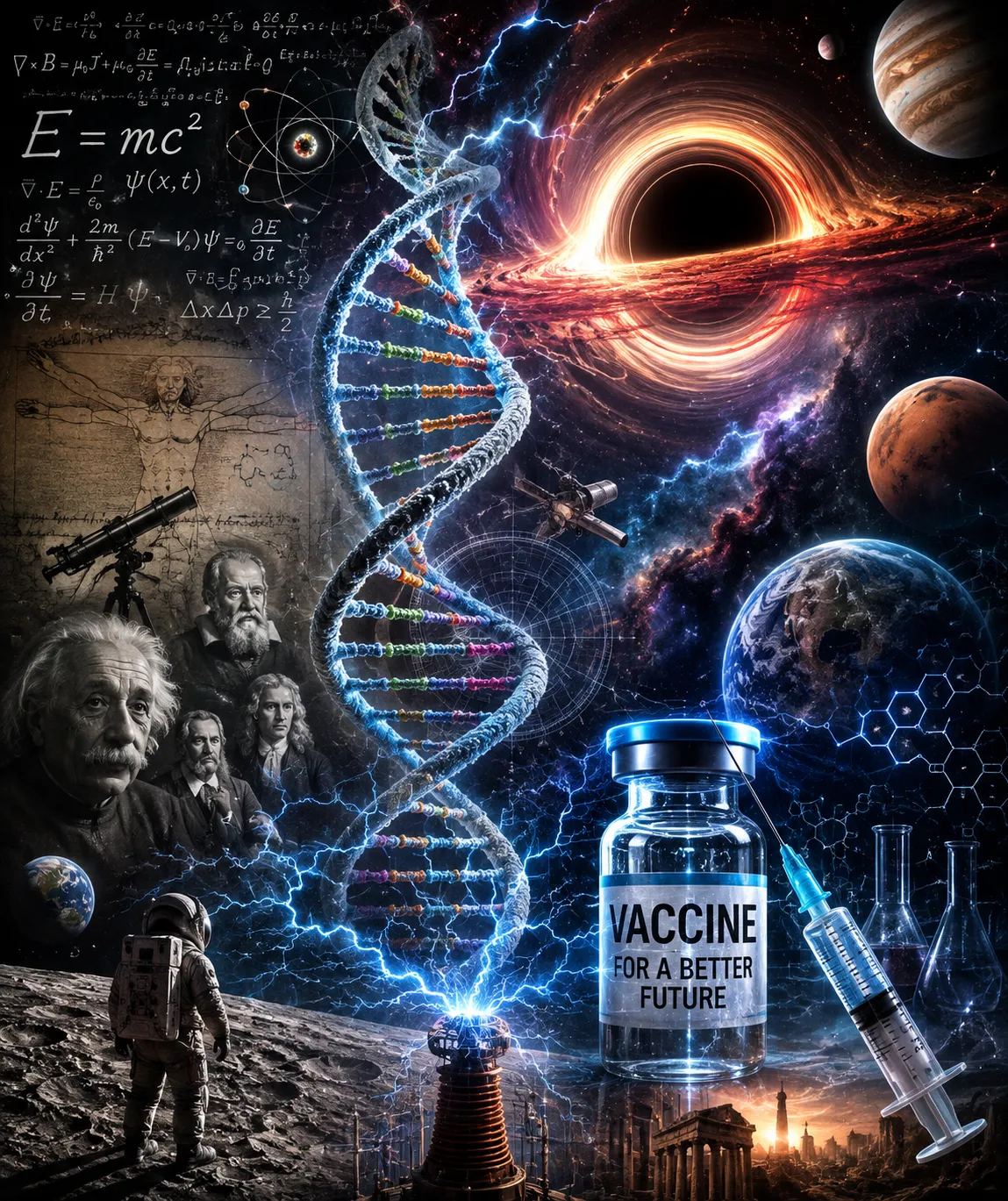
Human history is often told through wars, empires, and famous leaders. Yet the greatest turning points were often quiet moments in workshops, laboratories, and observatories where curious minds uncovered how the universe truly works. A single discovery could transform medicine, communication, agriculture, or our understanding of life itself. Many of these breakthroughs did not simply solve one problem—they reshaped civilization for generations.
Some discoveries took centuries to be fully appreciated, while others changed the world almost overnight. Together, they reveal a remarkable story of human curiosity and persistence. Here are twenty scientific discoveries that fundamentally changed humanity, explained in simple language while connecting the past with the modern world.
Fire and the understanding of combustion
Long before people understood chemistry, they discovered how to control fire. This was perhaps humanity's first great scientific achievement. Fire provided warmth, protection from predators, and the ability to cook food. Cooking made many foods easier to digest, allowing humans to gain more energy and improve nutrition.
Thousands of years later, scientists discovered that fire is a chemical reaction involving oxygen. This understanding helped launch modern chemistry and engineering. Today, knowledge of combustion powers engines, generates electricity, and even supports space exploration. Although we now seek cleaner energy sources, the discovery of how fire works remains one of civilization's foundations.
The wheel and mechanical principles
The invention of the wheel seems simple, but it introduced one of the most powerful ideas in physics: reducing friction. Early civilizations used wheels to transport heavy objects, making trade and agriculture far more efficient.
Modern engineering still relies on the same mechanical principles. Cars, bicycles, factory machines, and countless industrial systems depend on rotating components. Even advanced robots use concepts first demonstrated by the humble wheel thousands of years ago.
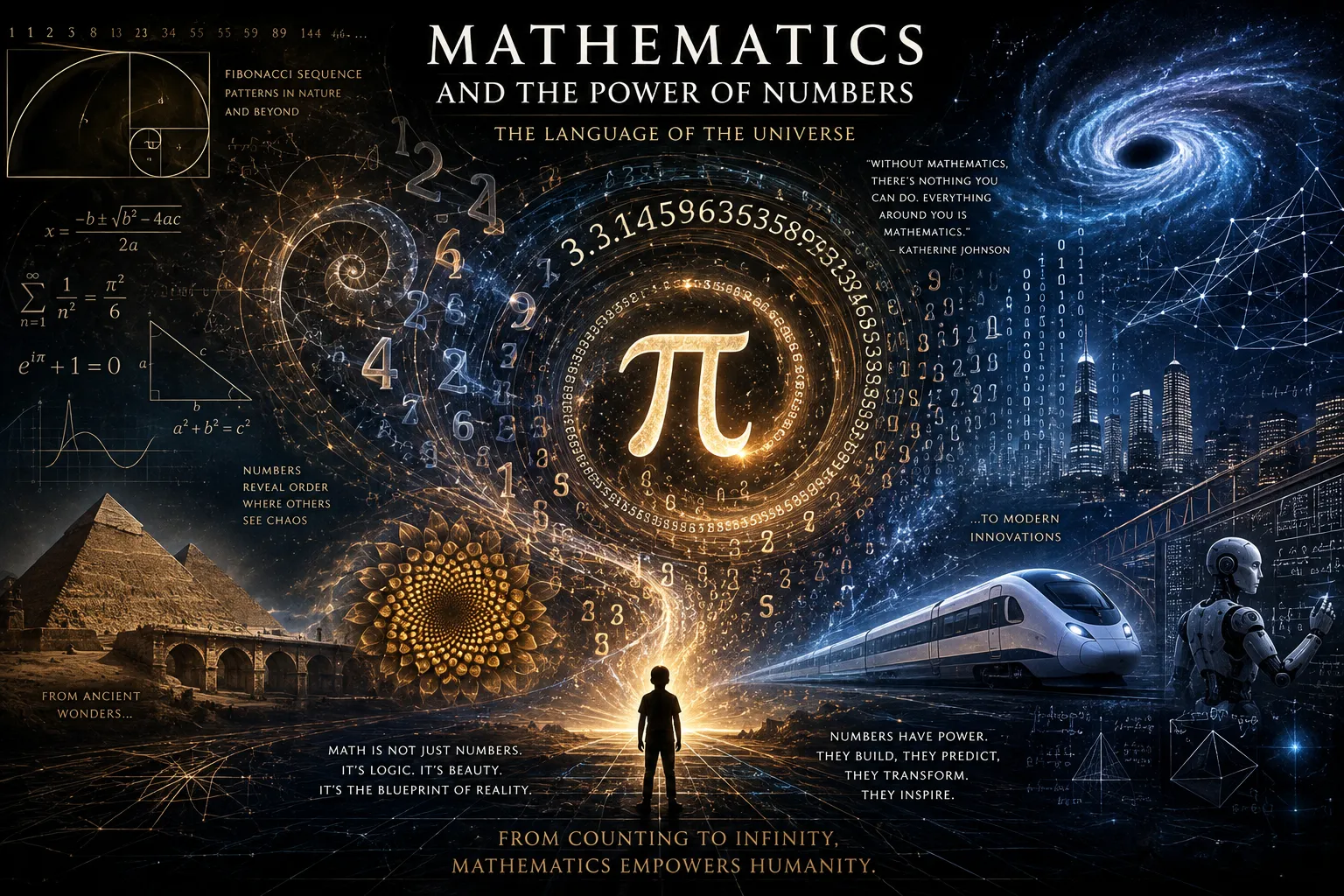
Mathematics and the power of numbers
Early civilizations realized that numbers could describe the world. Ancient Egyptians used mathematics to build pyramids, while Greek thinkers developed geometry to explain shapes and distances.
Today, mathematics forms the language of science. Computers, satellites, banking systems, medical research, and artificial intelligence all rely on mathematical models. Although many equations appear complicated, their purpose is simple: helping us understand patterns that would otherwise remain hidden.
The heliocentric model of the Solar System
For centuries, many people believed Earth stood at the center of the universe. This idea changed dramatically when astronomers proposed that Earth actually orbits the Sun.
The discovery challenged traditional beliefs and encouraged people to trust careful observation over assumptions. Later observations by Galileo and laws developed by Kepler strengthened this new model. Modern astronomy, planetary science, and space exploration all grew from this revolutionary change in perspective.
Gravity
When Isaac Newton explained gravity, he showed that the same force causing an apple to fall also keeps the Moon orbiting Earth. This unified two seemingly unrelated phenomena into one elegant explanation.
Gravity helps scientists predict planetary motion, launch satellites, and understand black holes. Even today, engineers calculate gravity every time they design bridges, aircraft, or space missions. Albert Einstein later refined our understanding with general relativity, but Newton's discovery remains essential in everyday science.
The microscope
The invention of the microscope opened an invisible world. Tiny organisms, cells, and tissues suddenly became visible for the first time.
Scientists realized that living things are made from incredibly small structures that cannot be seen with the naked eye. Modern microscopes allow researchers to study viruses, bacteria, cancer cells, and even individual molecules. Without this discovery, modern medicine would be impossible.
Blood circulation
In the seventeenth century, William Harvey demonstrated that blood continuously circulates through the body, pumped by the heart. Before this discovery, many incorrect ideas about the human body persisted.
Understanding circulation transformed medicine. Doctors could better explain diseases, perform safer surgeries, and develop treatments based on how blood transports oxygen and nutrients. Today, heart surgery, blood transfusions, and cardiovascular medicine all rely on Harvey's groundbreaking work.
Vaccination
For much of history, infectious diseases killed millions of people. Everything changed when Edward Jenner demonstrated that exposure to a harmless form of a disease could protect against a deadly one.
Vaccination trains the immune system to recognize dangerous viruses or bacteria before infection occurs. Since then, vaccines have prevented countless deaths and even eliminated smallpox worldwide. Modern vaccine technology, including mRNA vaccines, builds upon the same basic principle discovered more than two centuries ago.
Germ theory
People once believed disease resulted from bad air or mysterious forces. Scientists such as Louis Pasteur and Robert Koch showed that microscopic organisms cause many illnesses.
This simple idea transformed hospitals, food safety, and public health. Handwashing, sterilized surgical instruments, clean drinking water, and antibiotics all became possible because doctors understood the true cause of infections. Average life expectancy increased dramatically as a result.
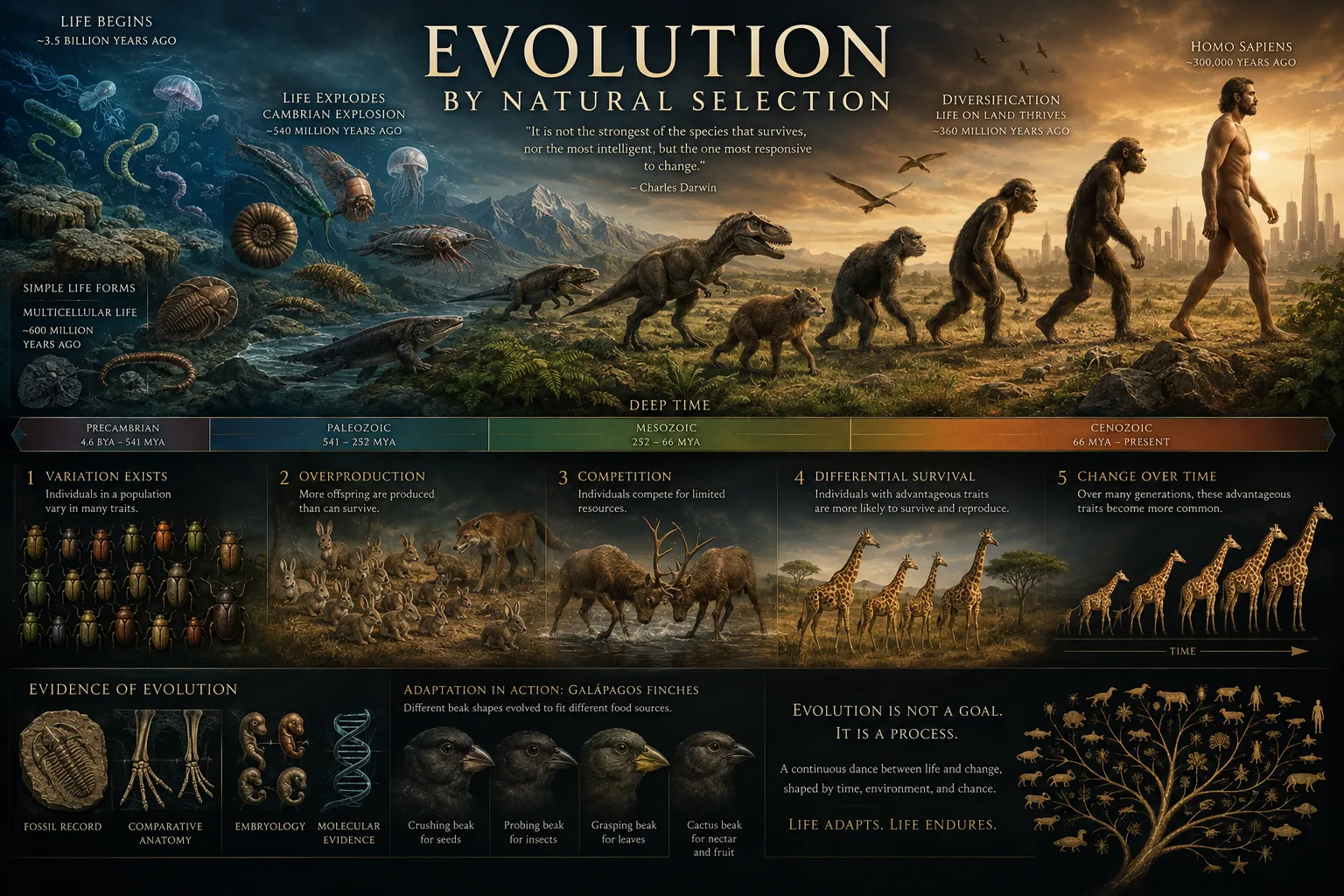
Evolution by natural selection
Charles Darwin proposed that species gradually change over time through natural selection. Individuals with useful traits are more likely to survive and pass those traits to future generations.
Evolution explains the incredible diversity of life on Earth. It also helps scientists understand antibiotic resistance, emerging diseases, conservation biology, and even human genetics. Far from being just a historical theory, evolution remains one of biology's central ideas.
Electricity
Although lightning fascinated humans for thousands of years, scientists gradually learned that electricity could be generated, controlled, and transmitted.
Electricity powers nearly every aspect of modern life. Homes, hospitals, factories, computers, and transportation all depend on reliable electrical systems. Without this discovery, modern civilization as we know it would simply not exist.
Electromagnetism
James Clerk Maxwell demonstrated that electricity and magnetism are different aspects of the same force. His equations predicted electromagnetic waves before they were experimentally detected.
This discovery paved the way for radio, television, radar, Wi-Fi, mobile phones, GPS, and satellite communication. Every wireless signal traveling through the air today traces its origins back to Maxwell's remarkable insight.
The periodic table
Chemists once struggled to organize the growing number of known elements. Dmitri Mendeleev created the periodic table, arranging elements according to repeating patterns in their properties.
The periodic table became a map of chemistry. It even predicted elements that had not yet been discovered. Today, it guides research into new materials, medicines, batteries, and clean energy technologies. Students around the world continue to learn chemistry through this elegant scientific framework.
DNA
Scientists eventually discovered that DNA contains the instructions for building every living organism. The famous double-helix structure explained how genetic information is stored and copied.
DNA research transformed biology, medicine, and agriculture. Doctors can identify inherited diseases, forensic scientists solve crimes, and researchers develop gene-based therapies. Modern biotechnology continues to expand because of our growing understanding of DNA.
Antibiotics
Alexander Fleming noticed that a particular mold killed harmful bacteria growing in his laboratory. This accidental observation led to the discovery of penicillin.
Antibiotics revolutionized medicine by allowing doctors to treat bacterial infections that had previously been deadly. Millions of lives have been saved through these medicines. Today, scientists also work to combat antibiotic resistance, reminding us that scientific discoveries require responsible use.
Plate tectonics
For centuries, continents seemed fixed in place. Scientists eventually discovered that Earth's surface consists of massive plates moving slowly over time.
Plate tectonics explains earthquakes, volcanoes, mountain ranges, and the movement of continents. It also helps researchers locate natural resources and better understand Earth's history. Even though the plates move only a few centimeters each year, their long-term effects shape the entire planet.
The structure of the atom
Ancient philosophers imagined matter consisted of tiny particles, but modern science revealed the detailed structure of atoms. Researchers discovered electrons, protons, and neutrons, fundamentally changing physics.
Understanding atoms enabled nuclear energy, medical imaging, radiation therapy, and semiconductor technology. It also revealed that ordinary matter is far more complex than anyone had imagined.
Semiconductors
The discovery that certain materials could carefully control electrical current led to the invention of the transistor. Tiny transistors eventually replaced bulky vacuum tubes.
Today, billions of transistors fit onto a single computer chip. Smartphones, laptops, medical equipment, satellites, and artificial intelligence systems all depend on semiconductor technology. This discovery sparked the digital revolution that defines the twenty-first century.
The expanding universe
Astronomers discovered that distant galaxies are moving away from each other, showing that the universe itself is expanding. This finding supported the idea that the universe began billions of years ago in an extremely hot, dense state.
Modern cosmology continues exploring dark matter, dark energy, and the earliest moments after the Big Bang. The discovery expanded not only our scientific knowledge but also our sense of humanity's place within the cosmos.
CRISPR gene editing
One of the newest revolutionary discoveries is CRISPR, a powerful method for editing DNA with remarkable precision. Originally found as part of a bacterial defense system, scientists adapted it into a tool for genetic engineering.
Researchers hope CRISPR will help treat inherited diseases, improve crops, and develop new medical therapies. Although important ethical questions remain, the technology represents one of the greatest scientific advances of modern times. Just as the microscope once revealed an invisible world, gene editing allows humanity to reshape life at its most fundamental level.
Science has never advanced through one spectacular moment alone. Every discovery builds upon earlier knowledge, connecting generations of thinkers across centuries. Fire led to chemistry, mathematics enabled physics, microscopes revealed cells, and DNA unlocked genetics. Together, these discoveries transformed human life from basic survival into an age of space exploration, artificial intelligence, and precision medicine.
The next revolutionary discovery may already be taking shape in a laboratory somewhere in the world. History suggests that the greatest breakthroughs often begin with a simple question, a careful observation, and the courage to challenge what everyone else assumes is true.






















Responses (0)
Sign in to share your thoughts.
Sign in