
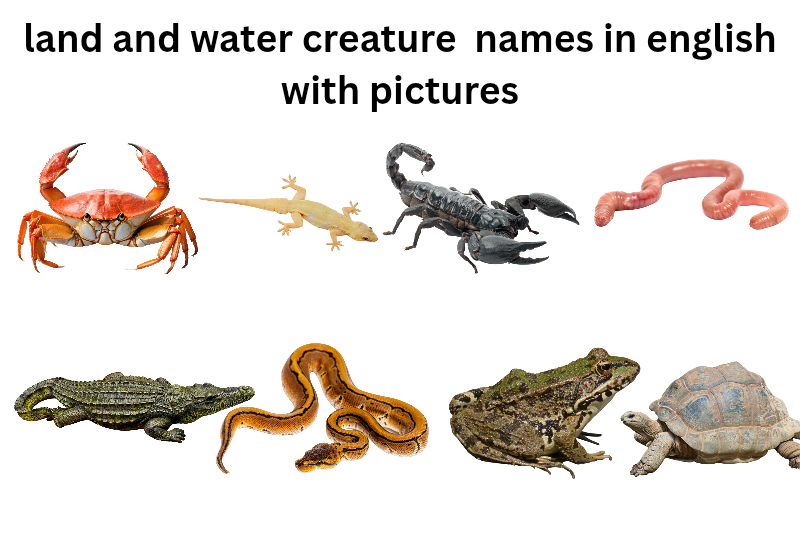
This blog introduces the names of various water and land creatures in English, along with clear pictures for each. It’s perfect for students, beginners, or anyone curious about animals. With simple descriptions and visuals, it helps readers easily recognize and learn about creatures from both land and water environments.

No.1 Crab
Crabs are fascinating sea creatures known for their hard shells, sideways walk, and powerful pincers. Found in oceans, freshwater, and on land, crabs play an important role in the ecosystem by cleaning up waste and feeding on small organisms. There are thousands of crab species, ranging in size and color. Crabs use their claws for defense, digging, and eating. While they may look tough, many species are soft underneath their shell and molt to grow. Crabs are also a popular seafood around the world, especially in coastal areas where they are freshly caught and cooked.

No.2 Chameleon
Chameleons are known for their color-changing skin, long tongues, and independently moving eyes. These reptiles live around in the world and are well adapted to trees. Chameleons change color not just for camouflage but also to communicate and regulate temperature. Their sticky, lightning-fast tongues help them catch insects in an instant. With zygodactylous feet and prehensile tails, they’re excellent climbers. Chameleons are sensitive to their environment and do best in warm, humid climates. Their quiet nature and unique appearance make them a favorite among reptile lovers and wildlife photographers.

No.3 Crocodile
Crocodiles are large, powerful reptiles found in rivers, lakes, and wetlands in tropical regions. Known for their strong jaws, armored skin, and stealthy hunting skills, crocodiles are apex predators. They can stay underwater for long periods and strike with incredible speed. Despite their fearsome reputation, crocodiles play a key role in maintaining balance in aquatic ecosystems. They’ve been around since the age of dinosaurs, showing little change over millions of years. Though dangerous in the wild, crocodiles are also admired for their strength, survival skills, and ancient heritage.

No.4 Earthworm
Earthworms may seem simple, but they are vital for healthy soil. Living underground, they tunnel through the earth, which helps air and water reach plant roots. Earthworms feed on organic matter like dead leaves, breaking it down into rich nutrients. Their castings (waste) improve soil fertility, making them a farmer’s best friend. Though they have no eyes, earthworms are sensitive to light and moisture. They breathe through their skin and are most active in moist environments. Small, quiet, and hardworking, earthworms are essential to gardening, farming, and nature’s recycling system.

No.5 Frog
Frogs are amphibians known for their jumping legs, smooth skin, and loud croaks. They begin life as tadpoles in water, growing legs and lungs as they mature into adults. Frogs live both in water and on land, often near ponds, swamps, or rainforests. Their skin absorbs water and helps with breathing, so they need moist environments. Frogs eat insects, making them helpful in controlling pests. Their long tongues and quick reflexes make them excellent hunters.

No.6 Lizard
Lizards are cold-blooded reptiles with scaly skin, long tails, and quick reflexes. Found in deserts, forests, and even cities, they vary in size and color depending on the species. Most lizards eat insects, while some larger ones eat plants or small animals. They can shed and regrow their tails if threatened. Many lizards are harmless and help control pests in gardens. With their sharp vision, quiet movements, and sun-loving behavior, lizards are interesting creatures to observe.

No.7 Snail
Snails are slow-moving creatures known for their spiral shells and soft bodies. They move using a muscular foot that glides on slime, helping them travel across rough surfaces. Snails are found in gardens, forests, freshwater, and even oceans. They feed on plants, fungi, and sometimes small animals. Their shell provides protection from predators and harsh weather. Snails are most active in moist, cool conditions and often come out after rain. Though often seen as pests in gardens, snails play an important role in breaking down organic matter and keeping ecosystems healthy.

No.8 Scorpion
Scorpions are arachnids with eight legs, a pair of pincers, and a curved tail ending in a stinger. Found in deserts, forests, and grasslands, they’re nocturnal hunters feeding mainly on insects. Scorpions use their pincers to grab prey and their stinger to inject venom. While many species look intimidating, only a few are dangerous to humans. Scorpions glow under ultraviolet light, a feature that fascinates scientists. Adapted to dry environments, they can survive with little food or water for weeks.

No.9 Tortoise
Tortoises are land-dwelling reptiles known for their dome-shaped shells and slow pace. They can live for many decades—some over 100 years—and are often seen as symbols of patience and wisdom. Tortoises are herbivores, feeding on grass, fruits, and leafy plants. Their hard shells protect them from predators, and they withdraw inside when threatened. Found in dry regions, forests, and grasslands, tortoises are calm creatures that play a peaceful role in nature. Many species are protected due to habitat loss and illegal pet trade.

No.10 Snake
Snakes are legless reptiles known for their flexible bodies, forked tongues, and smooth, scaly skin. They move by slithering and can be found in forests, deserts, water, and grasslands. Some snakes are venomous, using their fangs to inject venom into prey, most snakes are harmless and shy. They play an important role in nature by controlling pests like rats and insects. Snakes shed their skin as they grow, a symbol of renewal in many cultures. They’re silent, fascinating hunters with incredible survival skills.

No.11 Python
Pythons are large, non-venomous snakes known for their strength and size. They kill prey by wrapping around and suffocating . Found in Africa, Asia, and Australia, pythons live in forests, grasslands, and near water. They can grow very long—some over 20 feet—and eat animals as big as deer. Pythons are calm by nature and avoid humans unless threatened. Their slow digestion means they can go weeks or even months between meals. Pythons are important predators in the wild and are also popular in zoos and reptile collections.





















Responses (0)
Sign in to share your thoughts.
Sign in