Menopause: A Natural Phase in Women's Life


Menopause is a natural stage in every woman's life that marks the end of menstrual cycles. It is not a disease but a biological transition.
It usually occurs between the ages of 45 and 55. A woman is considered to have reached menopause when she has not had a period for 12 consecutive months. The years leading up to it are called perimenopause, when hormone levels begin to fluctuate.
The main cause is a natural decline in reproductive hormones. As the ovaries produce less estrogen and progesterone, the body responds with various physical and emotional changes. These hormonal shifts can affect several body systems.
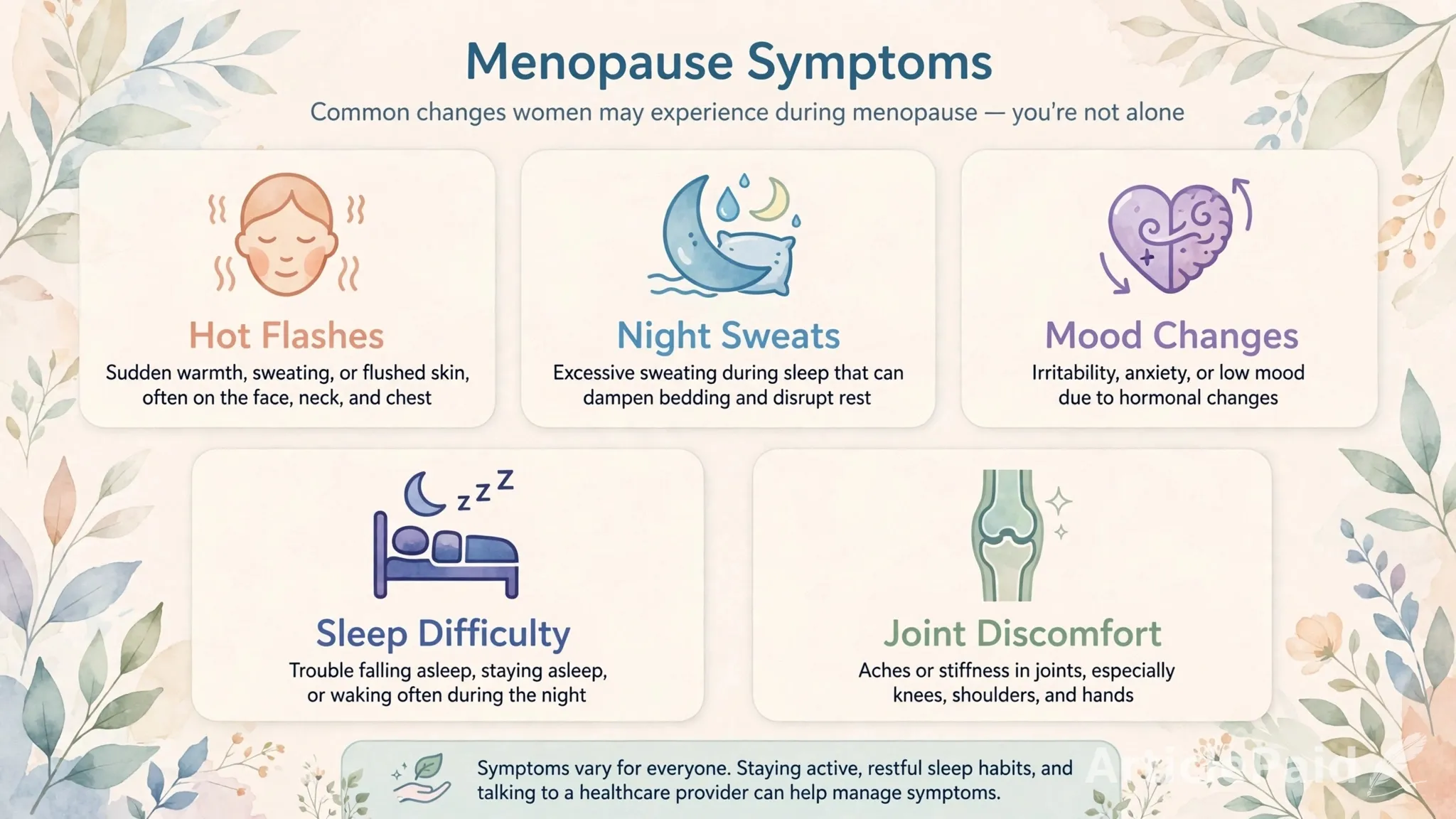
Common symptoms vary from woman to woman. Many experience hot flashes, night sweats, and difficulty sleeping. Some notice mood changes, increased irritability, or trouble concentrating. Physical symptoms may include vaginal dryness, joint discomfort, and changes in hair and skin. Irregular periods are often among the first signs.
The emotional impact is equally important. Some women feel relieved that their periods are ending, while others may experience sadness or anxiety about this new stage of life. Understanding and encouragement from family and friends, along with open conversations, can make the transition easier.

There are several ways to manage symptoms and maintain good health.
Eating a balanced diet rich in calcium and vitamin D helps support bone health. Regular physical activity, such as walking, yoga, or strength training, can improve mood, sleep, and bone strength. Maintaining a consistent sleep schedule and limiting caffeine and alcohol may also help reduce hot flashes and improve sleep quality.
Stress management techniques, such as deep breathing, meditation, and spending time outdoors, can further support emotional well-being.
If symptoms are severe or interfere with daily life, it is important to consult a doctor. Heavy bleeding, persistent low mood, or frequent palpitations should also be discussed with a healthcare professional. Any bleeding after 12 consecutive months without periods needs medical evaluation. A doctor can offer guidance and discuss suitable treatment options if necessary.
Menopause marks the beginning of a new chapter. With awareness, healthy habits, and the right support, women can navigate this stage with confidence and maintain their overall well-being.










Responses (0)