How to Stay Hydrated the Right Way Without Overhydrating – Water
Water is essential for good health, but many people make a common mistake when drinking it. Some drink several glasses of water at once, thinking it will…

Introduction
Water is essential for good health, but many people make a common mistake when drinking it. Some drink several glasses of water at once, thinking it will keep them better hydrated. However, drinking too much water in a short period can disturb the body's natural balance. The better approach is to spread water intake throughout the day rather than drinking large amounts all at once.
What Are the Side Effects of Overhydration?
When you drink excessive amounts of water in a short period, it can lower the sodium level in your blood. This condition is called hyponatremia. Low sodium levels can cause nausea, headaches, fatigue, confusion and muscle cramps. In severe cases, it can even lead to seizures. Drinking water too quickly does not improve hydration; instead, it can put your body's fluid balance at risk.
What Is the Right Routine for Drinking Water?
There is no fixed amount of water that works for everyone. Many adults need around 8–9 cups of fluids daily, but their requirements can vary depending on weather, physical activity, diet and individual health.

A simple approach is to drink one glass of water at a time instead of several glasses together. After finishing one glass, leave a comfortable gap before drinking the next. You do not need to drink another glass immediately. Spread your water intake throughout the day and drink according to your thirst and daily needs.
You can start your morning with a glass of water, have another between breakfast and lunch, drink water around lunchtime, and continue at regular intervals throughout the afternoon and evening. You may need more water during hot weather or after physical activity.
What Are the Benefits of Staying Properly Hydrated?
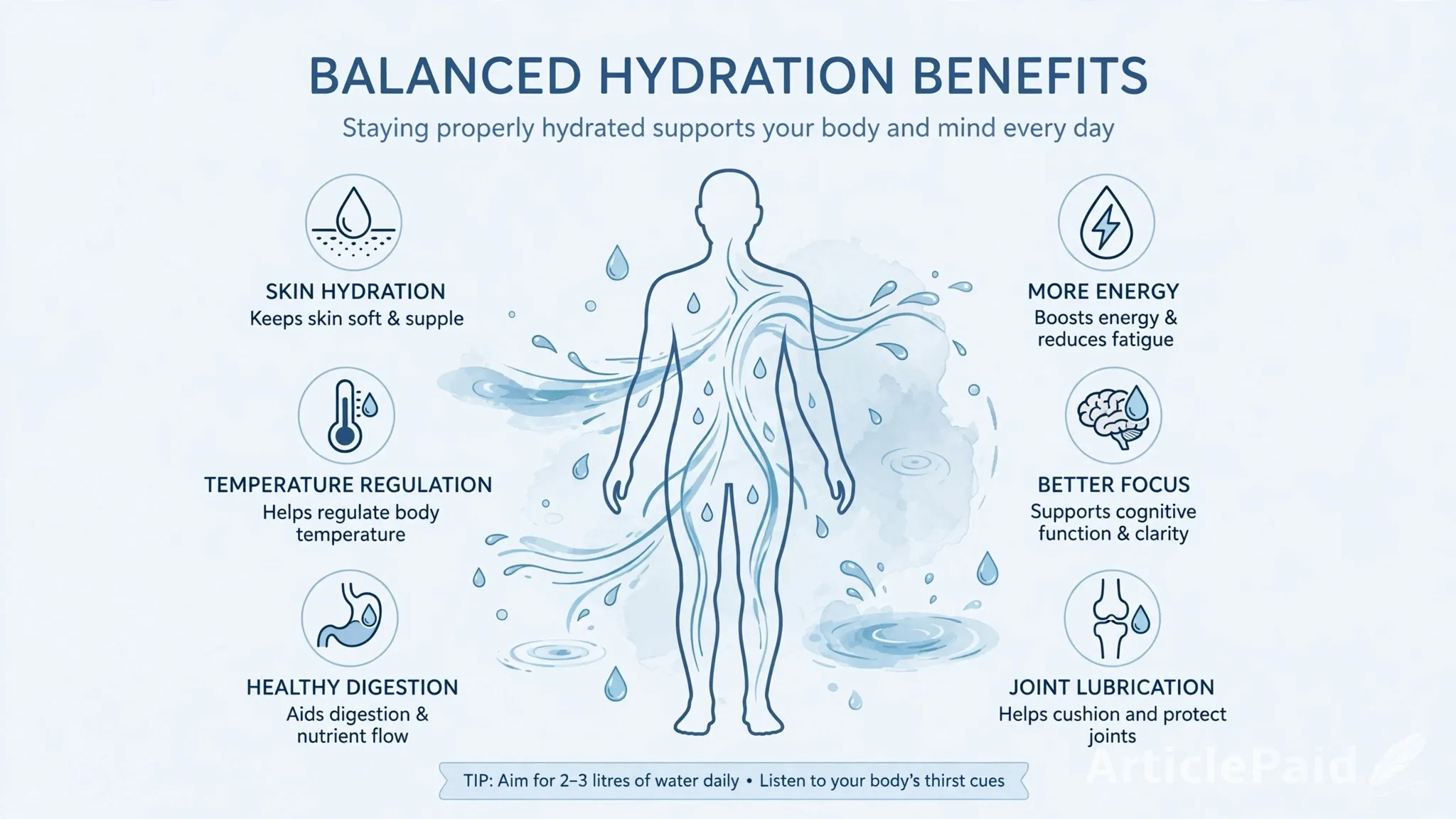
Drinking enough water supports several important body functions. It helps regulate body temperature, supports digestion, maintains normal blood circulation and allows the kidneys to remove waste products through urine.
Proper hydration can also help prevent dehydration-related tiredness and headaches. It supports concentration and helps your body function efficiently throughout the day.
The biggest benefit is maintaining balance. Remember, the goal is not to drink as much water as possible but to give your body the fluids it needs without forcing excessive amounts.














Responses (0)