
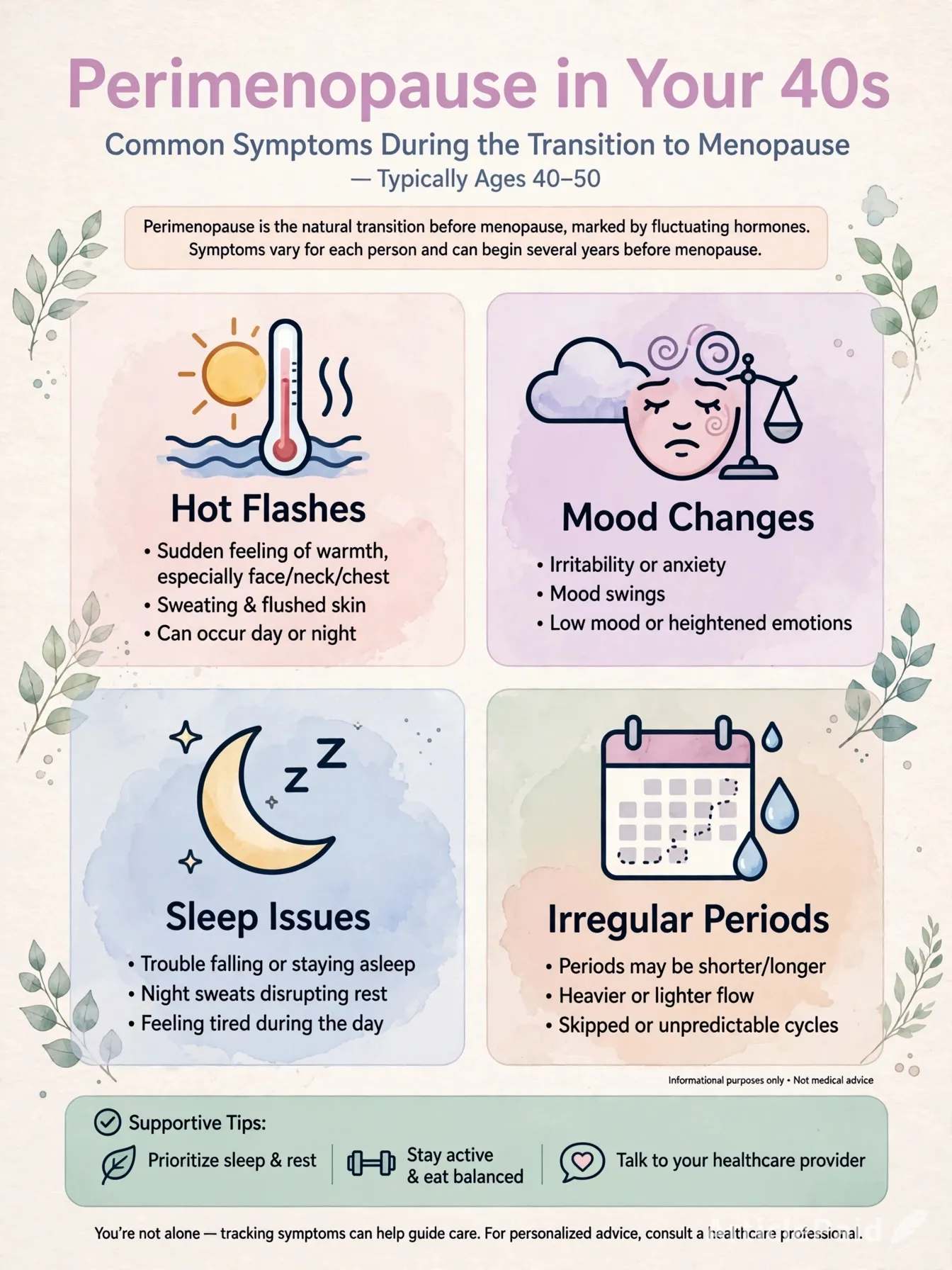
A clear, evidence-based guide to the years before menopause
You are waking up at 3 a.m. for no reason. Your period came early last month, skipped this month, and then showed up heavier than you expected. Little things irritate you more than they used to. Nothing is clearly wrong, yet nothing feels quite like you. For a lot of women, this is perimenopause, and very few of us were warned it was coming.
What Is Perimenopause?
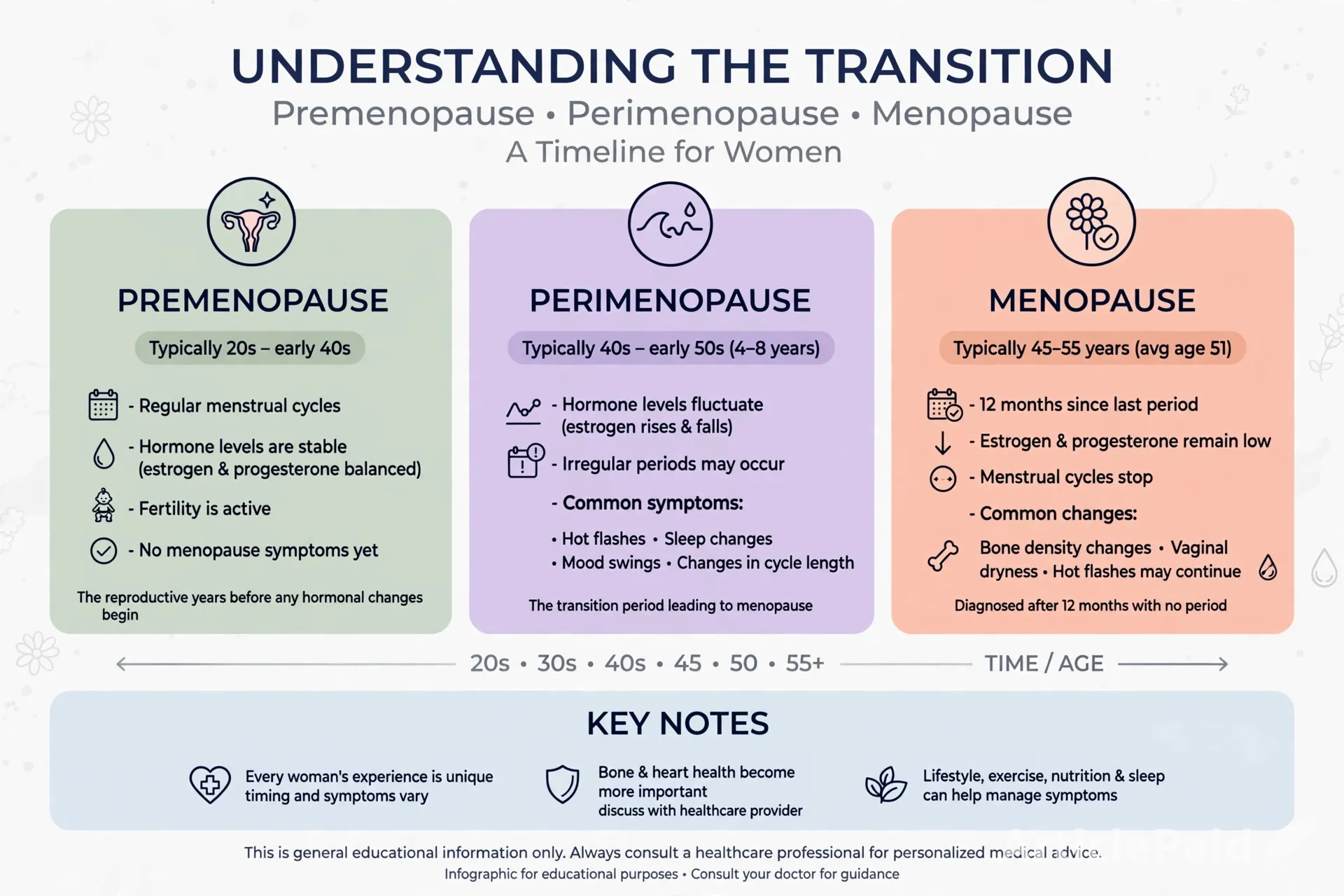 Perimenopause is the stretch of time before menopause, when your body is slowly getting ready to stop having periods. Doctors sometimes call it the menopausal transition. The word that matters most here is fluctuation. According to Mayo Clinic, estrogen and progesterone don’t simply fade away; they rise and fall, and that unevenness is behind many of the changes women notice. Once you have gone twelve months in a row without a period, you have reached menopause, and perimenopause is officially over.
At What Age Does Perimenopause Start?
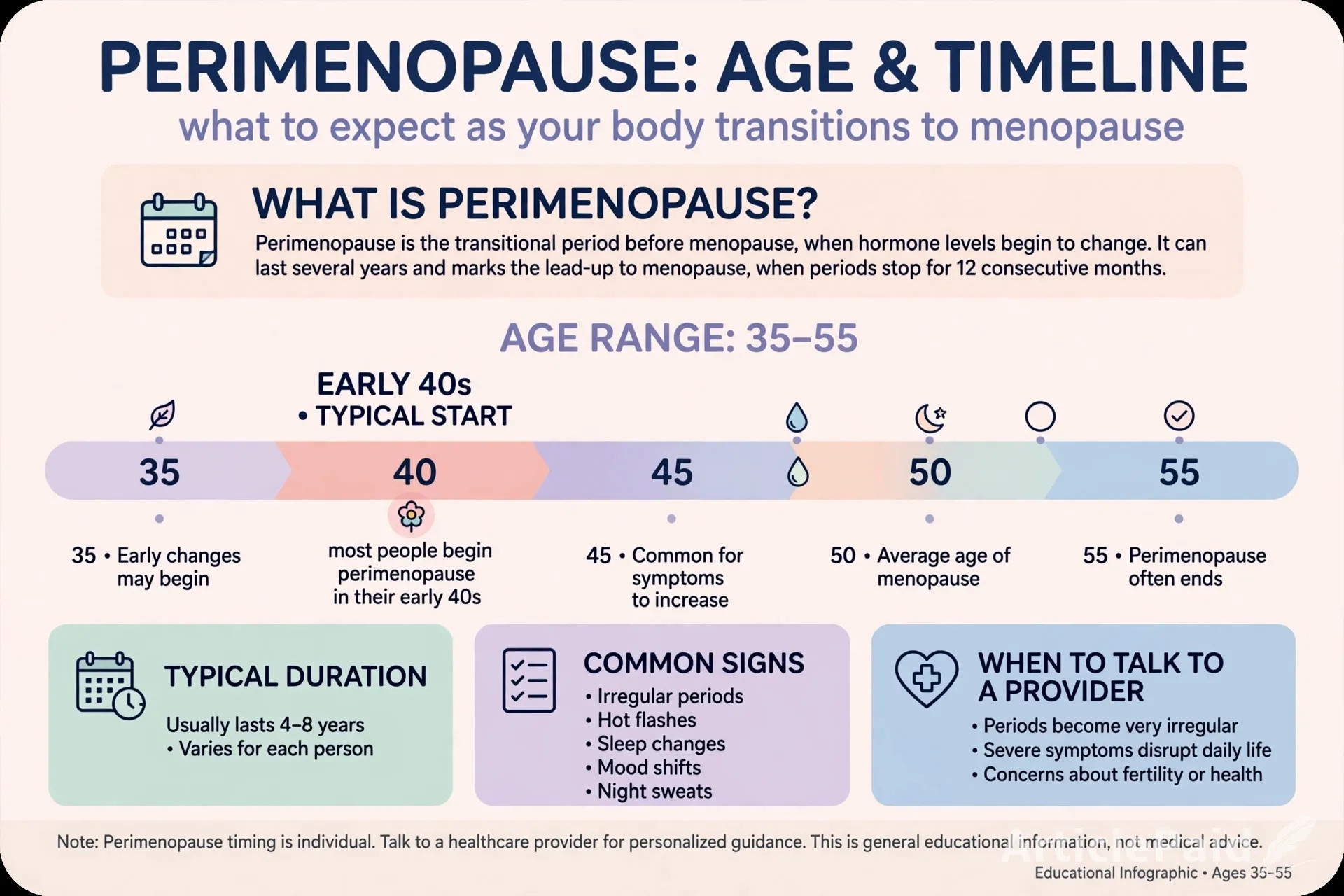 There is no single starting line. Many women first notice irregular periods in their 40s, but Mayo Clinic notes that some see changes as early as their 30s and others not until their 50s. A few things can bring it on earlier. Smoking is one of them: menopause arrives one to two years sooner in smokers. A family history of early menopause, chemotherapy or pelvic radiation, and certain surgeries can also play a part, as can conditions such as thyroid disease or other autoimmune disorders.
Common Perimenopause Symptoms
No two women have the same experience, and some barely notice anything at all. These are the changes most often described.
Irregular periods. Cycles may get shorter, longer or simply unpredictable, and the flow can swing from light to heavy. Mayo Clinic says a cycle length that is consistently off by seven days or more can point to early perimenopause, while going 60 days or more between periods suggests the late stage.
Hot flashes and night sweats. Many women get them, though how strong they are, how long they last and how often they come varies a great deal from person to person.
Sleep trouble. Night sweats are a common cause, but sleep patterns can change even when you have no hot flashes at all.
Mood changes. Irritability, mood swings and a higher risk of depression can show up, especially in women who have had premenstrual mood problems, postpartum depression, depression or anxiety in the past. Mood changes have plenty of causes unrelated to hormones, so it’s worth not blaming everything on perimenopause.
Vaginal and bladder changes. Lower estrogen can leave tissue drier and less elastic. That may cause pain during sex, burning when you urinate and more frequent urinary or vaginal infections. Some women also leak urine more often.
The quiet changes you can’t feel. Bone is lost faster than it is replaced, which raises the risk of osteoporosis. Cholesterol shifts too, with LDL (the “bad” kind) tending to rise and HDL (the “good” kind) often falling, which adds to heart disease risk over time. You won’t notice either one, which is exactly why they deserve a conversation with your doctor.
Can You Still Get Pregnant?
Yes. Fertility drops as ovulation becomes irregular, but pregnancy is still possible as long as you are having periods. If you don’t want to get pregnant, Mayo Clinic advises using birth control until you have gone 12 months without a period.
When Bleeding Is a Reason to See a Doctor
Irregular periods are normal in perimenopause, but some patterns aren’t worth waiting out. Book an appointment if bleeding is very heavy, lasts longer than seven days, happens between periods, or if your periods keep arriving less than 21 days apart. And if you have gone a full year without a period and then bleed again, tell your doctor promptly, since it can signal a problem that needs attention.
How Long Do Symptoms Last, and What Helps?
Honest answer: it depends. Hot flashes in particular vary in length, severity and frequency, and many women never need treatment. A medical overview from StatPearls notes that treatment makes sense when hot flashes get in the way of daily life or sleep, and that for most women they eventually resolve, usually after about five years. Of the options available, systemic estrogen is the most effective, cutting hot flash frequency by around 75 percent, but only a few treatments are FDA-approved and hormone therapy isn’t right for everyone. That is a decision to make with a doctor who knows your history, not something to settle from a blog post, this one included.
Everyday Habits Worth Your Attention
Because bone and heart health are quietly affected, perimenopause is a sensible time to ask your doctor about bone density, calcium, vitamin D and heart-friendly eating. If you smoke, stopping is one of the clearest steps you can take. Beyond that, the unglamorous basics can make days easier: a steady sleep routine, a cooler bedroom, regular movement, and a simple journal where you note your cycle, sleep and mood for a few months. That journal will make your next appointment far more useful than trying to remember everything on the spot.
A Caution About Online Menopause Advice
Perimenopause has become a big commercial topic, and not everything sold around it is backed by good evidence. A 2026 study in JAMA Network Open looked at menopause-related Google searches in the United States, the United Kingdom and Australia, and found growing commercialization in how people search. The most searched commercial terms involved supplements such as black cohosh and digital services like apps. Search data can’t tell us how good the information people read actually is, as the authors themselves acknowledge, but it is a fair reminder to check claims against reliable medical sources before spending money.
Frequently Asked Questions
How long does perimenopause last?
It differs for every woman. It begins when your cycles and symptoms start to shift andends once you have gone 12 months without a period.
Can perimenopause start in your 30s?
Yes. Some women notice changes in their 30s, although the 40s are more typical.
Is perimenopause the same as menopause?
No. Perimenopause is the transition. Menopause is the point reached after 12 months in a row with no period.
Do I need treatment for perimenopause?
Not always. Many women manage well without it. If symptoms disrupt your sleep, work or relationships, talk to a healthcare professional about your options.
Which symptoms mean I should see a doctor?
Very heavy bleeding, bleeding that lasts longer than seven days, bleeding between periods, cycles shorter than 21 days, or any bleeding after 12 months without a period.
References
This article draws on Mayo Clinic Staff, “Perimenopause: Symptoms and causes,” Mayo Clinic, updated August 22, 2026 (mayoclinic.org/diseases-conditions/perimenopause/symptoms-causes/syc-20354666); Farina FR et al., JAMA Network Open, published June 4, 2026, doi:10.1001/jamanetworkopen.2026.16596; and “Hot Flashes,” StatPearls, National Library of Medicine, NCBI Bookshelf (NBK539827). This article is for general information and is not a substitute for medical advice.



















Responses (0)
Sign in to share your thoughts.
Sign in