

Easy Ways to Improve Your Health and Well-Being Every Day Good health takes time to develop.
1. Start Your Day With a Nutritious Breakfast
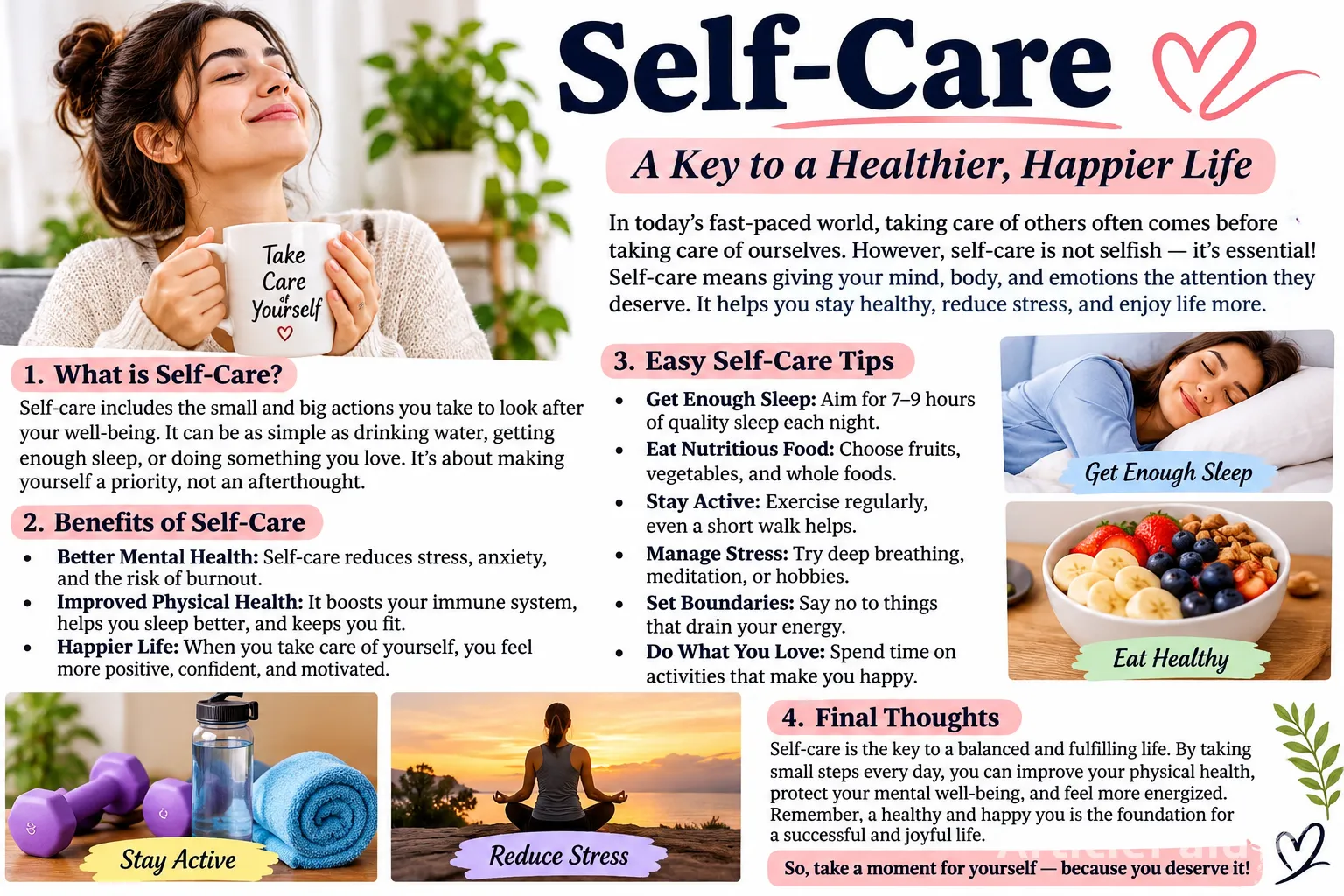
After a night of fasting, breakfast can provide your body with essential nutrients. Consider eggs, oatmeal, yogurt, fruit, and whole-grain toast as alternatives to sugary cereals, pastries, and highly processed foods. Healthy fats, protein, and fiber in a well-balanced breakfast can help make meals more satisfying and provide steady energy throughout the day.
2. Include More Vegetables and Fruits Fruits and vegetables provide vitamins, minerals, fiber, and many naturally occurring plant compounds. Consuming a wide range of vibrant fruits and vegetables can help you get a wider range of nutrients. Try including vegetables in your lunch and dinner, and keep fresh fruit on hand for a quick snack.

3. Drink Enough Water
Numerous bodily functions depend on water. Symptoms like thirst, tiredness, headache, and poor concentration may be caused by dehydration. Individual fluid requirements vary based on activity, climate, diet, health, and other factors. A simple way to help stay hydrated throughout the day is to drink water frequently.
4. Maintain Physical Activity Regular physical activity supports cardiovascular health, muscle strength, mobility, and overall fitness. To get more active, you don't necessarily need a pricey gym membership. Daily movement can be facilitated by household activities, recreational sports, stretching, cycling, and walking. If you haven't exercised in a while, starting slowly can help you keep the habit.
5. Make Sleep a Priority
Sleep is essential to both mental and physical health. Adults typically require seven or more hours of sleep each night, though each person's requirements may vary. Better sleeping habits may be supported by a regular sleep schedule, a comfortable sleeping environment, and limiting stimulating activities before bed.
6. Eat less food that has been highly processed. While diets that heavily rely on highly processed foods may provide excessive amounts of added sugars, sodium, or unhealthy fats while providing less variety in nutrients, they can also be convenient. This does not mean every processed food needs to be avoided. Instead, try to build most meals around minimally processed foods such as vegetables, fruits, whole grains, beans, nuts, seeds, eggs, fish, and other nutrient-rich choices.
7. Manage Everyday Stress
Stress is a normal part of life, but prolonged or overwhelming stress can affect overall well-being. Simple activities such as walking outdoors, deep breathing, hobbies, social connection, or taking short breaks may help people manage everyday stress.
It's just as important to find healthy ways to unwind as it is to eat well and exercise regularly.

8. Build Healthy Habits Gradually
When trying to improve their health, one of the biggest mistakes people make is trying to change everything at once. Extreme changes can be difficult to maintain.
Instead, pick one or two goals that are doable. You could start by eating vegetables for dinner or going for a 20-minute walk several days a week. You can make another positive change once the habit is ingrained.
In conclusion Living a healthy lifestyle does not have to be difficult. Better overall well-being can be improved by eating nutritious foods, exercising frequently, getting enough sleep, drinking enough water, managing stress, and maintaining consistent daily routines. Focusing on practical routines that can become a part of your daily life is the most sustainable strategy. Small steps, repeated consistently, can create meaningful long-term changes.





















Responses (0)
Sign in to share your thoughts.
Sign in