
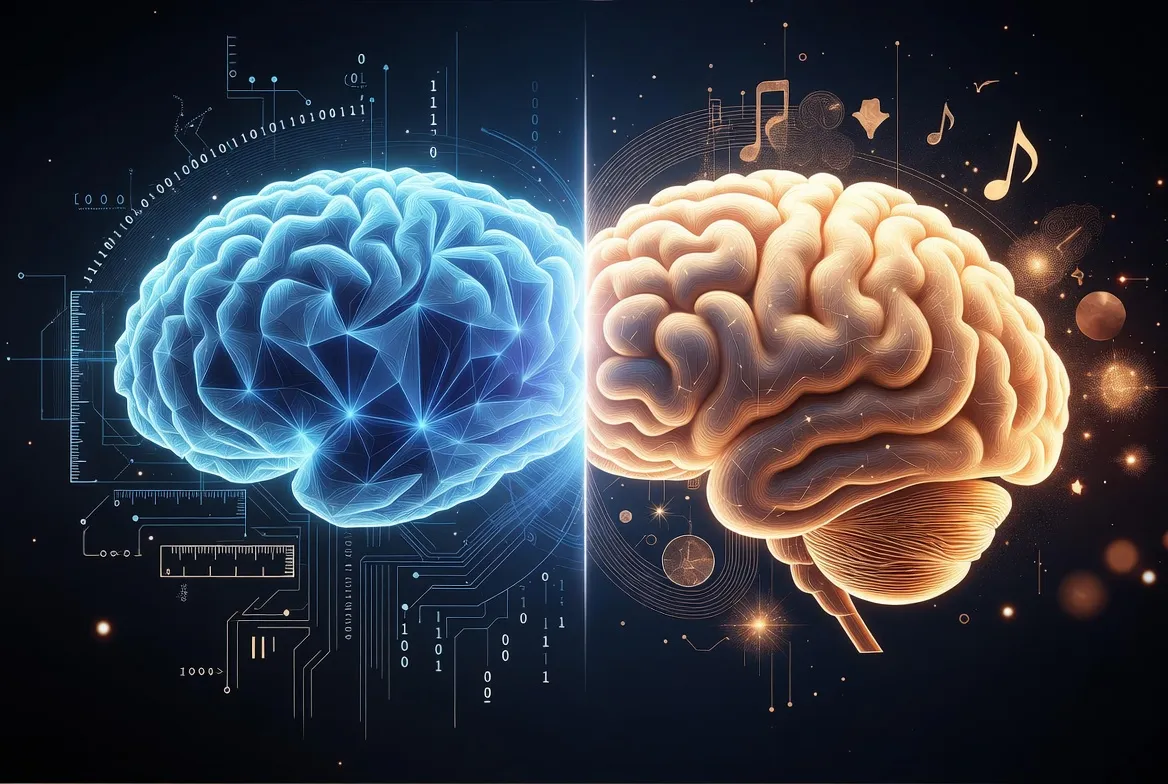
Straight Mind vs Perceptive Mind
Every human brain runs two powerful operating systems. One is the straight mind—logical, linear, and precise. The other is the perceptive mind—intuitive, pattern-seeking, and deeply sensitive. Understanding the difference between them reveals why some people solve problems like engineers while others grasp truths that numbers alone cannot explain.
The straight mind works like a high-speed calculator. It prefers clear rules, step-by-step reasoning, and measurable evidence. It asks: “What are the facts? What is the sequence? What can be proven?” This mode of thinking built modern science, mathematics, law, and technology. It excels at analysis, planning, and eliminating error. When you carefully check a bank statement, follow a recipe exactly, or debug computer code, you are using your straight mind. It values consistency and hates ambiguity.
The perceptive mind operates differently. It absorbs vast amounts of information at once—tone of voice, body language, atmosphere, subtle patterns—and forms rapid, often wordless insights. It notices what “feels off” before it can explain why. Artists, skilled therapists, experienced doctors making a diagnosis from incomplete data, and parents who instantly sense their child’s mood all rely heavily on this capacity. The perceptive mind is not anti-logic; it simply processes reality in parallel rather than in a straight line. It detects relationships, emotions, and possibilities that pure analysis might miss.
Neuroscience supports this distinction. While the old “left brain = logic, right brain = creativity” idea is oversimplified, research shows that different neural networks favor different styles. The prefrontal cortex and language centers dominate sequential reasoning. Broader networks involving the insula, amygdala, and parietal regions help integrate sensory and emotional information into intuitive judgments. Nobel Prize-winning psychologist Daniel Kahneman described a similar split as System 2 (slow, deliberate, effortful) and System 1 (fast, automatic, associative).
Neither mind is superior. The straight mind without perception becomes rigid and blind to context.
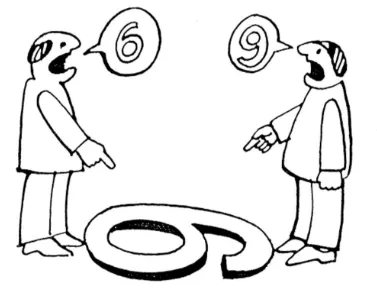
The perceptive mind without structure can drift into bias or wishful thinking.
The most effective people learn to switch between both. A scientist uses the straight mind to design an experiment, then the perceptive mind to notice an unexpected pattern in the data. A leader uses perception to read a room and logic to make the final decision.
In daily life the tension appears everywhere. Straight-mind people may dismiss gut feelings as “irrational.”
Perceptive people may grow frustrated when others demand data for something they simply “know.”

Cultural attitudes often favor the straight mind—schools reward correct answers more than insightful questions—yet many of life’s most important choices (whom to trust, when to take a risk, how to comfort someone) depend heavily on perception.
The healthiest approach is integration. Train the straight mind with careful thinking and evidence. Cultivate the perceptive mind through observation, art, silence, and attention to subtle signals. When both systems work together, we see the world more completely—not just what is measurable, but also what is meaningful.





















Responses (0)
Sign in to share your thoughts.
Sign in