The Benefits of Strength Training for Long-Term Health


Strength training has a bit of an image problem.
For a lot of people, the phrase immediately brings up visions of crowded weight rooms, clanking iron, gym bros, and the terrifying prospect of not being able to walk down the stairs the next day.
If that’s what comes to mind, I completely get it.
It can feel loud, intimidating, and completely disconnected from normal life.
But here’s the reality: strength training isn’t about building massive muscles or lifting heavy barbells unless you actually want to.
At its core, it’s simply giving your body the physical grit and resilience it needs to live a long, vibrant life.
Think of it as putting money into a physical savings account—one that pays huge dividends as you get older.
Here is what putting your muscles to work actually does for you over the long haul.
1. It Builds Armor for Your Bones

As we age, our bones naturally start losing density. For women especially, this process speeds up after menopause, putting us at a much higher risk for osteopenia and osteoporosis.
Here’s the cool part: your bones are dynamic, living tissue, and they respond to pressure.
When you lift weights, stretch resistance bands, or do bodyweight squats, your muscles tug on your bones.
That subtle tension sends a clear signal to your body:
“Hey, we need to stay solid!” In response, your body lays down denser bone tissue.
It is one of the absolute best ways to shield yourself against fractures down the road.
2. It Protects Your Independence as You Age
Have you ever watched an older adult struggle to push themselves up from a soft couch, carry heavy groceries, or handle a steep set of stairs?
That usually isn't just a joint issue—it's a loss of raw muscle strength.
Starting in our 30s, we naturally begin losing muscle mass every decade if we don't actively work to keep it.
Strength training hits the brakes on that drop-off. By building and maintaining lean muscle, you ensure that at 60, 70, or 80, you can still hoist your own luggage into an overhead bin, get down on the floor to play with kids (and actually get back up), and move through the world on your own terms.
3. It Takes the Fire Off Your Aching Joints
If you deal with cranky knees or a stubborn lower back, lifting weights might feel like the last thing you should do.
But when done with decent form, strength training is dynamic medicine for joint pain.
Muscles act as your body's built-in shock absorbers.
When the muscles surrounding your knees, hips, and spine are strong, they take the direct force off the joints themselves.
Stronger glutes take the heat off your lower back; stronger quads protect your knees.
Moving your joints through their natural range of motion also keeps them lubricated and fluid.
4. It Turns Your Body Into an Efficient Fuel Burner
Muscle is active, hungry tissue. Every single time you contract your muscles during a workout, they pull glucose straight out of your bloodstream to use as fuel.
This dramatically improves your insulin sensitivity and helps keep your blood sugar in check, lowering your risk for type 2 diabetes.
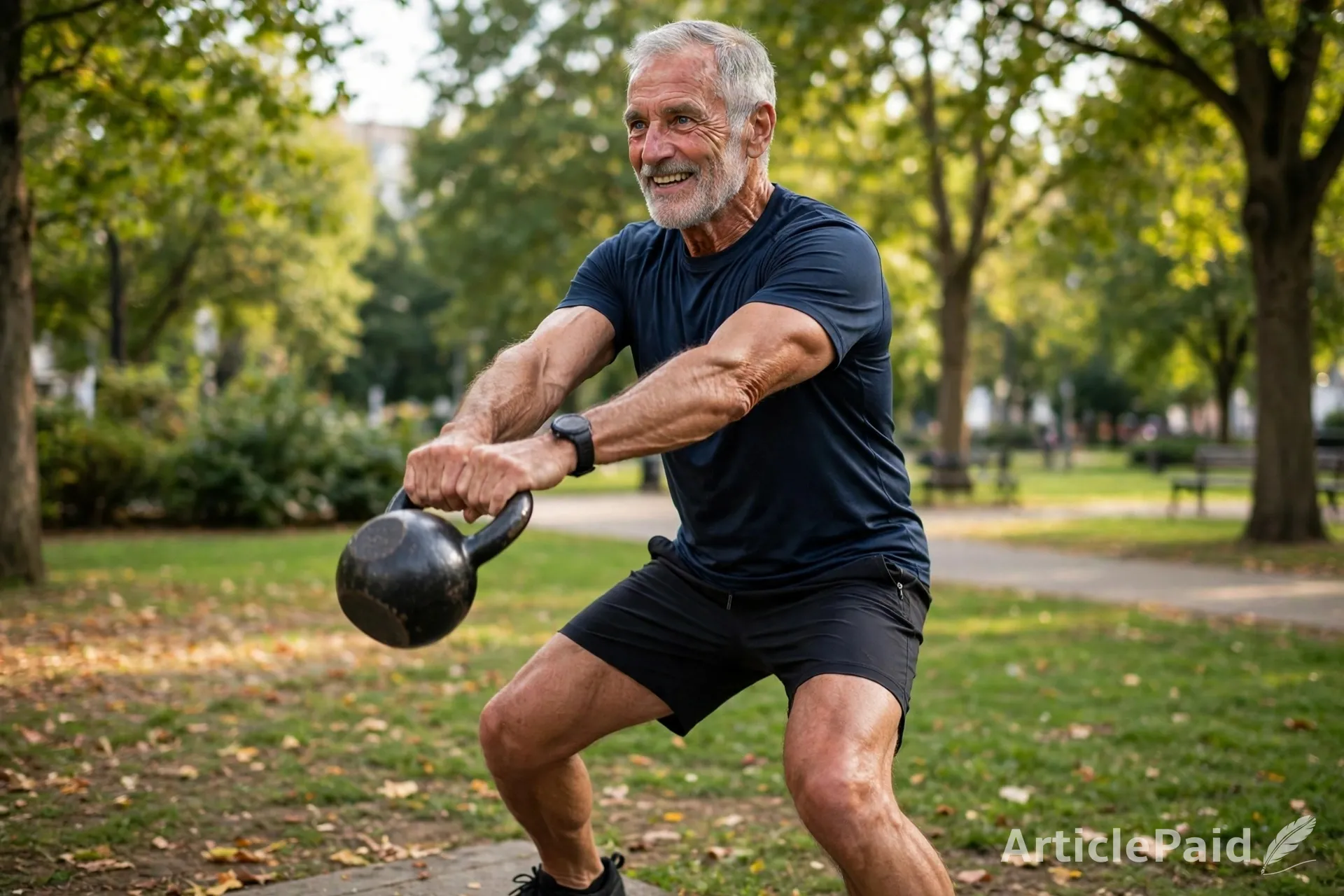
On top of that, carrying more muscle slightly bumps up your baseline metabolic rate.
That means your body burns energy far more efficiently, even while you’re kicked back on the couch reading a book.
How to Start Without Overwhelming Yourself
You don't need a gym membership, matching workout gear, or an hour of high-intensity sweat to see results.
Start right where you are.
Try bodyweight squats onto a sturdy chair, push-ups off your kitchen counter, or lunges down the hallway.
Grab a pair of light dumbbells or a basic resistance band.
Aim for just two days a week, spending 20 to 30 minutes on simple movements—pushing, pulling, squatting, and carrying.
The goal isn't to push yourself to exhaustion; it's to build a habit that makes everyday life feel lighter. Your future self will thank you for starting today.















Responses (0)