
Following her original appearance on Cyprus back in the 13th Century BC, Aphrodite became a big hit with people, and worship of her spread all around ancient Greece. Why was she so appealing? "Fertility, love, procreation is a topic across humanity, no matter which culture," Ulbrich says. "One of her names is Pandemos: the goddess of all people.
Nudity
So far, so uncontroversial. For several
hundred years, artists didn't make Aphrodite look particularly different from
other female Olympian goddesses. And in her early years, they did not typically
depict her naked, and certainly never in the more provocative poses we now
associate with her. But then, in 350BC, an artwork appeared that changed
everything.
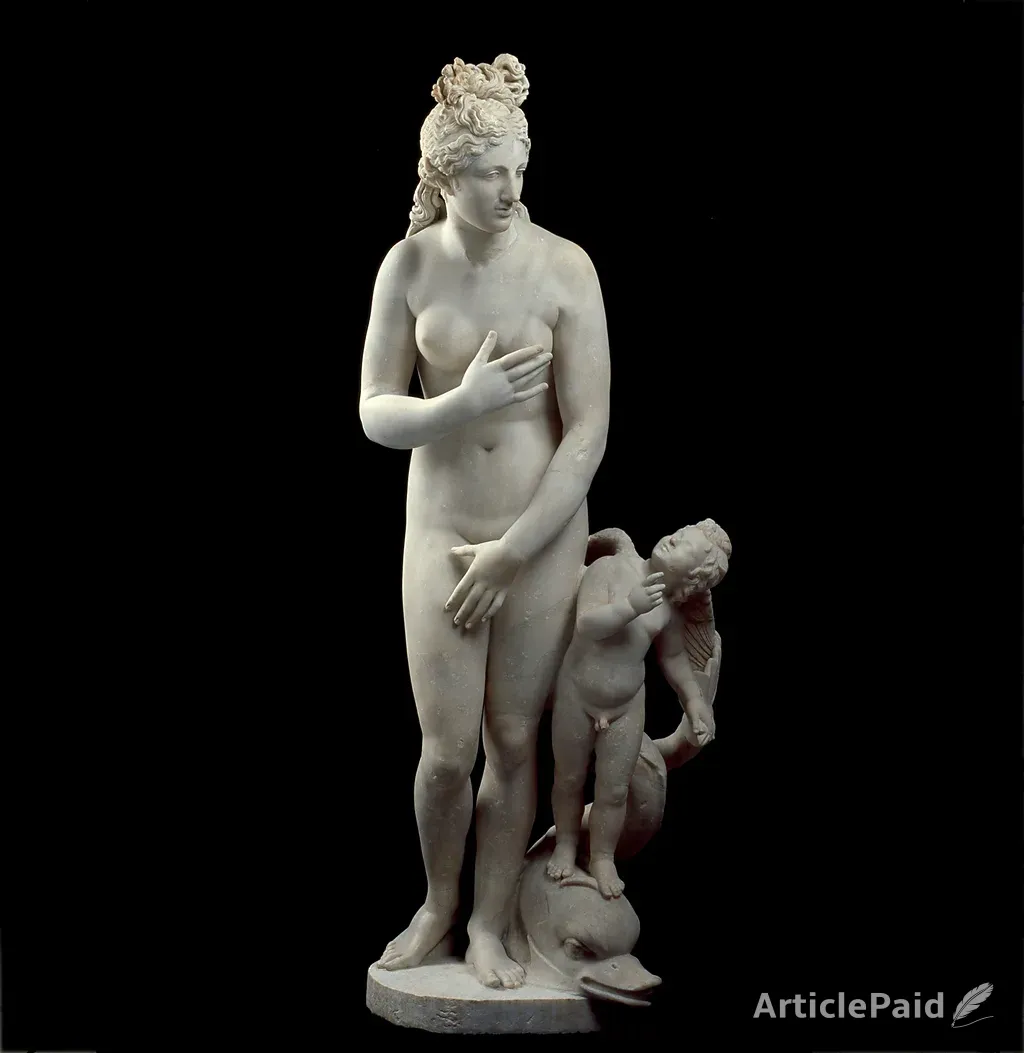
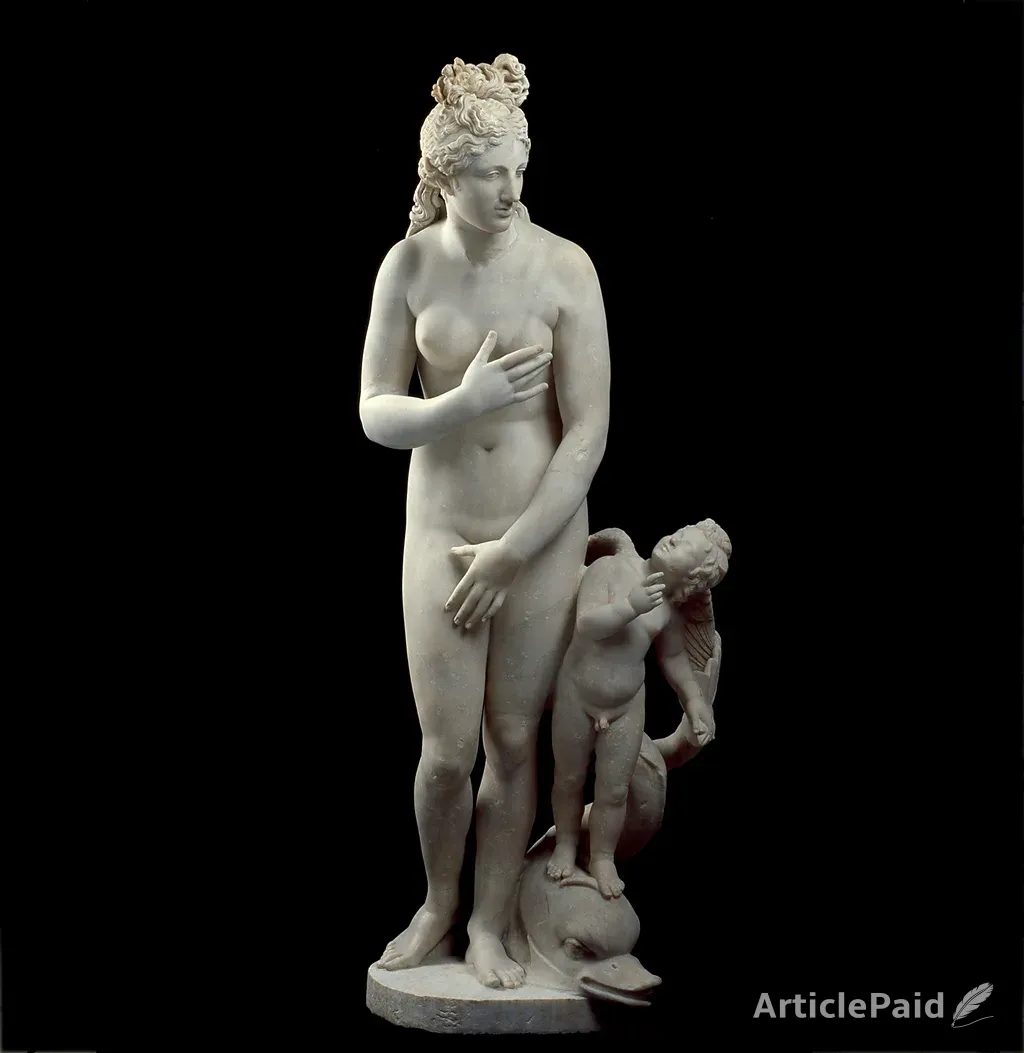
Praxiteles's Aphrodite of Knidos (c 350BC)
was the first completely nude artwork of a woman in ancient Greece. The
original sculpture is lost, but we can get a good picture of what it looked
like by later Roman copies like the Capitoline Venus (c 160BC). Before
Praxiteles, it was only male figures who were shown undressed.
"Celebrating physical male beauty through nudity was perfectly normal from
the 7th or 6th Century BC onwards," Ulbrich says. So, Praxiteles chose to
do the same for female physical beauty. Praxiteles's Aphrodite of Knidos was lost but later Roman copies
like the Capitoline Venus are similar (Credit: The Ashmolean Museum)Aphrodite's nudity was
different. If you look closely, you can see how dissimilar the presentation of
nudity is in Greek male sculptures: it's all in the body language. Praxiteles's
Aphrodite is shown caught whilst bathing. She appears shy and vulnerable,
covering herself in shame or embarrassment, whereas the nude male body in Greek
art had always been shown as confident and heroic. Ulbrich explains: "It
is mostly based on how she's presented in myths, where she is constantly
bathing and working on her physical beauty."
But in Praxiteles's artwork, Aphrodite's
hands are positioned slightly away from her, making it possible for a viewer to
see her exposed body if they look at it from different angles.
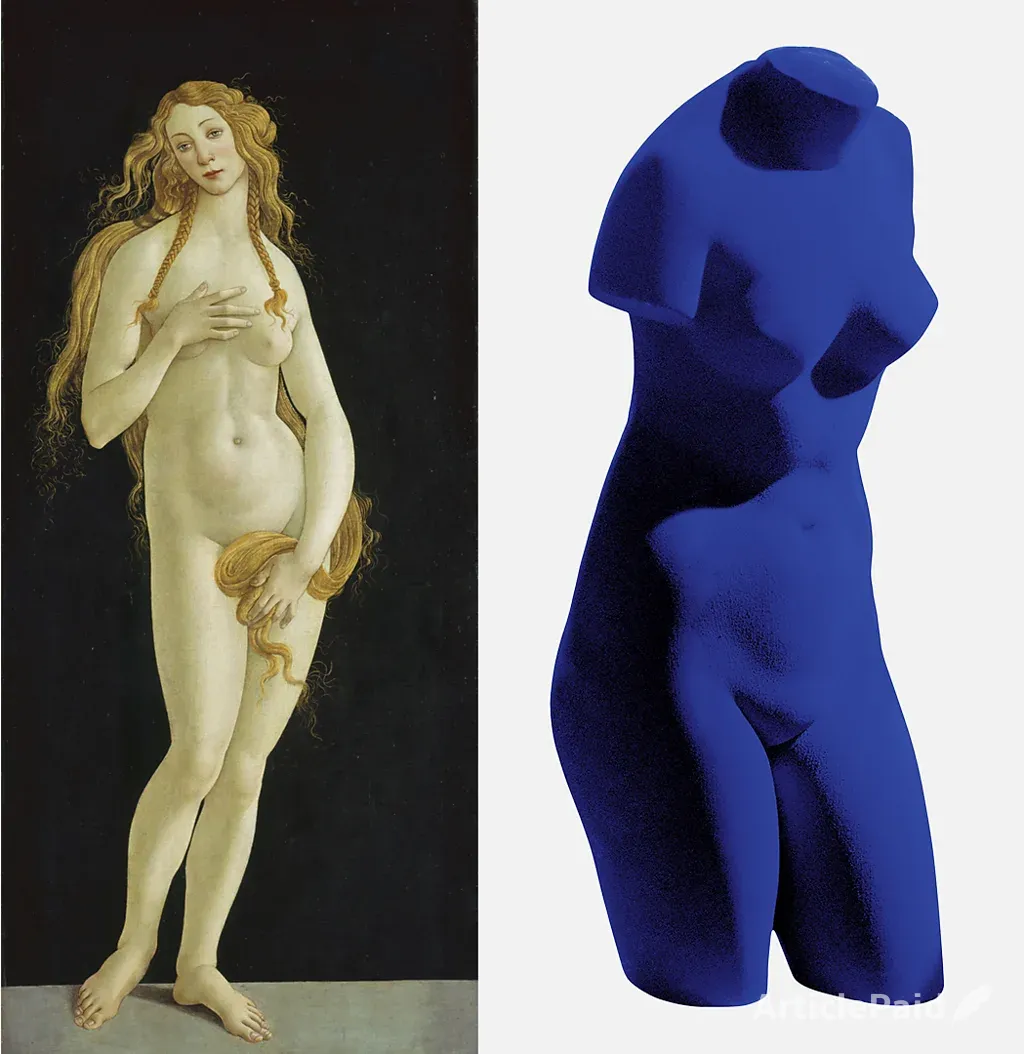
Aphrodite's rebirth
Aphrodite was reborn in artworks such as Botticelli's The Birth of
Venus and Yves Klein's 20th Century version.
And so, via artists' repeated rehashing of
the Venus Pudica, the objectified female form became an
indelible feature of the art historical canon. Rubens and Velázquez
reincarnated it in the Baroque period. It was revived by Cabanel and Manet in
the 1800s, and by Modigliani and Yves Klein in the 20th Century. The outrage of
Mark Twain and Mary Richardson are responses to this history of Aphrodite's
eroticisation.























Responses (0)
Sign in to share your thoughts.
Sign in