

⚖️ The Birthright Citizenship Standoff
The Supreme Court’s 6–3 ruling in Trump v. Barbara (issued in late June 2026) dealt a major constitutional blow to the administration's day-one agenda.
With the executive order permanently struck down, the administration has split its strategy into two distinct channels:
1. The DOJ’s Law Enforcement Pivot
Acting Attorney General Todd Blanche quickly announced that while the Department of Justice will respect the court's ruling regarding children already born on U.S. soil, it will aggressively pivot its law enforcement apparatus to choke off the entry pathways entirely.
Targeting "Birth Tourism": The DOJ is redirecting federal fraud and immigration enforcement task forces to target commercial networks, temporary visa manipulation, and non-citizen entry pathways utilized by individuals traveling to the U.S. explicitly to give birth.
Denaturalization Focus: This builds on an ongoing DOJ directive to ramp up denaturalization task forces, heavily scrutinizing past naturalization applications for any "willful misrepresentation" or fraud.
2. The Legislative Uphill Battle
On Capitol Hill, congressional allies are answering the administration's call to draft statutory challenges to birthright citizenship. However, the strategy faces an immense legal and political reality check:
The Constitutional Barrier: Legal experts and key congressional leaders note that as long as the Supreme Court views birthright citizenship as a constitutional guarantee under the 14th Amendment, any standard legislative bill attempting to redefine it would be instantly struck down on the same grounds.
The Midterm Factor: Because passing a Constitutional Amendment requires an unattainable two-thirds supermajority in both chambers, the legislative push is widely viewed as a high-visibility messaging strategy to rally the base and frame immigration as the defining issue for the upcoming midterm elections.
⛽ The Retail Fuel Price Push
The administrative pressure on retail fuel stations is a direct response to a massive consumer pain point triggered by regional conflicts earlier in the year.
The Economic Context: The "Rocket and Feather" Effect
When the maritime conflict in the Middle East escalated, crude oil flows through the Strait of Hormuz were severely disrupted, causing retail gasoline prices to spike across the United States.
While crude oil prices have since stabilized or begun to fall, retail pump prices have been slow to mimic that decline—a classic economic phenomenon known as the "up like a rocket, down like a feather" effect, where retailers slowly bleed off high prices to protect profit margins. Bessent's Mandate to Retailers
Facing severe public friction over these sticky consumer energy costs, Treasury Secretary Scott Bessent issued a sharp warning directly to oil and gas retailers to drastically accelerate their price cuts.
The $2.50 Target: The directive aligns with the White House's aggressive public goal of driving average retail gas down to $2.50 per gallon by leveraging increased domestic oil production under the administration's "Drill, baby, drill" and fast-tracked energy infrastructure policies.
The Reality Check: Energy analysts remain highly skeptical of hitting the $2.50 mark in the immediate future. The Energy Information Administration (EIA) emphasizes that even with resumed shipping and increased domestic drilling, global market lag and ongoing maritime volatility make average pump prices under $3.00 unlikely for the majority of 2026, meaning the administration's public friction with retail stations is likely to persist through the summer.
#StraitOfHormuz#HormuzIncident#HormuzCrisis#MaritimeSecurity#UKMTO#OmanCoast#TankerAttack#BreakingNews#Geopolitics#MiddleEastCrisis#WestAsiaWar#IranConflict#InternationalRelations#Chokepoint#LawOfTheSea#GlobalSecurity? Economic & Supply Chain Impact
#EnergyCrisis#OilPrices#BrentCrude#LNGSupply#SupplyChainDisruption#GlobalTrade#ShippingNews#MaritimeLogistics#WorldNews#GlobalEconomy#CurrentEvents#HormuzStrait
More from ArticlePaid
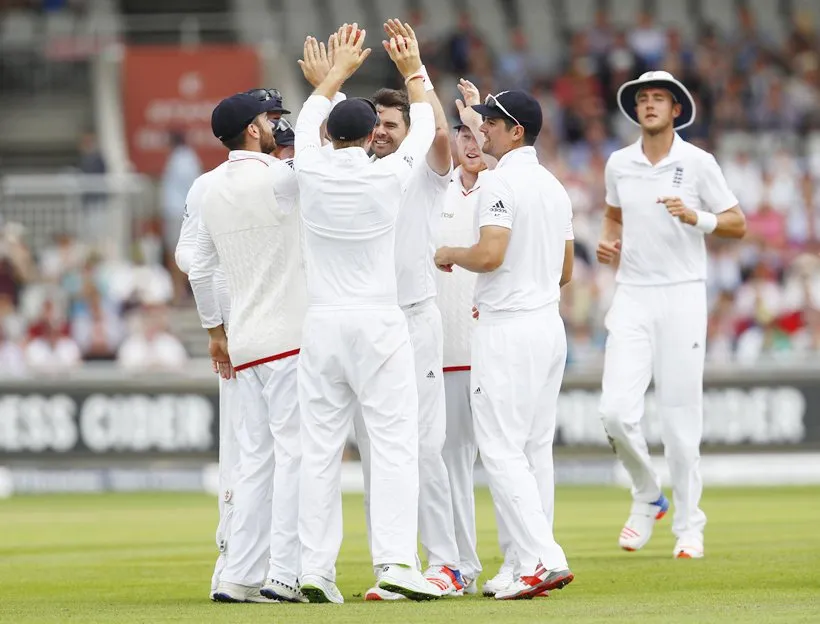
Root returns as captain after Ben Stokes' sudden retirement
England legend asked to steady the ship Leading England run-scorer Joe Root has been reappointed England Test captain in the ...
8 views 0 comments
BlackRock buys $589 million of these two cryptocurrencies this week
I keep seeing the same headline loop around my feed, and yeah it’s one of those that makes you stop scrolling for half a second.Bl...
63 views 0 comments
Tropical Storm Ivo Nears Hurricane Strength Off Mexico
Tropical Storm Ivo intensifies in the eastern Pacific, bringing heavy rain, rough surf, and rip currents to Mexico’s southwest coast. Forecasters warn of
217 views 0 comments
Shoukd containment of cats indoors be mandated Victoriawide?
Cats are hunters, it’s in their blood to prey on other animals, because of this cats pose a risk to native wildlife when allowed outdoors. Keeping cats con
126 views 0 comments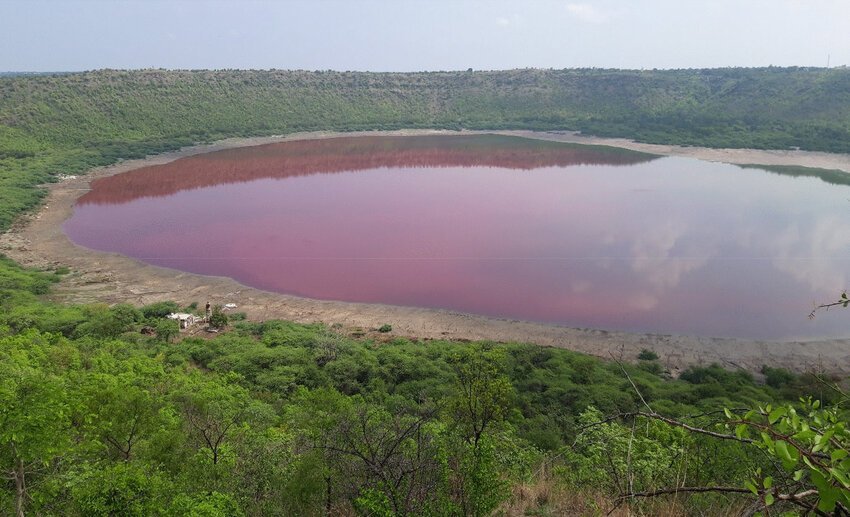
Lonar Lake Turns Pink Overnight: Scientists Explain Rare l
Lonar Lake Changes Colour Overnight: From Emerald Green to Surreal PinkIntroduction Nature often surprises us with spectacular transformations, but few are
161 views 0 comments
Influencer Emily claiming she had "all" her ribs removd
Social media was sent into a frenzy after influencer Emily James made the shocking claim that she had “all” of her ribs removed to achieve a slimmer waistl
309 views 1 comments
Rare Two-Night Sturgeon Full Moon and Celestial Highlights
A stunning two-night Sturgeon full moon in August 2025 peaks at 3:55 a.m., accompanied by planets and Perseid meteors. How to view and why it matters.The f
147 views 0 comments
Climate Change Worldwide and Its Severe Impact on Pakistan
Pakistan has become one of the most climate-vulnerable countries in the world, facing back-to-back natural disasters. From floods to heatwaves, hailstorms
450 views 0 comments
Rain in karachi causing disturbance and life threat.
Karachi, Pakistan's largest city, has been severely affected by heavy monsoon rains, resulting in widespread flooding, power outages, and traffic disruptio
915 views 0 commentsWeekly Top Articles

Best AI Tools in 2026: 10 Tools That Make Everyday Work Easier
Artificial intelligence has become a practical part of everyday work in 2026. From writing and research to graphic design, coding,...

10 Future-Ready Courses Writers Should Consider in 2027
The Concept of Writing Skills Has Changed The role of a great writer is no longer about putting words together to form a good...

Money and Peace Together: 5 Hobbies That Can Earn You Extra Income Today
IntroductionIt is no secret that a person’s leisure time is often limited due to the ongoing hustle for money. However, in some ca...

Creamy Garlic Butter Chicken: A Weeknight Dinner Worth Repeating
Every so often, a dish takes over your social feed and you wonder if it's really that good. This one is. Tender chicken sits in a ...

Top 10 Online Courses to Learn in 2026 for a Successful Future Career
IntroductionThe online courses market is on the rise in 2026, and there are plenty of options suitable for students, job seekers. ...

7 AI Skills Paying $100 Daily In 2026 (No Degree Required)
IntroductionThe world of Artificial Intelligence is booming, offering unprecedented opportunities to make a living and build a sus...






Responses (0)
Sign in to share your thoughts.
Sign in