Fireflies Create Light Without Producing Any Real Heat

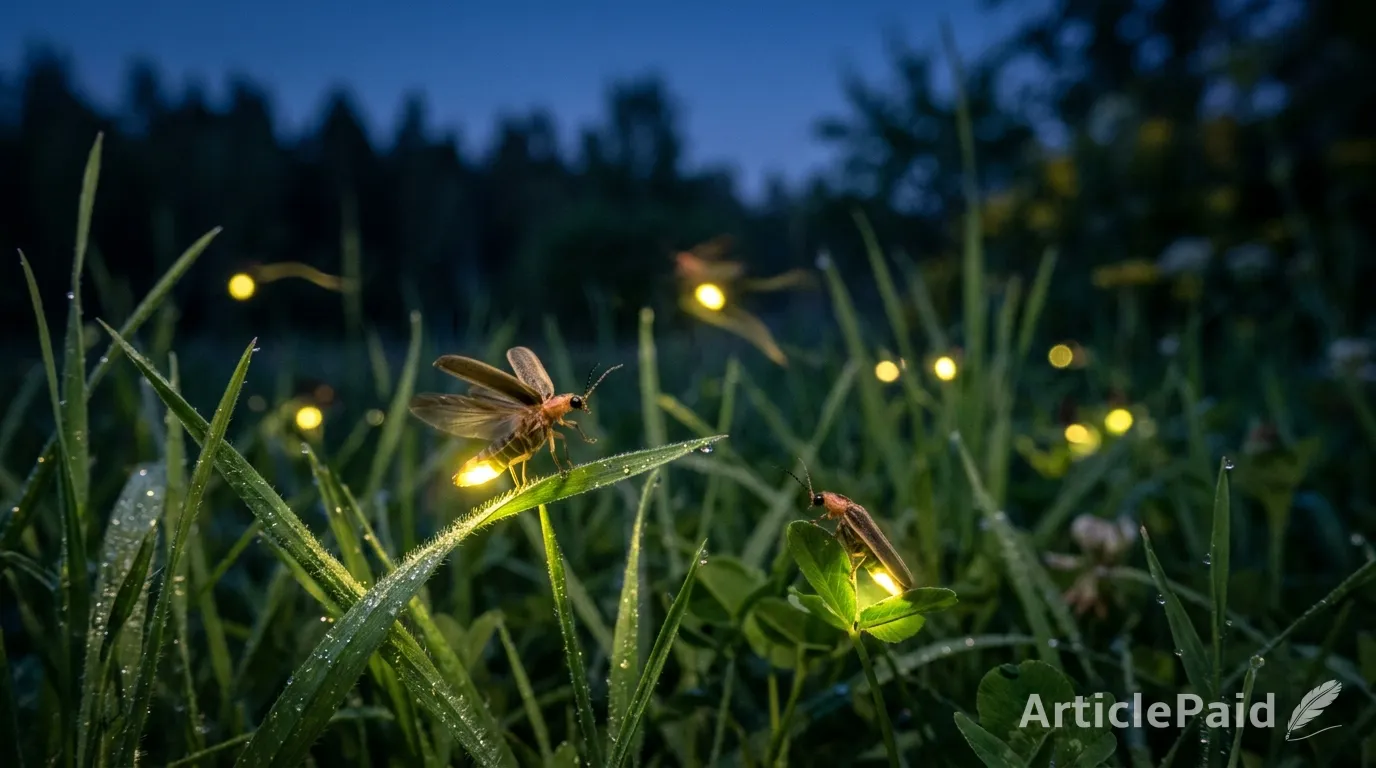
During a warm summer evening, there are few sights quite as magical as the little glowing fireflies flitting about. While it looks like little stars flying through the grass, surprisingly these creepy crawlies actually produce their own light using a brilliant natural chemical process called Bioluminescence.
An amazing fact about fireflies is that the light they make doesn’t really produce any heat. Instead of burning hot like normal bulbs, fireflies glow using what scientists often refer to as ‘cold light’. This makes fireflies a highly efficient way of producing light and is one of the most interesting examples of natural engineering in nature.
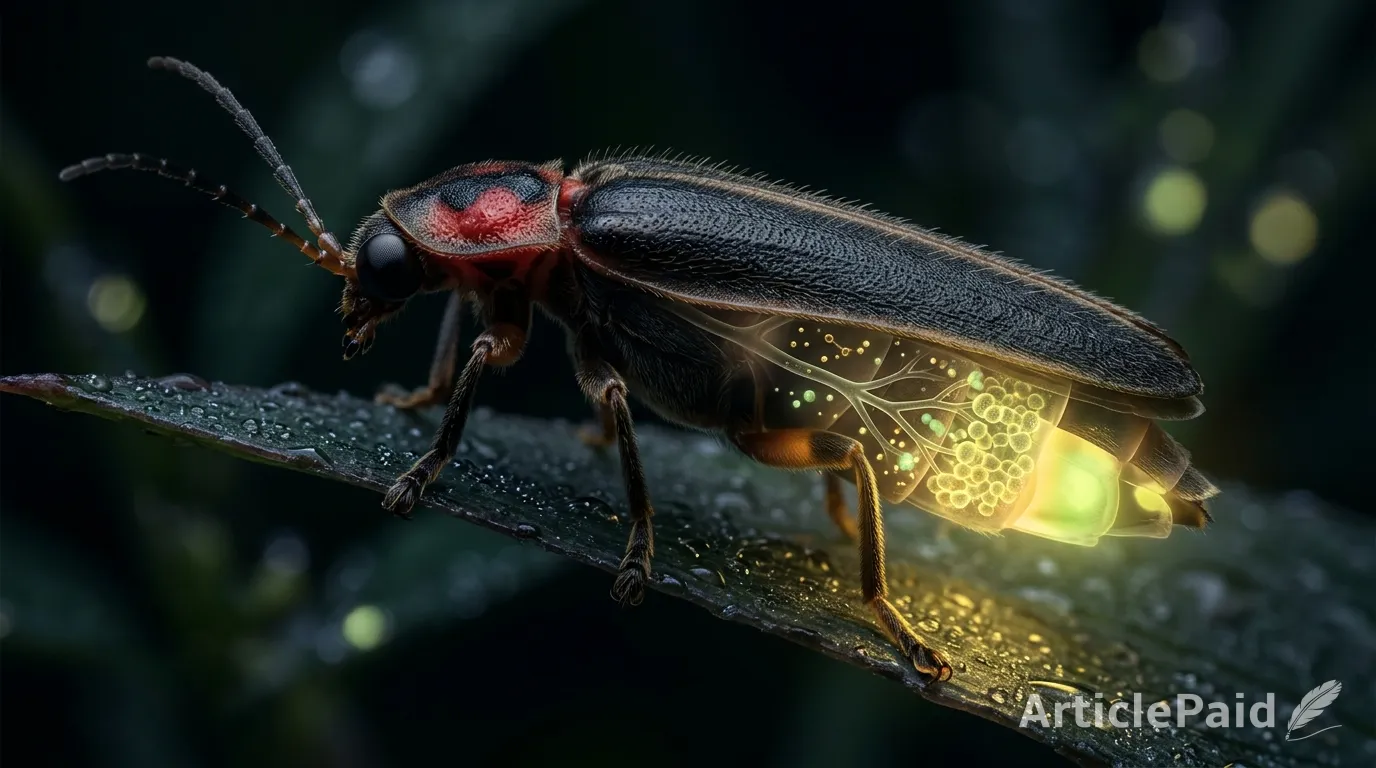
But how do these little insects produce light? What causes them to flash at night and what makes their light special?
What is Bioluminescence?
Bioluminescence is the process where organisms can produce light through a chemical process.
Bioluminescence can be found in many creatures including fireflies, certain sealife, fungi and some microorganisms. These creatures use their bioluminescence for many different reasons including mating, feeding and even avoiding predators.
Within the fireflies bodies is a special organ used to glow. This is located towards the end of their abdomens. Within this organ there are specialised cells.
This light is produced through a chemical process using;
• Luciferin (a light producing chemical)
• Luciferase (an enzyme which speeds up the chemical process)
• Oxygen (needed for the chemical reaction)
• ATP (provides energy for cellular processes)
When oxygen interacts with the Luciferin, helped by Luciferase and other important components, it releases energy to create light.
This highly efficient process means most of the energy is used to make light instead of heat.
It is often referred to as cold light due to the fireflies not producing much heat through the chemical reaction. This doesn’t mean the the light is 0 degrees Celsius. Instead it means that there isn’t much heat being given off. Compared to many artificial lights.
Normal light bulbs give off a lot of heat. But fireflies have evolved to glow using their very efficient process with very little wasted energy.
Why do fireflies flash at night?
They don’t just flash to make summer nights pretty! Fireflies use their glowing to help communicate and mate.
Many species of fireflies will have a specific pattern to their flashes. This helps to attract a lover! A male may fly around flashing, and a female of the same species will flash back.
Each species of firefly can have different flashing patterns. Some may flash quickly while others will have longer or repetitive patterns.
The timing, length and the tempo of the flashes can help identify species of fireflies.
An amazing example of natural communication! Fireflies don’t use sound or any visible movement, they use their light.
Can fireflies control when they glow?
Yes! Fireflies can control when they flash. Although this differs depending on the species.
Within their glowing organs there are specialised tissues and structures that control how much oxygen is available.
Oxygen plays an important role. Controlling how much oxygen gets to their glowing cells will help control when they glow.
Scientists are still looking into how fireflies can control their bioluminescence. The process it slightly more complicated than simply turning a light on and off.
Are all fireflies the same?
No! There are thousands of different firefly species around the world.
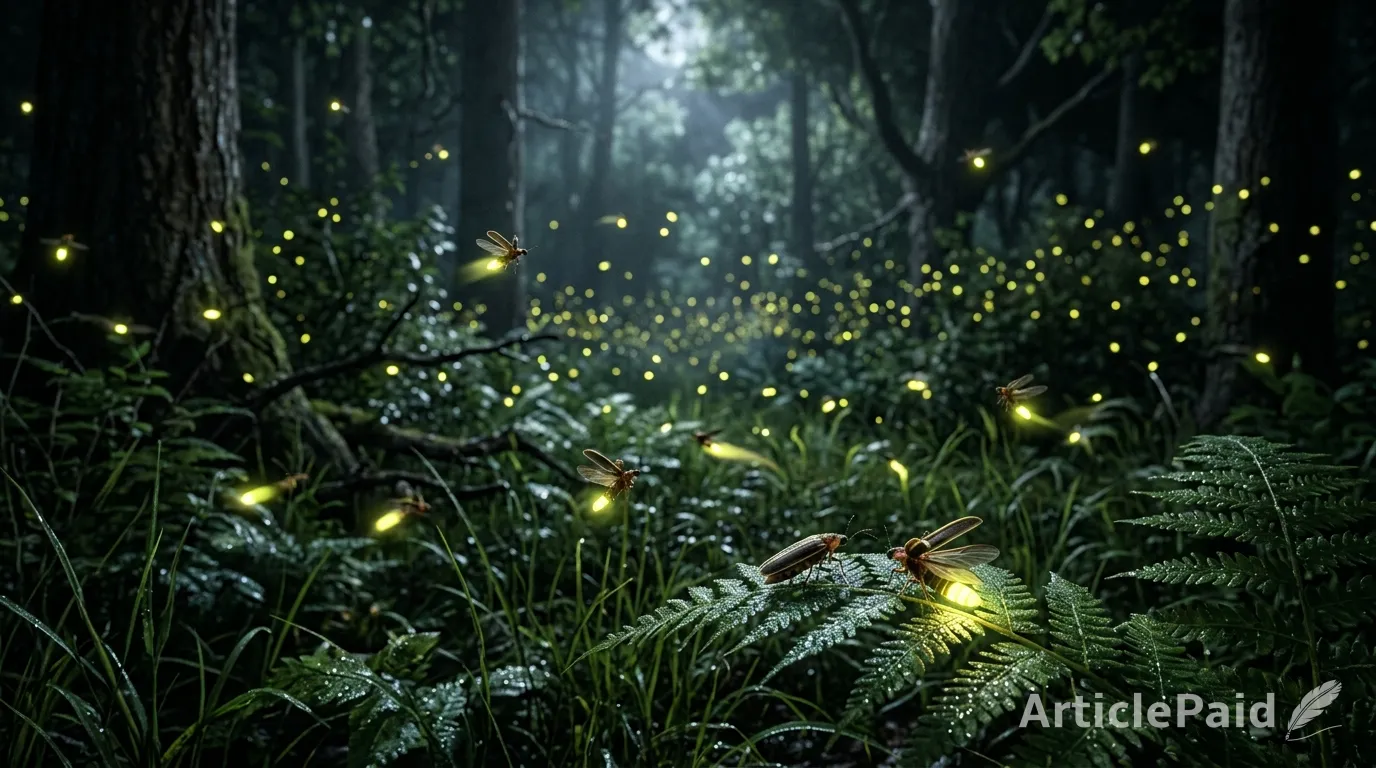
While some have synchronised flashing patterns to create amazing displays in the forest and along rivers, others will glow continuously or have different flashing patterns.
Some fireflies will be diurnal and won’t rely as much on visible flashing. While others are more common to see glowing after sunset.
Fireflies can be found in a variety of environments including forests, grasslands and wetlands, as long as there are the right levels of moisture and food.
Their larvae are also interesting. Often referred to as glowworms, many can produce light. In some species they will even use their light as a defence mechanism to let predators know they may not taste nice!
Why is firefly light important to science?
Firefly bioluminescence is not only beautiful but very important for science.
Luciferase enzymes have many uses in biology. Scientists can add genes that produce luciferase to cells and watch the light they produce when a specific biological process happens.
Scientists could use this to see how genes are working, or to watch certain cellular activities and see how treatments are affecting the cells.
As light can be measured accurately, this helps scientists see what is happening within cells.
Research inspired by fireflies has increased people’s interest in energy efficient lighting. Unfortunately this can be a tricky process as making artificial lighting using biological processes is difficult to keep the right chemical reactions going.
Why are there fewer fireflies in some places?
Unfortunately these beautiful creatures are struggling in many areas.
A major issue is light pollution. Fireflies use their flashing to communicate, however artificial light from streets, buildings and vehicles can get in the way.
They also struggle with habitat loss. Fireflies depend on wetlands, forests and grasslands to complete their life cycle. If these are destroyed or heavily changed then firefly numbers could suffer.
Pesticides and pollution can also affect fireflies and the small creatures they feed on.
We can help protect them by reducing unnecessary outside lighting, not using too much pesticides and keeping our natural green spaces.
Simple changes like turning your garden lights off if they aren’t needed can create a darker environment so fireflies can communicate better.
Final thoughts
Fireflies are such a brilliant example of how nature can produce amazing results using simple biological processes.
The light they produce with hardly any heat is due to the chemical process called Bioluminescence. Using Luciferin, Luciferase, Oxygen and Cellular energy they produce one of the most efficient natural lights.
They use their glowing to communicate and attract mates. Also their unique chemistry has provided scientists with some great tools. Their light helps scientists see what is happening within cells.
Next time you see a glowing firefly remember how amazing the chemical process is! They are able to produce their own light with hardly any wasted energy.
They don’t need batteries, wires or hot bulbs. Nature has given them their own amazing light system!














Responses (0)