Muhammad Ali: The Man Who Fought for His Beliefs, Not Just for Victory
Some people become famous because of what they achieve, but a few become unforgettable because of what they stand for. M

In this article 7 sections
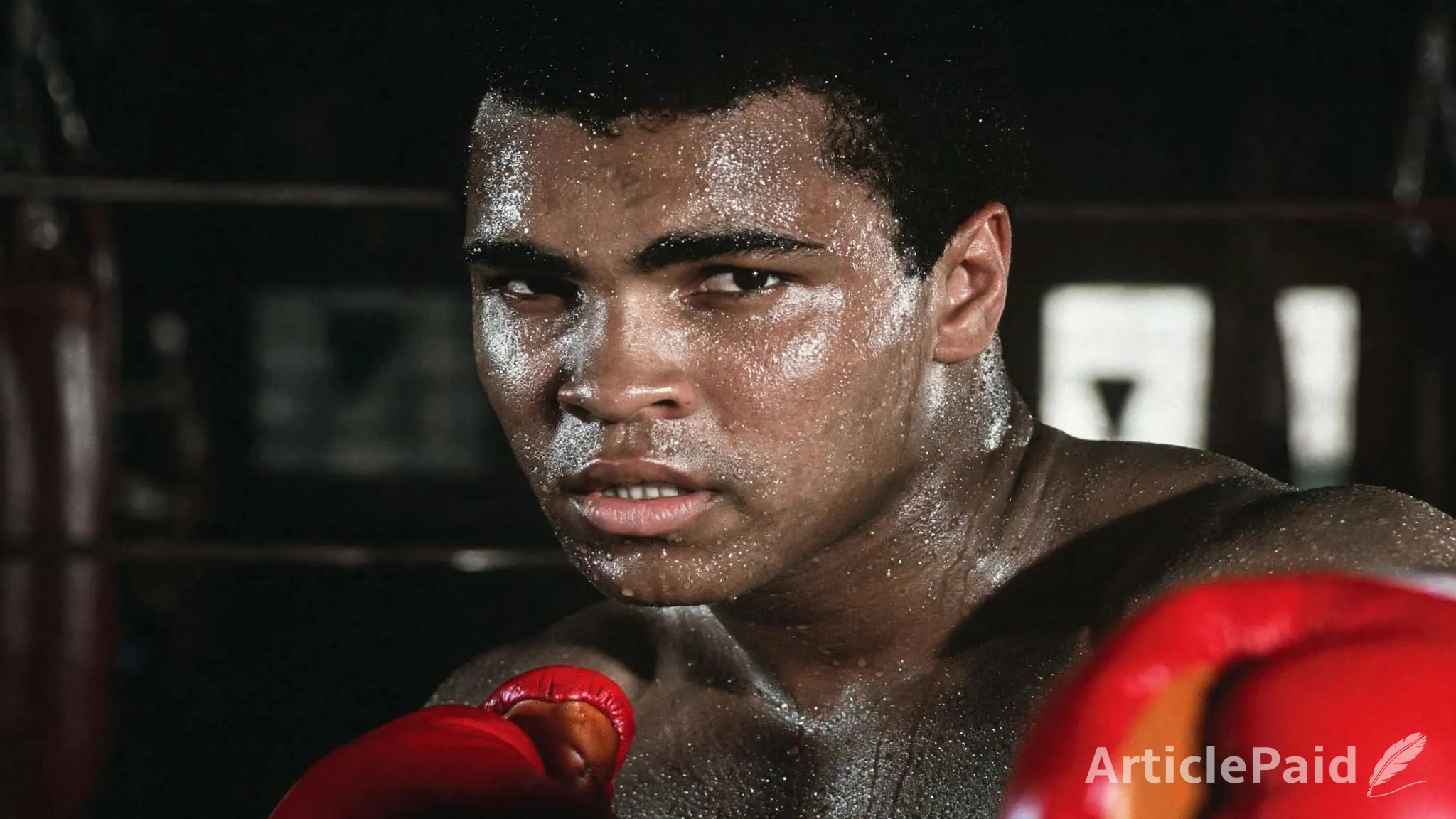
Some people become famous because of what they achieve, but a few become unforgettable because of what they stand for. Muhammad Ali was one of those people. The world knew him as a boxing champion, but his life was much bigger than the sport. Behind his famous smile, confidence, and powerful punches was a man who faced difficult choices, lost years of his career, and later struggled with a serious illness.
A Boy Who Dreamed of Becoming a Champion
Muhammad Ali was born on January 17, 1942, in Louisville, Kentucky, United States. His birth name was Cassius Marcellus Clay Jr. He grew up in a working-class family and developed an interest in boxing at a young age.
An interesting story from his childhood is that his bicycle was stolen when he was twelve. He reported the incident to a police officer named Joe Martin, who also worked as a boxing trainer. Martin suggested that he learn how to fight. This unexpected meeting introduced young Cassius to boxing.
He started training seriously and quickly showed his natural talent. Years of practice and determination helped him win a gold medal at the 1960 Olympic Games in Rome.
But this was only the beginning of his journey.
The Day His Name and Life Changed
In 1964, at the age of 22, Cassius Clay defeated the famous heavyweight champion Sonny Liston and became the world heavyweight champion.
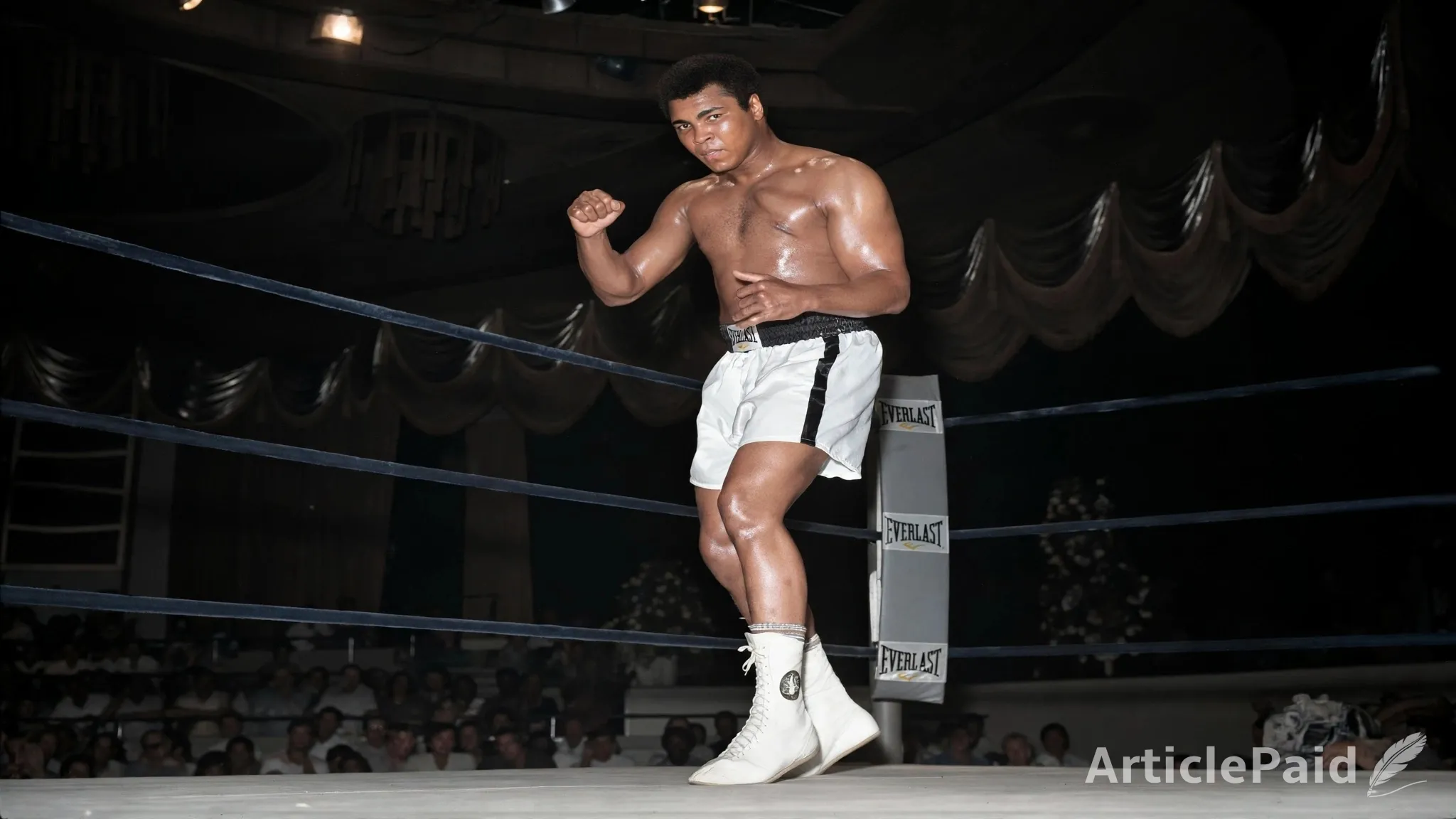
Around this important period, he publicly announced his association with the Nation of Islam and adopted the name Muhammad Ali. He later followed Sunni Islam.
His decision to change his name was deeply connected to his religious beliefs and personal identity. However, not everyone accepted his decision. He faced criticism and discrimination, but he continued to stand by his chosen name.
For Ali, becoming a champion was important, but living according to his beliefs was equally important.
The Decision That Cost Him His Boxing Career
One of the most difficult periods of Muhammad Ali's life began in 1967.
During the Vietnam War, he refused induction into the United States military, citing his religious beliefs and moral objections to the war.
This decision changed his career completely.
He was convicted of draft evasion, stripped of his heavyweight title, and banned from professional boxing during his legal battle. At the height of his fame, he suddenly lost the opportunity to do what he loved most.
Imagine working your entire life to become a world champion and then being forced away from your profession.
Ali continued to challenge his conviction. In 1971, the United States Supreme Court overturned it.
He had spent nearly four years away from professional boxing during his athletic prime. However, he did not give up.
Returning to the Ring
Muhammad Ali returned to boxing and continued fighting some of the strongest opponents of his time.
In 1974, he faced George Foreman in the historic fight known as The Rumble in the Jungle, held in Zaire, now the Democratic Republic of the Congo.
Many people expected Foreman to win, but Ali surprised the world by defeating him and reclaiming the heavyweight championship.
He won the world heavyweight title three times, an extraordinary achievement in boxing history.
He eventually retired in 1981 with a professional record of 56 victories and 5 defeats, including 37 victories by knockout.
The Battle He Could Not Win in the Ring
In 1984, Muhammad Ali was diagnosed with Parkinson's syndrome, a condition that affected his movement and speech.
The man who had once moved around the boxing ring with incredible speed gradually began experiencing difficulty with everyday physical movements.
His hands trembled, his speech became slower, and simple activities became more challenging.
It was a painful change for someone whose career had been built around movement, strength, and physical control.
However, Ali did not disappear from public life. He continued to make appearances, support humanitarian causes, and inspire people around the world.
In 1996, he appeared at the Atlanta Olympic Games to light the Olympic flame. His trembling hands held the torch, and millions of people watched this emotional moment.
It reminded the world that courage is not always about physical strength.
The Legacy of Muhammad Ali
Muhammad Ali died on June 3, 2016, at the age of 74, after a respiratory illness. He had lived with Parkinson's syndrome for many years.
His death brought sadness to millions of people across the world.
Today, people remember him not only for his boxing victories but also for his confidence, religious journey, humanitarian work, and willingness to face the consequences of his decisions.
His life teaches us something important: success is not simply about winning when everything is going well. Sometimes, real courage appears when a person has to stand firm during the most difficult moments.
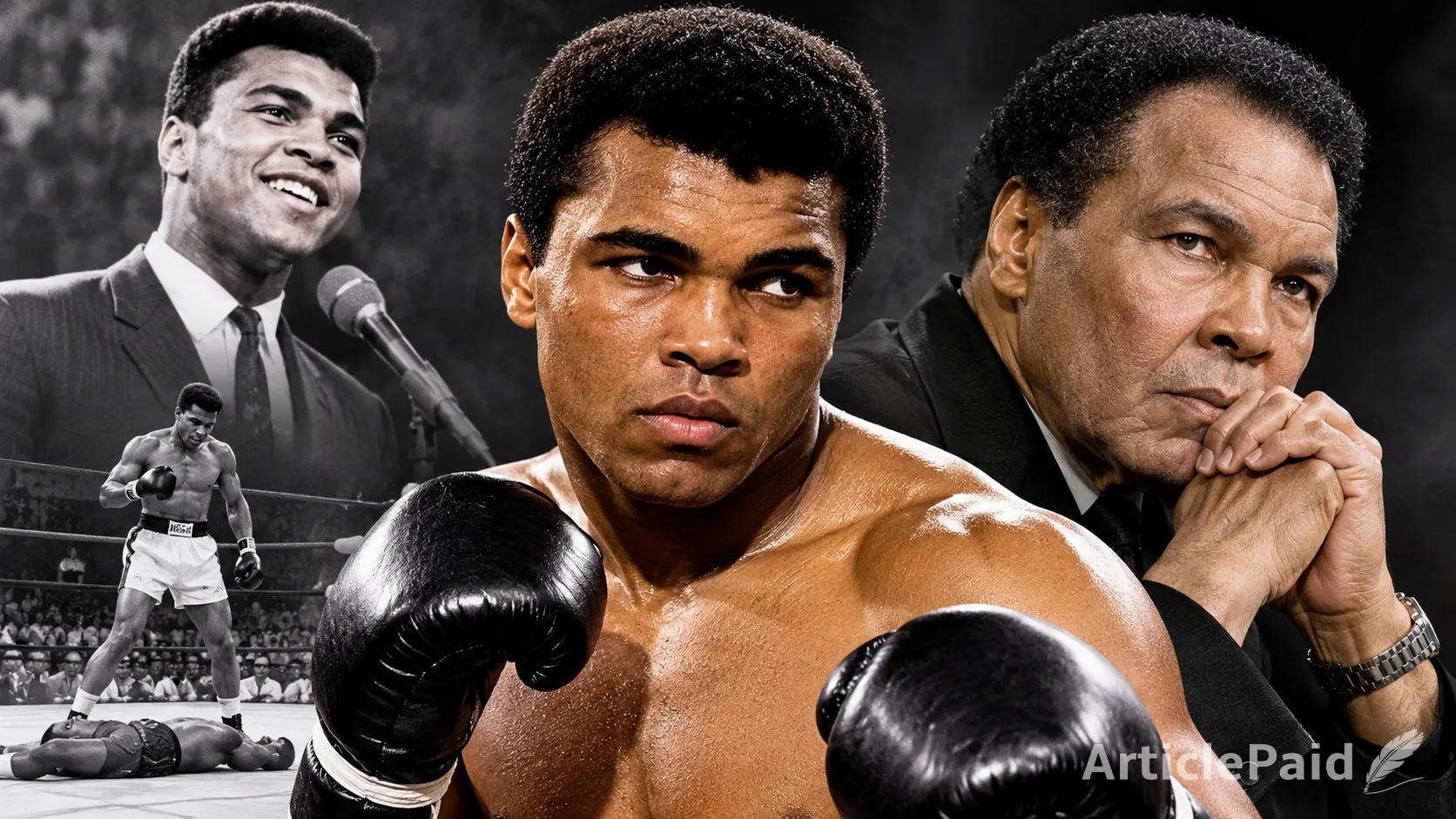
Muhammad Ali won many fights inside the boxing ring, but his story also reminds us that some of life's biggest battles happen outside it.
A champion may leave the ring, but the courage he shows can remain in people's hearts for generations.













Responses (0)