
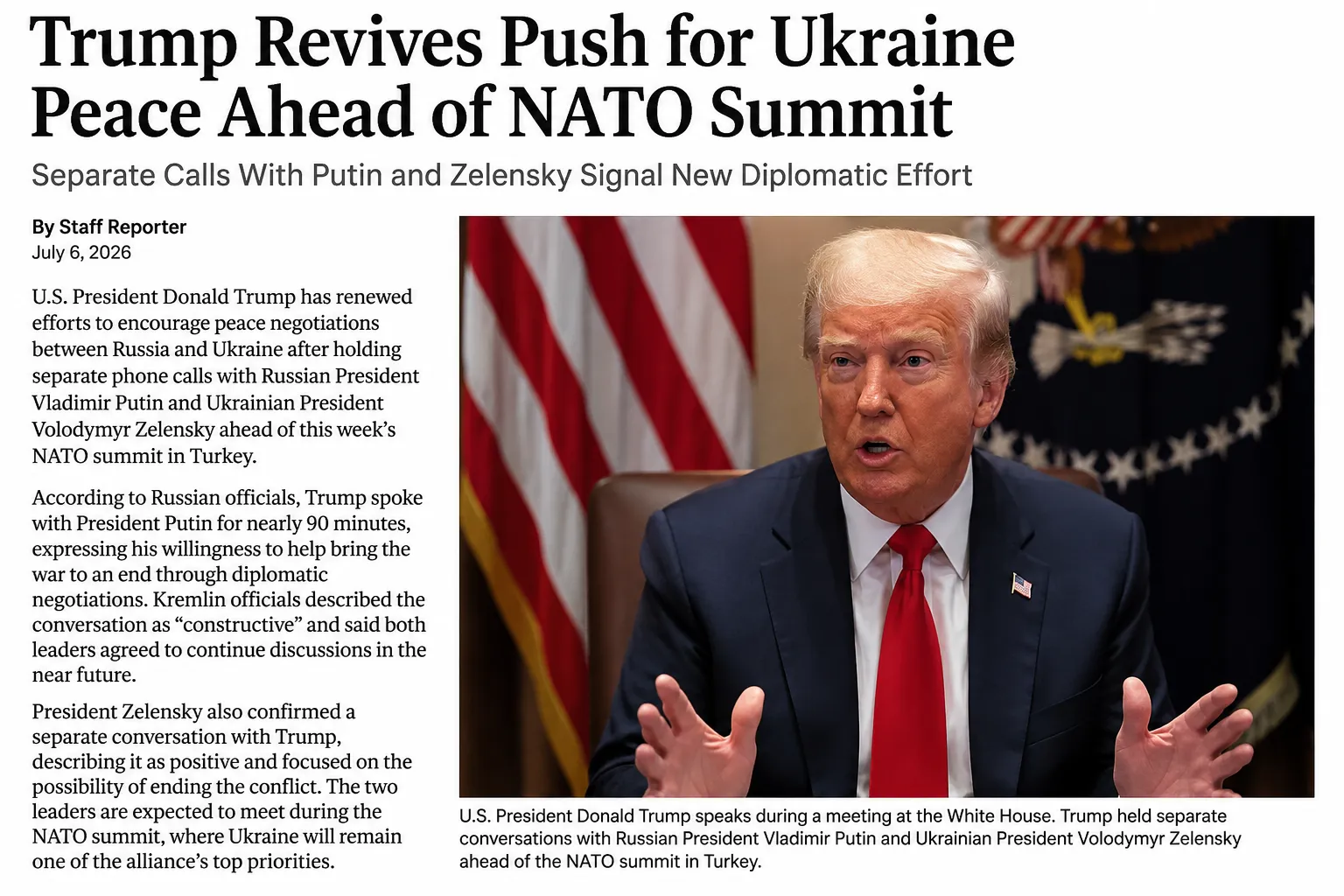
As world leaders prepare to gather for this week's NATO summit, U.S. President Donald Trump has once again placed the Ukraine war at the center of international attention. After holding separate phone conversations with Russian President Vladimir Putin and Ukrainian President Volodymyr Zelensky, Trump signaled that he wants to play a role in helping the two countries move closer to a peaceful resolution.
The Russia–Ukraine war has continued for years, claiming thousands of lives, displacing millions of people, and leaving entire communities devastated. Despite repeated diplomatic efforts by world leaders, the conflict remains one of the most serious security challenges facing Europe and the wider international community.
According to Russian officials, Trump's conversation with President Putin lasted approximately 90 minutes. During the call, the two leaders reportedly discussed the ongoing conflict, international security, and the possibility of reopening diplomatic channels. Kremlin representatives later described the discussion as "constructive" and said both sides agreed to remain in contact as opportunities for future negotiations develop.
Shortly afterward, Trump also spoke with Ukrainian President Volodymyr Zelensky. Zelensky described the discussion as positive and welcomed continued international efforts to achieve what he called a "just and lasting peace." While neither side revealed every detail of the conversation, both leaders emphasized the importance of diplomacy alongside continued international cooperation.
The timing of these calls is particularly significant. NATO leaders are gathering at a moment when the alliance faces growing pressure to maintain military support for Ukraine while also encouraging any realistic path toward peace. Security assistance, defense cooperation, and long-term stability in Eastern Europe are expected to dominate discussions throughout the summit.
Meanwhile, the situation on the battlefield remains difficult. Russian missile and drone attacks continue to target cities and infrastructure across Ukraine, while Ukrainian forces remain engaged in intense fighting along several front-line regions. Civilians continue to bear the greatest burden of the conflict, with families forced from their homes and communities struggling to recover from repeated attacks.
For many observers, Trump's decision to speak directly with both Putin and Zelensky reflects an effort to position himself as a mediator capable of communicating with both sides. Supporters argue that maintaining dialogue is essential, even when disagreements remain deep. They believe that every serious peace process begins with communication, regardless of how difficult the negotiations may be.
Others remain cautious. Political analysts note that the major obstacles preventing peace have not changed. Questions surrounding occupied territories, future security guarantees for Ukraine, sanctions on Russia, prisoner exchanges, and accountability for wartime actions continue to divide both governments. Without meaningful compromise on these issues, experts say a lasting agreement will remain difficult to achieve.
International reactions have been mixed. Some leaders welcome renewed diplomatic engagement, believing that any effort to reduce violence deserves consideration. Others stress that peace negotiations must respect Ukraine's sovereignty and territorial integrity, arguing that any agreement should provide lasting security rather than only a temporary pause in fighting.
The upcoming NATO summit is expected to provide an important opportunity for further discussions between allied leaders. Trump is anticipated to meet President Zelensky during the event, while alliance members continue debating military assistance, defense spending, and future support for Ukraine. Decisions made during the summit could influence both the military situation on the ground and future diplomatic efforts.
Although no immediate breakthrough has been announced, Trump's conversations with both Putin and Zelensky have renewed international attention on the possibility of peace negotiations. Whether these talks eventually lead to meaningful progress remains uncertain, but they demonstrate that diplomacy continues to play an important role alongside military and political developments.
For millions of people affected by the war, the greatest hope remains simple: an end to the violence, the return of stability, and a future in which peace replaces years of conflict. While the road ahead remains uncertain, every serious conversation between world leaders keeps alive the possibility that diplomacy may eventually succeed where years of fighting have not.



















Responses (1)
Sign in to share your thoughts.
Sign in