Small Kitchen Swaps to Cut Microplastics Without Losing Your Mind
Small Kitchen Swaps to Cut Microplastics Without Losing Your Mind If you have read any health news lately, you have prob

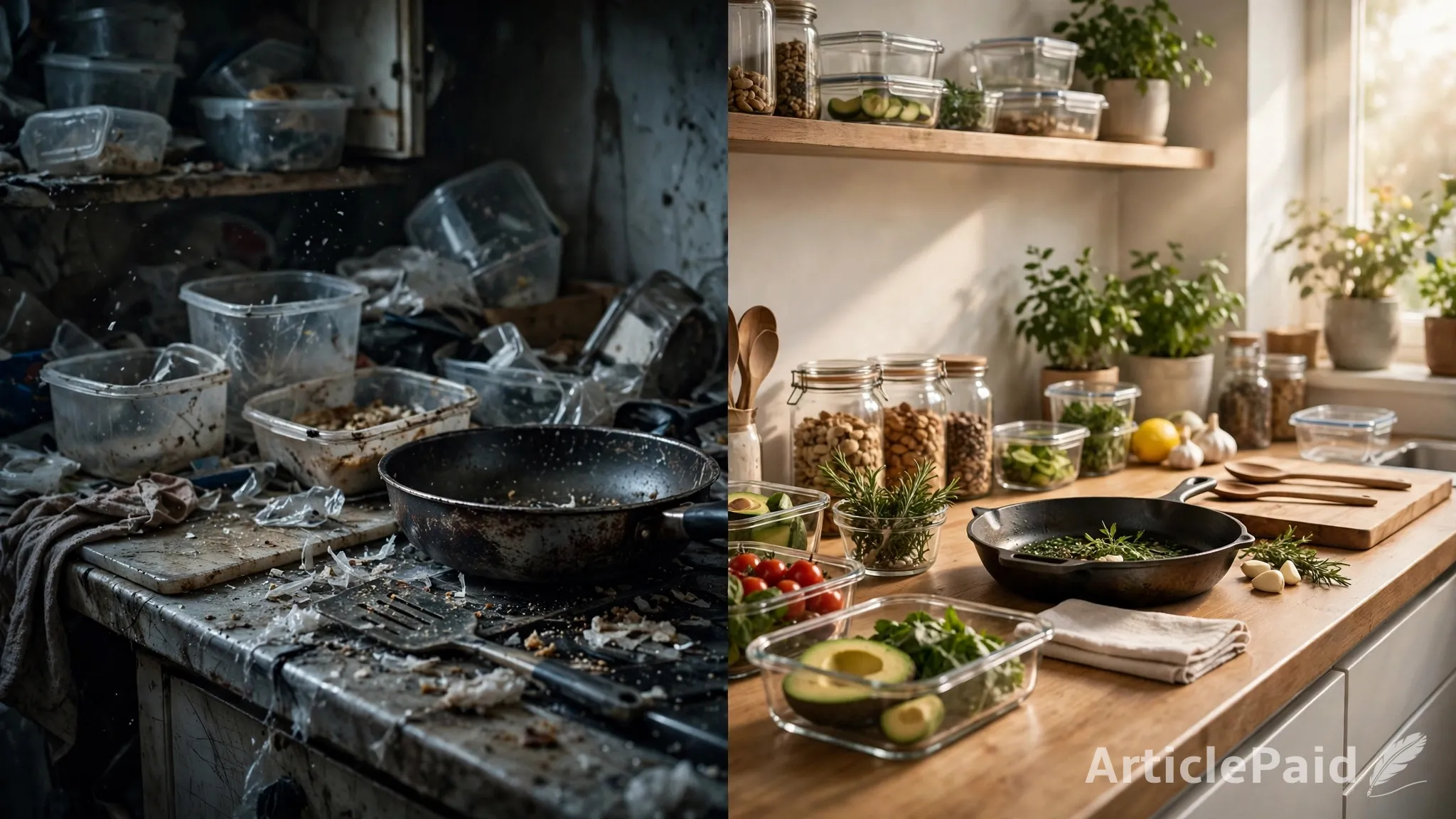
Small Kitchen Swaps to Cut Microplastics Without Losing Your Mind
If you have read any health news lately, you have probably seen the word "microplastics" pop up everywhere.
They are in the ocean, in bottled water, and—uncomfortably—inside us. Seeing those headlines usually triggers the same reaction:
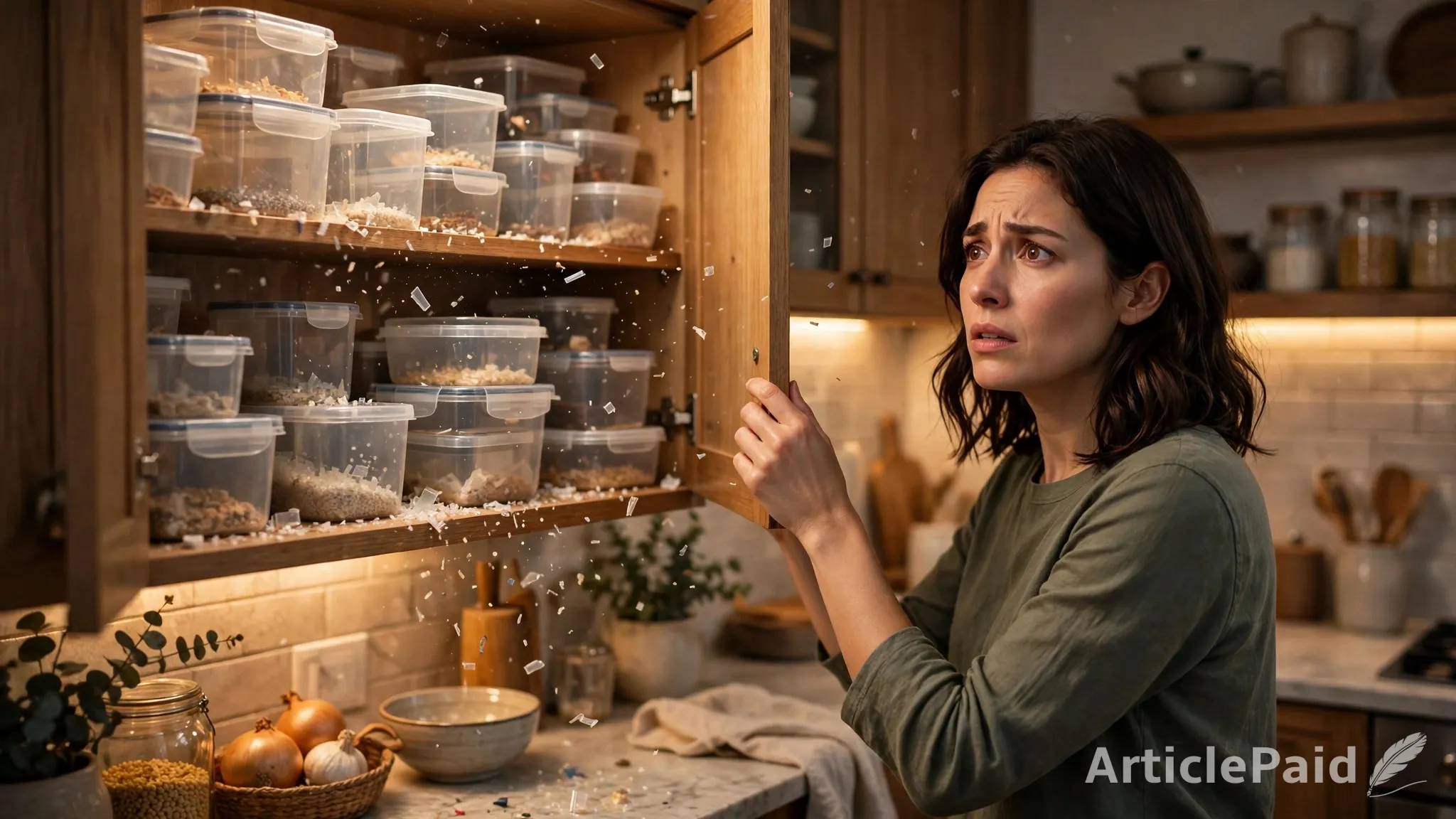
you walk into your kitchen, open a cabinet full of plastic containers, sigh loudly, and wonder if you are supposed to throw away half your belongings before dinner.
Take a deep breath. You do not need to panic, and you definitely do not need to spend a small fortune replacing everything you own this weekend.
Most of our everyday exposure happens right in the kitchen because heat and friction make plastic break down faster.
Making a few realistic, low-stress tweaks to how you store and cook your food can make a huge difference without turning your routine upside down.
Keep Heat Far Away From Plastic
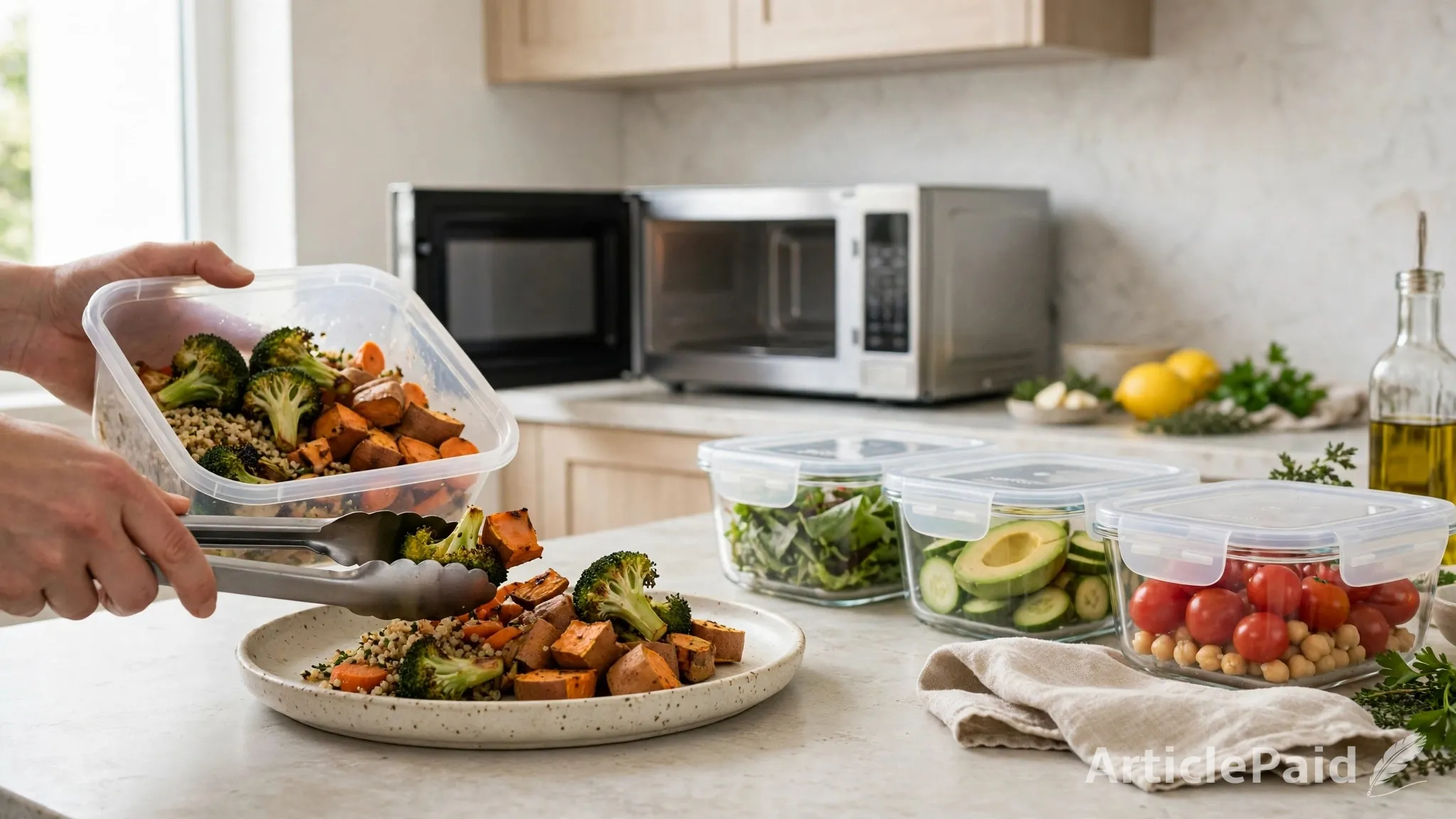
If you only change one habit this week, change how you reheat your leftovers. Plastic and microwaves simply do not mix well.
Even when a tub says "microwave-safe" on the bottom, that stamp just means the plastic will not warp or melt into a puddle—it does not stop tiny particles from leaching into your hot pasta sauce.
You do not need to buy an expensive matching set of containers right away.
Keep your existing plastic tubs for dry snacks, washed grapes, or cold salads, and move food onto a regular ceramic dinner plate before heating it up.
When you are ready to pick up a few glass containers with snap lids, you will probably love them anyway—glass never hangs onto stubborn tomato stains or leftover garlic smells the way plastic always does.
Say Goodbye to Scratched Non-Stick Pans
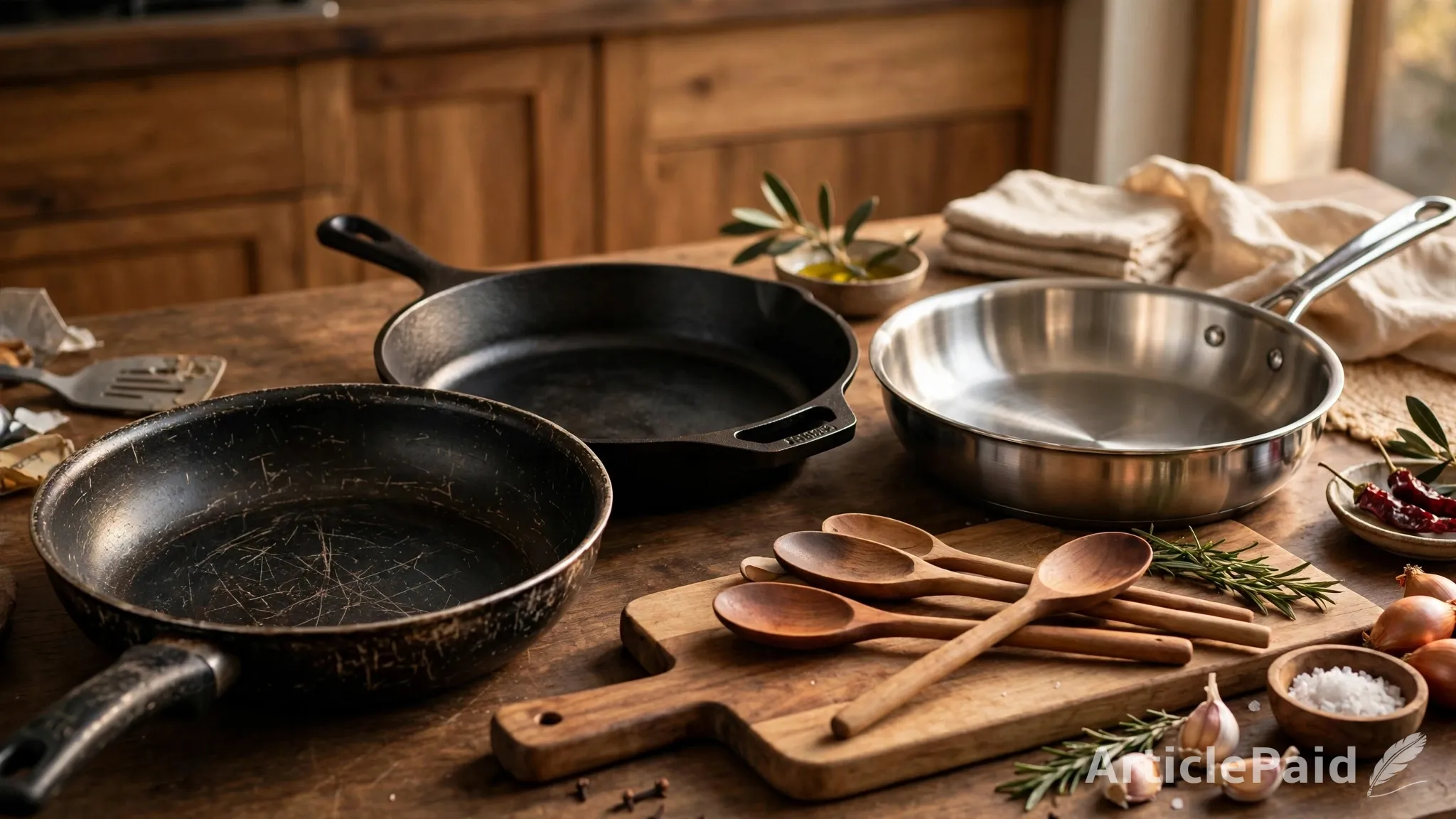
Take an honest look at your favorite frying pan. If the non-stick coating has deep scratches, dull patches, or little flakes peeling off the edges, it is time to part ways.
Every time a metal fork scrapes across a worn coating or the pan gets too hot, tiny fragments end up right in your meal.
Switching over to stainless steel, cast iron, or true ceramic cookware feels a little intimidating at first, especially when you are used to eggs sliding effortlessly out of a non-stick skillet.
Cast iron takes a tiny bit of patience to season, and stainless steel just wants a properly heated pan with a splash of oil before you drop your food in.
Once you get the feel for them, though, those pans last for decades instead of two years—and you never have to second-guess what is flaking into your breakfast.
Upgrade Your Daily Cutting Boards and Utensils
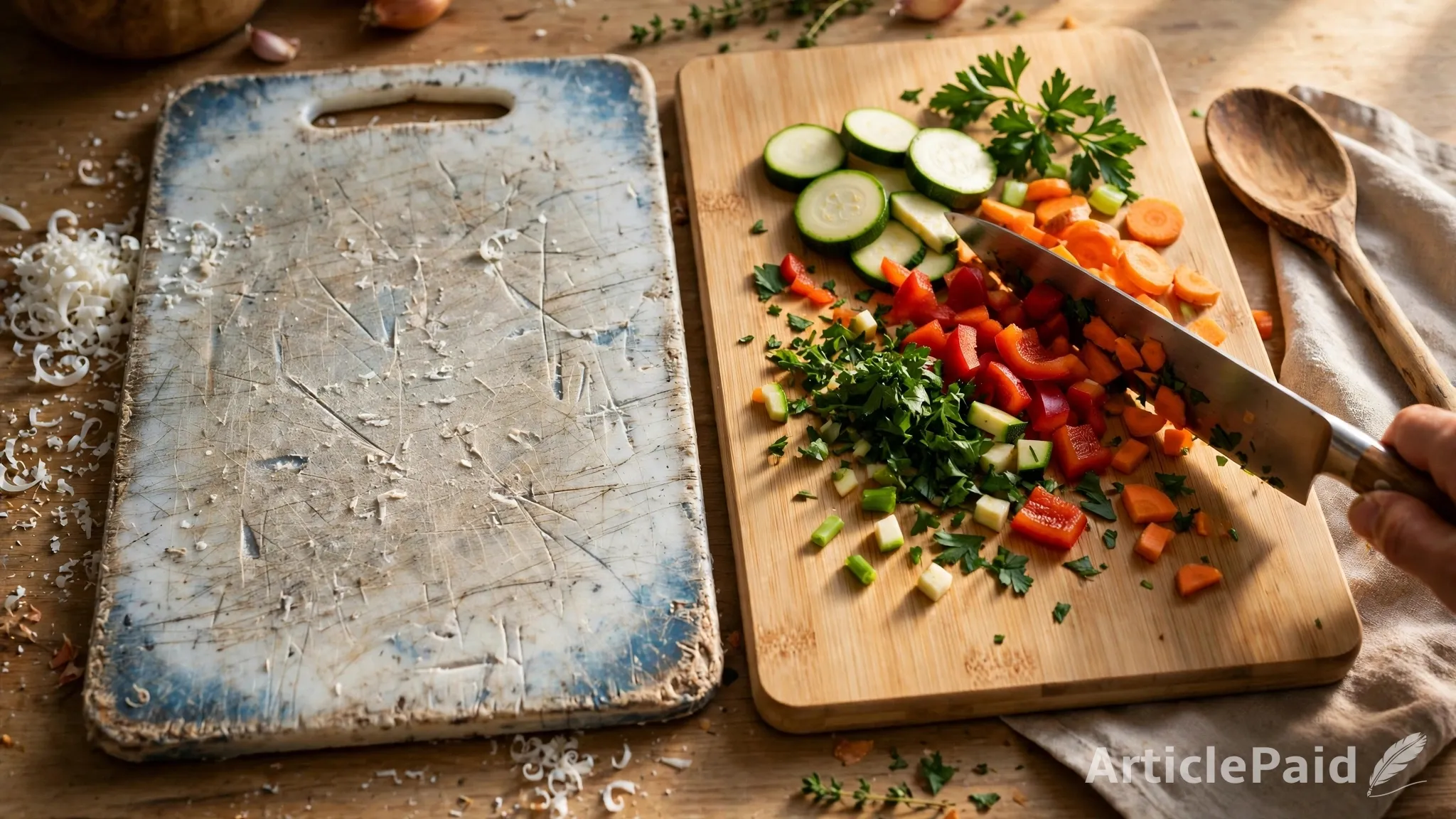
We spend so much time thinking about big pots and pans that we completely forget about the smaller tools touching hot food every single day.
Think about black plastic spatulas sitting in sizzling oil, or old plastic cutting boards covered in thousands of tiny knife scars. Every single scratch on a plastic board is a groove where microscopic shavings can loosen and mix into whatever you are chopping.
Swapping a scarred plastic cutting board for a solid wood or bamboo board is one of the easiest, most affordable upgrades you can make.
Wood is kinder to your knife blades and cleans up easily with warm soapy water.
While you are at it, trade worn plastic spoons for wooden spoons, stainless steel turners, or sturdy silicone spatulas that handle high heat without breaking down.
Aim for Practical, Not Perfect
Here is the honest truth: none of us are going to avoid microplastics 100%, and trying to live a completely plastic-free life will only leave you stressed out and broke.
You do not have to toss out good, usable storage containers today if money is tight.
Just use what you have a little differently—keep hot foods out of plastic, skip the dishwasher's high-heat dry cycle for plastic cups, and replace worn-out pieces one at a time with glass, wood, or metal.
Small shifts add up quietly over months and years.
Your kitchen does not need to look like a minimalist magazine spread to be healthier—it just needs a few common-sense habits that actually fit your real life.











Responses (0)