Imagine you’re a scientist in 1997. Your job is to listen to the ocean. Not with your ears, but with super-sensitive underwater microphones called hydrophones.
One day in the summer, your computer picks up something wild.
It’s LOUD. Like, _really_ loud. Louder than a whale. Louder than an earthquake.
It lasts for about 1 minute. And it sounds like... "bloop."
The team at NOAA, America’s ocean agency, names it exactly that: The Bloop.
They had no idea what made it. And 29 years later in 2026, we still don’t have a 100% answer.
That’s what makes it so fun and so creepy at the same time.
Where Did We Hear It?
The Bloop was recorded on August 19, 1997.
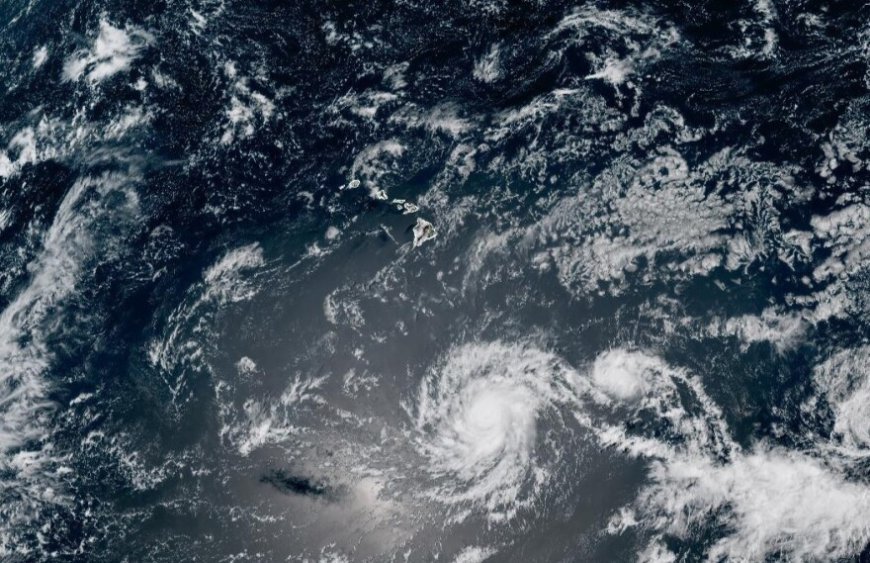
Location: Southern Pacific Ocean, about 1,600 km west of Chile and 3,000 km east of Australia. Basically, the middle of nowhere.
The sound was picked up by hydrophones that were 5,000 km apart. That means the source had to be HUGE.
Scientists could triangulate it. The sound came from somewhere around 50°S 100°W.
This part of the ocean is so deep and so remote that humans have barely explored it. We know more about the surface of Mars than this part of the Pacific.
So whatever made the Bloop, it was down there. In the dark. Alone.
Just How Loud Was It?
Let’s put it in perspective.
A blue whale, the loudest animal on Earth, screams at about 188 decibels.
The Bloop was estimated at 240+ decibels.
That’s louder than a rocket launch.
If you were 10 feet away from it in the water, it could probably kill you.
The sound also traveled for thousands of kilometers. That only happens with massive energy.
For years, the first guess was obvious: a giant sea animal.
Maybe a whale we don’t know about? A giant squid? A new species of leviathan?
The internet LOVED this theory. People started drawing 100-foot sea monsters with glowing eyes.
It felt like we’d finally found proof that the ocean still has secrets bigger than our imagination.
But here’s the problem: no animal we know of can make a sound that loud, at that frequency, and in that way.
Theory #1: The Sea Monster
This is everyone’s favorite.
The Bloop’s sound profile didn’t match any whale. But what if it’s something new?
The ocean is 80% unexplored. We discover new species every year. The Mariana Trench alone probably has creatures we can’t even imagine.
Could it be a colossal squid? A giant octopus? A plesiosaur that survived?
It’s romantic. It’s mysterious. It’s the reason most people still talk about The Bloop.
But biologists say: an animal that big would need to eat. We’d see evidence. Whale carcasses. Footage. Sonar. Nothing.
Still, “we haven’t found it” doesn’t mean “it’s not there.” And that’s what keeps this theory alive.
Theory #2: Icequakes
In 2012, NOAA scientists dropped a plot twist.
They said: "We think The Bloop was ice."
Specifically, icequakes.
In Antarctica, massive icebergs crack and break apart. When they do, the ice rubs against the sea floor. That creates incredibly loud, low-frequency sounds that travel for thousands of miles.
NOAA found that the location of The Bloop matches a place where icebergs frequently break up.
They even played the sound next to a recorded icequake. They sound... really similar.
Case closed, right?
Well, not totally. Icequakes are usually crackling and popping. The Bloop is one smooth, rising tone. It’s cleaner.
Scientists say “probably ice.” The internet says “but what if it’s not?”
And that 1% of doubt is enough to keep the mystery alive.
Why We Love The Bloop?
The Bloop matters not because we’re scared of it.
It matters because it reminds us of something: we don’t know everything.
In 2026 we have AI, we have satellites, we have rovers on Mars. But 3 miles under the ocean, something made a sound louder than a rocket, and we still can’t point to it and say "that."
The ocean is our own planet’s final frontier. It covers 71% of Earth. We’ve mapped less than 25% of the seafloor.
The Bloop is like the ocean whispering: "Hey. I’m still here. And I’m bigger than you."
It’s humbling. And honestly, kind of cool.
Are There More "Bloops"?
Yes! NOAA has a whole playlist of weird ocean sounds.
The Upsweep:
A seasonal sound, probably volcanoes.
The Whistle:
Sounds like a tea kettle. No idea.
Julia:
Sounds like a giant animal hitting ice.
But none of them are as famous as The Bloop. Because The Bloop was the first, and the loudest, and the weirdest.
Today scientists still monitor those hydrophones 24/7. If The Bloop happens again, we’ll know in seconds.
The Ocean Keeps Its Secrets
So what was The Bloop?
Most scientists today will say: _probably an icequake_.
But a small part of all of us wants it to be a monster.
And maybe that’s the point.
The Bloop isn’t just a sound. It’s a question.
It asks: what else is down there that we haven’t heard yet?
Next time you’re at the beach and the waves are quiet, remember: miles below, the ocean is talking.
And sometimes, it goes "bloop."


















Responses (0)
Sign in to share your thoughts.
Sign in