
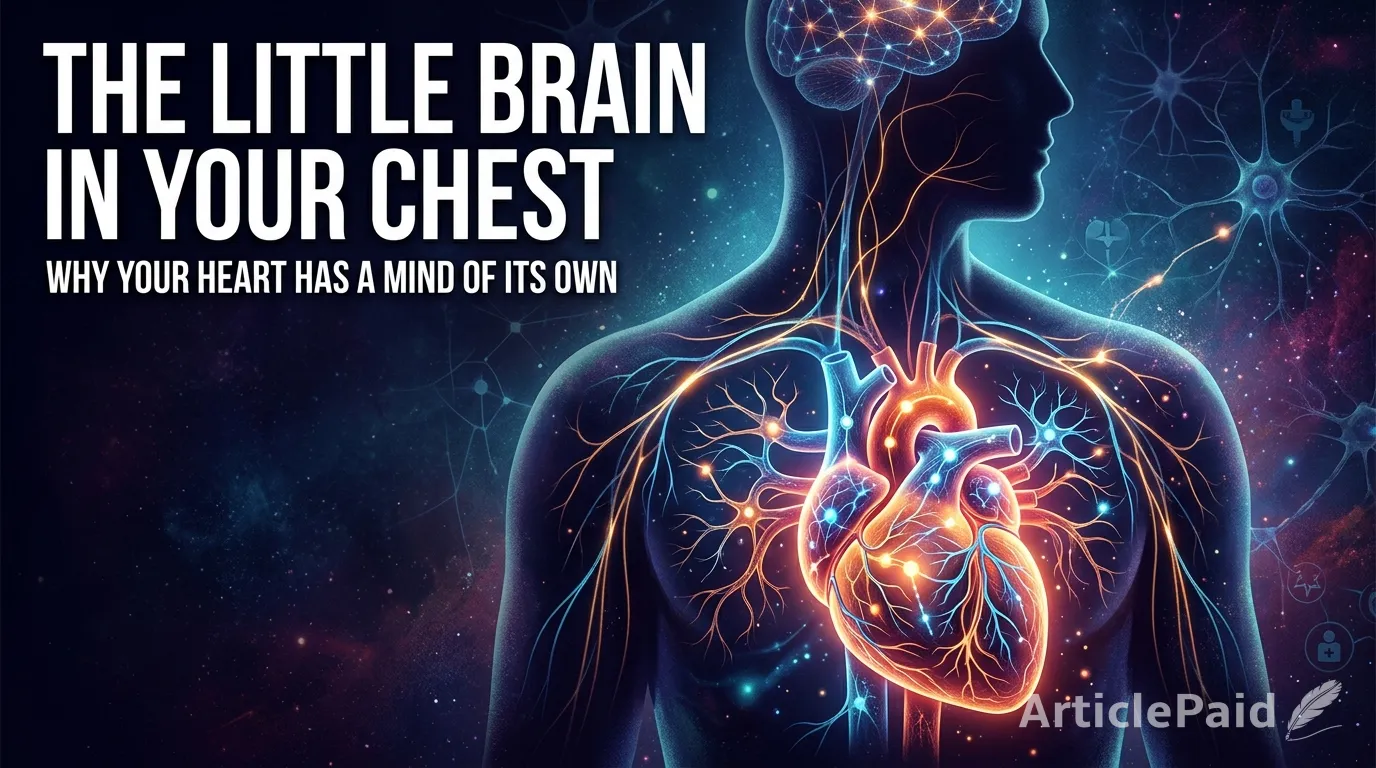
The Little Brain in Your Chest: Why Your Heart Has a Mind of Its Own
For centuries, science textbooks taught a simple narrative: the brain is the command center, and the heart is merely an efficient mechanical pump taking orders. But cutting-edge neurocardiology has revealed a fascinating truth that sounds almost like science fiction.
Tucked within the walls of your heart lies a complex network of around 40,000 specialized neurons—a system so sophisticated that scientists officially call it the Intrinsic Cardiac Nervous System, or simply the "little brain" in the heart.
This discovery fundamentally changes how we understand the relationship between mind and body. The heart’s neural network contains sensory neurons, motor neurons, and neurotransmitters identical to those found in the cranial brain. This enables the heart to process information, learn, remember, and make decisions independently.
In fact, during a heart transplant, when all central nervous system connections are severed, the donor heart continues to beat and adjust its rhythm to changing conditions purely on the strength of its internal "little brain."
Far from being a passive recipient of orders, the heart is an active participant in our emotional and cognitive lives. Biologically, the communication link between the heart and the brain is a two-way highway—and the heart actually sends significantly more signals up to the brain than it receives in return.
When you experience stress, excitement, or panic, the heart’s neurons detect chemical shifts in your bloodstream and alter its beating pattern.
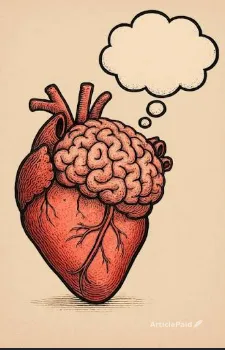
These altered cardiac signals then travel up the vagus nerve directly to the brain’s emotional centers, such as the amygdala and thalamus, directly influencing how you perceive fear, make decisions, and process stress.
This two-way dialogue explains why physical sensations in the chest are so deeply tied to our feelings. When your heart "races" with anxiety or "sinks" during disappointment, it isn't just reacting to a brain signal; its local nervous system is actively shaping your emotional state in real time.
Understanding the heart's intrinsic nervous system offers a remarkable bridge between biology and human intuition.
Expressions like "listen to your heart" or "following a gut feeling" were once dismissed as purely poetic metaphors.
Today, neurocardiology proves that our body possesses multiple neural hubs—including the brain, the gut, and the heart—that work in tandem to navigate the world.
The next time you feel a sudden surge of emotion or a physical reaction to a high-stakes moment, remember: your heart isn't just pumping blood to keep you alive.
It is actively sensing, processing, and thinking alongside you, beat by beat.























Responses (0)
Sign in to share your thoughts.
Sign in