The Psychology of Loneliness: Why We Feel Isolated in a World of Instant Messagi

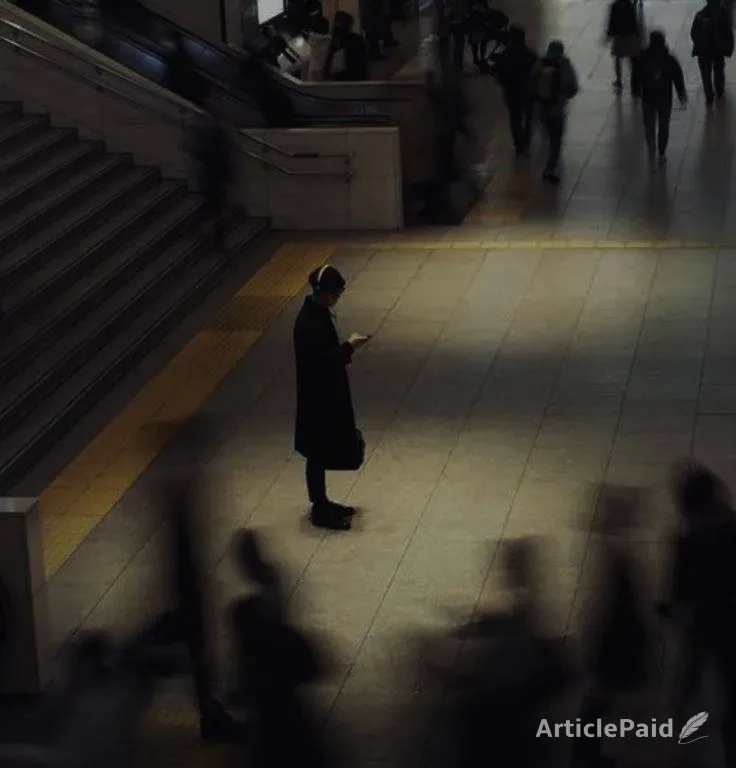
The average smartphone user unlocks their device dozens of times a day—technically, we are connected at all times. Yet, in June 2025, the World Health Organization reported that one in six people globally suffers from loneliness, with factors linked to this experience contributing to approximately 871,000 deaths annually—about one hundred people every hour.
The paradox of hyperconnectivity lies in the fact that the number of social contacts and the sense of closeness no longer align. One might exchange messages with 40 different people in a single day, only to feel lonely by evening—lacking any genuine warmth, simply because there is no one with whom to have a truly meaningful conversation.
In this article, we will examine the nature of loneliness from a psychological perspective and explore how digital communication alters the quality of our social connections.
What is the psychology of loneliness?
In psychology, loneliness is defined as a subjective experience. It does not arise from the mere fact that no one is around, but rather from a gap between the relationships an individual desires and the relationships they actually have. One can live in a large, bustling household and still feel lonely, while another might spend a month in complete solitude at a country house without experiencing anything of the sort. The experience of loneliness cannot be cured by quantity; simply adding more people to one’s life is not enough if the deficit lies not in the number of social contacts, but in their depth.
When Solitude Can Be a Resource
In psychology, a distinction is made between the state of loneliness and solitude. Solitude is something an individual chooses for themselves; it is restorative—these are the very moments when one can reflect and create. For many, it is a physiological necessity.
Data from VTsIOM (Russian Public Opinion Research Center) for March 2025 indicate that attitudes toward this state are shifting in Russia: 68% of Russians no longer fear solitude, compared to 54% in 2010. The opportunity to spend time alone is increasingly viewed as the norm rather than a social failure, and the fear of solitude is no longer an inherent part of one’s worldview.
Social and Emotional Loneliness
Psychologists distinguish between two types of loneliness.
- Social loneliness is the absence of a close social circle—such as a group of friends, colleagues, or a community with shared interests. A person might be in an intimate relationship with a partner, yet lack even a single acquaintance with whom they could go to the movies.
- Emotional loneliness is the absence of someone with whom one can truly be oneself. While there may be people around, there is no one to whom one can speak openly—without any filters—about one’s fears, shame, or failures. Emotional distress is particularly acute in such cases, and the digital environment often masks it; social media feeds serve as a constant reminder that there are many people around, creating an illusion of emotional closeness. This is the very core of digital loneliness.
When Loneliness Becomes a Problem
The feeling of loneliness itself is a normal part of life—much like hunger or fatigue—serving as a signal that something is amiss with one’s social connections.
Loneliness becomes a problem when it exhibits the following four characteristics:
- Duration — the state persists for months, regardless of changing circumstances.
- Diminished quality of life — a loss of interest in activities that were once enjoyable.
- Worsening mood — feelings of dejection, anxiety, irritability, or sleep disturbances.
- Avoidance — the individual declines invitations despite a desire for social interaction, causing their social circle to shrink even further.
This last point is the most insidious, as it creates a self-perpetuating cycle. The longer a person remains alone, the more daunting it becomes to take the first step toward others—and the more reason they find to believe that they are not needed by anyone.
Why is it so difficult to endure?
The need to belong to a group is biological; for our ancestors, isolation meant death, which is why the brain perceives it as a life-threatening danger. This triggers anxiety, emotional exhaustion, and the nagging suspicion that something is wrong with you.
A second factor is the blow to one’s self-esteem. People who have felt lonely for a long time often attribute it to inherent personality traits—believing, for instance, that they are uninteresting, boring, or difficult to be around. This perspective can be paralyzing, as changing one’s fundamental character feels impossible—even though the situation might actually require taking specific, actionable steps.
Three perspectives on the causes of loneliness
The existential approach, associated with the work of Irvin Yalom, views loneliness as an inherent part of the human condition. There is always a gap between two individuals—one person’s inner experience can never be fully shared by another. The goal, therefore, is not to eliminate this gap, but to stop viewing it as a personal catastrophe.
Attachment theory explains why some people handle distance with ease, while others find it painful. Early relational experiences shape an individual’s expectations: Will I be supported? Is it okay to ask for help? Is it safe to show vulnerability? Someone with an anxious attachment style may constantly scan their relationships for signs of rejection. Digital messaging platforms provide ample fuel for this—for example, a message that has been "read" but left unanswered might be interpreted as a rejection, thereby intensifying feelings of loneliness.
Cognitive-behavioral models focus on underlying beliefs. People who have long felt lonely often harbor distorted thoughts, such as "I’m not an interesting person," "Reaching out first is intrusive," or "Everyone else has already formed their own social circles." These thoughts act like a set of instructions: the individual avoids taking actions that could change their situation, and as a result, the state of loneliness becomes entrenched.
How digital communication is changing the way we interact
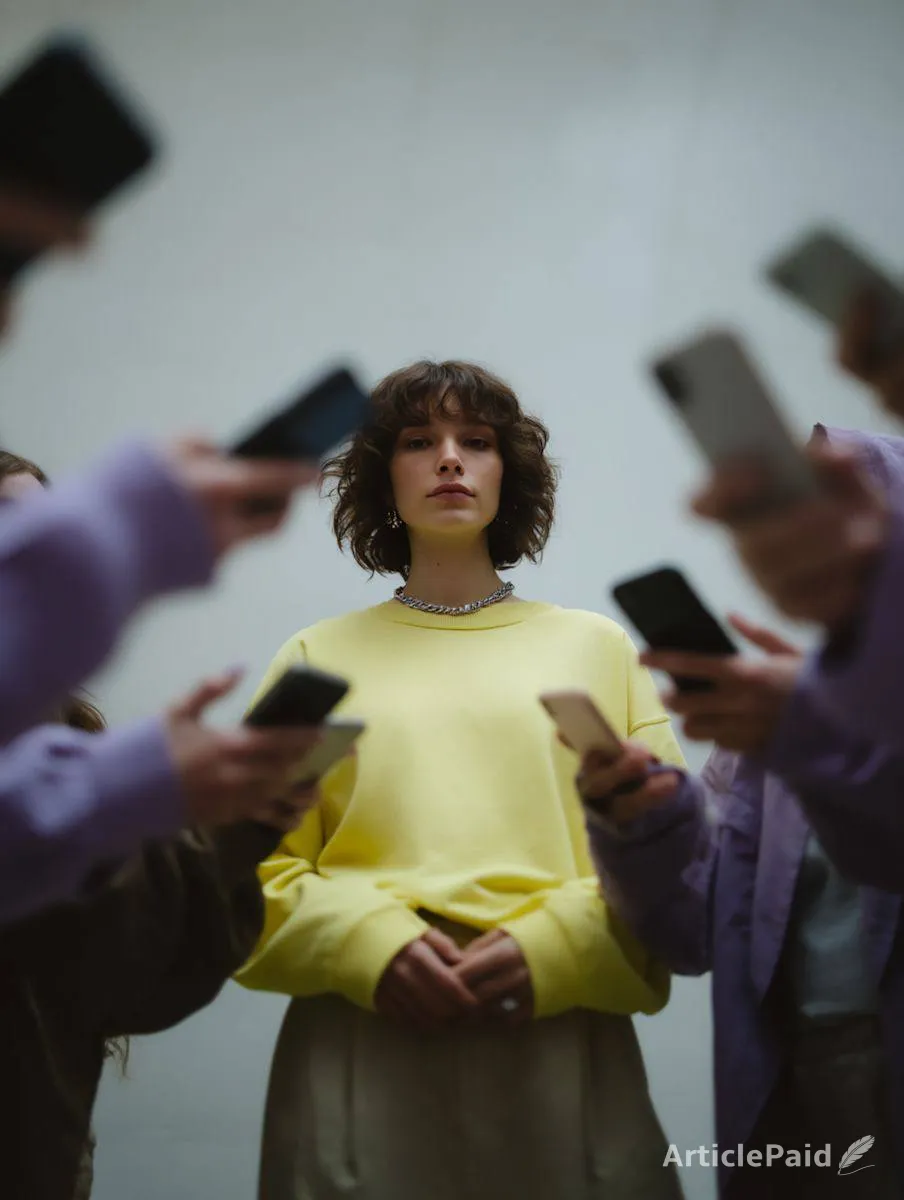
The primary shift is the transition from synchronous to asynchronous interaction. In a live conversation, both parties exist within the same moment in time. In written correspondence, this is absent: a message is sent, and a response may arrive at some later point. While this format is convenient for practical matters, it is ill-suited for fostering intimacy, which relies on the shared experience of a specific moment.
Furthermore, in face-to-face conversation, we pick up on intonation, pauses, facial expressions, and eye contact. Text conveys only the raw meaning, leaving the brain to fill in the emotional layer itself—for instance, the phrase "fine, let's talk later" might sound neutral when spoken, but in a chat, it could be perceived as an expression of resentment.
Another key feature is the ability to edit oneself. Messages can be rewritten, and one’s profile can be curated to showcase only the most flattering images. While this reduces the fear of judgment, it also eliminates spontaneity—and with it, a genuine sense of connection. We end up encountering an edited version of the other person, just as they encounter an edited version of us.
Why Micro-Interactions Fail to Meet Our Needs
A "like," a reaction, a sticker, or a quick "how are you?"—these are micro-interactions. They signal "I see you," which is their value. However, they do not satisfy the need for deep connection—much like a glass of water cannot replace a full meal.
The problem is that micro-interactions create a sense of having "done the work" of socializing. Someone might leave 20 reactions and reply in 5 different chats, feeling as though they’ve been socializing all day. In reality, they haven’t shared anything about themselves, nor have they learned anything about what others are going through.
Mechanisms That Exacerbate Isolation
While the digital environment doesn’t inherently make people lonely, it contains built-in mechanisms that intensify the experience of loneliness:
- Social comparison: Your feed displays curated snippets of other people’s lives, making your own ordinary evening feel like a failure by comparison.
- FOMO (fear of missing out): The persistent feeling that "real life" is happening elsewhere—and that you aren’t a part of it.
- Passive consumption: Reading or watching content without contributing or responding—gaining information about others without actually connecting with them.
- Blurred boundaries: Work-related chats intruding into your evening, or personal messages popping up during the workday—preventing any single interaction from receiving your full, undivided attention.
Research indicates that loneliness is linked less to the total time spent on social media and more to *how* it is used. Active engagement—such as leaving comments, sending private messages, or making calls—tends to have a neutral or positive effect, whereas passive scrolling is associated with a decline in well-being.
Age-related and Group Differences

The experience of loneliness varies across different groups.
Adolescents and young adults exhibit the highest level of engagement with the digital environment and a heightened sensitivity to social comparison. According to WHO estimates, 17–21% of individuals aged 13–29 experience loneliness, while a quarter of adolescents face social isolation. For a teenager, belonging to a group is fundamental to the development of their identity; consequently, experiences of exclusion or loneliness can be particularly damaging. Data from VTsIOM (the Russian Public Opinion Research Center) confirms this vulnerability: members of Generation Z are 1.6 times more likely than other age groups to report a fear of loneliness.
For adults, the primary issue is often "digital burnout." Work-related messaging channels remain constantly active, blurring the lines between personal and professional life—leaving little energy by the end of the day for genuine, in-person connection. Communication is reduced to purely functional exchanges: tasks, schedules, and domestic logistics. Years can pass without any spontaneous, casual conversation, leading to a sense of loneliness that persists even within a busy, full life.
Older adults face two contrasting realities. On one hand, they may encounter barriers to accessing technology, alongside a shrinking social circle—former colleagues have faded into the past, while friends may have moved away or are dealing with health issues. WHO estimates suggest that social isolation affects approximately one-third of older adults. On the other hand, technology can serve as a vital resource for this demographic; for instance, it is the only way they can make video calls to grandchildren living in other cities.
How to Combat Loneliness
Let’s start with technology: giving it up entirely is neither realistic nor necessary, but setting personal ground rules can be very effective.
- Establish fixed time slots for social media—perhaps 20 minutes in the morning and evening—rather than keeping it running constantly in the background.
- Disable non-essential notifications; you should be the one to decide when to check your phone.
- Opt for more in-depth forms of communication—a voice or video call is better than a flurry of ten separate messages.
- Try spending one day a week completely free from social media feeds—not as a form of punishment, but as an experiment.
Also, pay attention to the quality of your interactions. Text-based communication often fails to convey emotional nuance, so choose voice calls for important conversations; when you can hear how someone is feeling, misunderstandings are far less likely to occur.
You should also work on your underlying assumptions. The pressure to be available 24/7 is often something we impose on ourselves. Giving yourself permission not to respond immediately—or to go offline for the evening—is a matter of psychological hygiene, not rudeness. It is also helpful to test your beliefs against reality: for instance, the idea that reaching out first is "intrusive" is frequently disproven by actual experience.
When to Seek Professional Help
Taking steps on your own works when you have the energy to do so. If you lack that energy, it doesn’t mean your loneliness can’t be addressed—it just means you’ll need to start from a different point. You should consider seeking professional psychological help if:
- the feeling of loneliness has persisted for several months, regardless of your external circumstances;
- you notice signs of depression, such as a persistent low mood, a loss of interest in things you once enjoyed, or changes in your sleep or appetite;
- the emotional tension you feel before social interactions is so intense that you end up avoiding meetings or gatherings you actually want to attend;
- you have begun drinking more alcohol or spending excessive amounts of time online as a way to numb your feelings;
- you find yourself having thoughts about life being meaningless.
A counseling psychologist can help you identify the root causes of your sense of lack and assist you in rebuilding your social skills. A cognitive-behavioral therapist can work with you to address the underlying beliefs or mindsets that prevent you from forming close connections. A clinical psychologist is the right choice if you suspect you may be experiencing depression or an anxiety disorder—situations where simply talking about your feelings is no longer enough.








Responses (0)