

Artificial intelligence is no longer a futuristic concept reserved for science fiction or research laboratories. It has become a driving force behind digital transformation, influencing everything from healthcare and finance to education, manufacturing, retail, and entertainment. Businesses of every size are investing in AI technologies to improve efficiency, automate repetitive tasks, and deliver better customer experiences, while individuals interact with AI-powered tools almost every day without even realizing it.
As AI capabilities continue to evolve at an unprecedented pace, understanding the latest trends is becoming essential for organizations, entrepreneurs, marketers, developers, and consumers alike. The companies that recognize these changes early will be better positioned to innovate, remain competitive, and adapt to rapidly changing market conditions.
This article explores the top 10 artificial intelligence trends that are expected to shape the future over the coming years. Rather than focusing on hype, these trends reflect practical developments already transforming industries and laying the foundation for the next generation of intelligent technologies.
1. Generative AI will become a standard business tool
Generative AI has quickly moved from experimental technology to an essential business solution. Organizations are integrating AI assistants into daily workflows to generate content, summarize documents, write code, create marketing campaigns, analyze data, and support customer service.
Instead of replacing employees, generative AI increasingly serves as a productivity multiplier. Professionals can spend less time on repetitive work and more time solving complex problems, making strategic decisions, and developing creative ideas.
Businesses are also customizing foundation models using their own internal knowledge, allowing AI systems to provide more accurate and context-aware responses. This trend is making enterprise AI significantly more valuable than generic public chatbots.
As models become faster, cheaper, and more specialized, generative AI will become as common in the workplace as email, spreadsheets, and search engines.
2. AI agents will automate complete workflows
The next evolution of artificial intelligence is moving beyond simple chat interfaces toward autonomous AI agents.
Unlike traditional assistants that answer questions, AI agents can perform multi-step tasks independently. They can gather information, analyze data, interact with software, make recommendations, and complete workflows with minimal human intervention.
For example, an AI agent could research competitors, prepare a marketing strategy, schedule meetings, draft emails, generate reports, and continuously monitor campaign performance.
Businesses are already experimenting with teams of specialized AI agents working together, each responsible for a particular function such as sales, finance, customer support, or software development.
This shift from AI as a tool to AI as an active collaborator is expected to redefine workplace productivity over the next decade.
3. Multimodal AI will become the new standard
Early AI models primarily worked with text. Modern systems can understand and generate multiple types of information simultaneously, including text, images, audio, video, and structured data.
This capability, known as multimodal AI, enables far more natural interactions.
Imagine uploading a product photo, asking questions about it using your voice, receiving written recommendations, and generating a promotional video—all within a single AI platform.
Healthcare professionals can analyze medical images alongside patient records. Engineers can combine diagrams, documentation, and sensor readings. Retailers can build personalized shopping experiences using images, text, and customer behavior.
As multimodal AI improves, digital experiences will become increasingly intuitive and human-like.
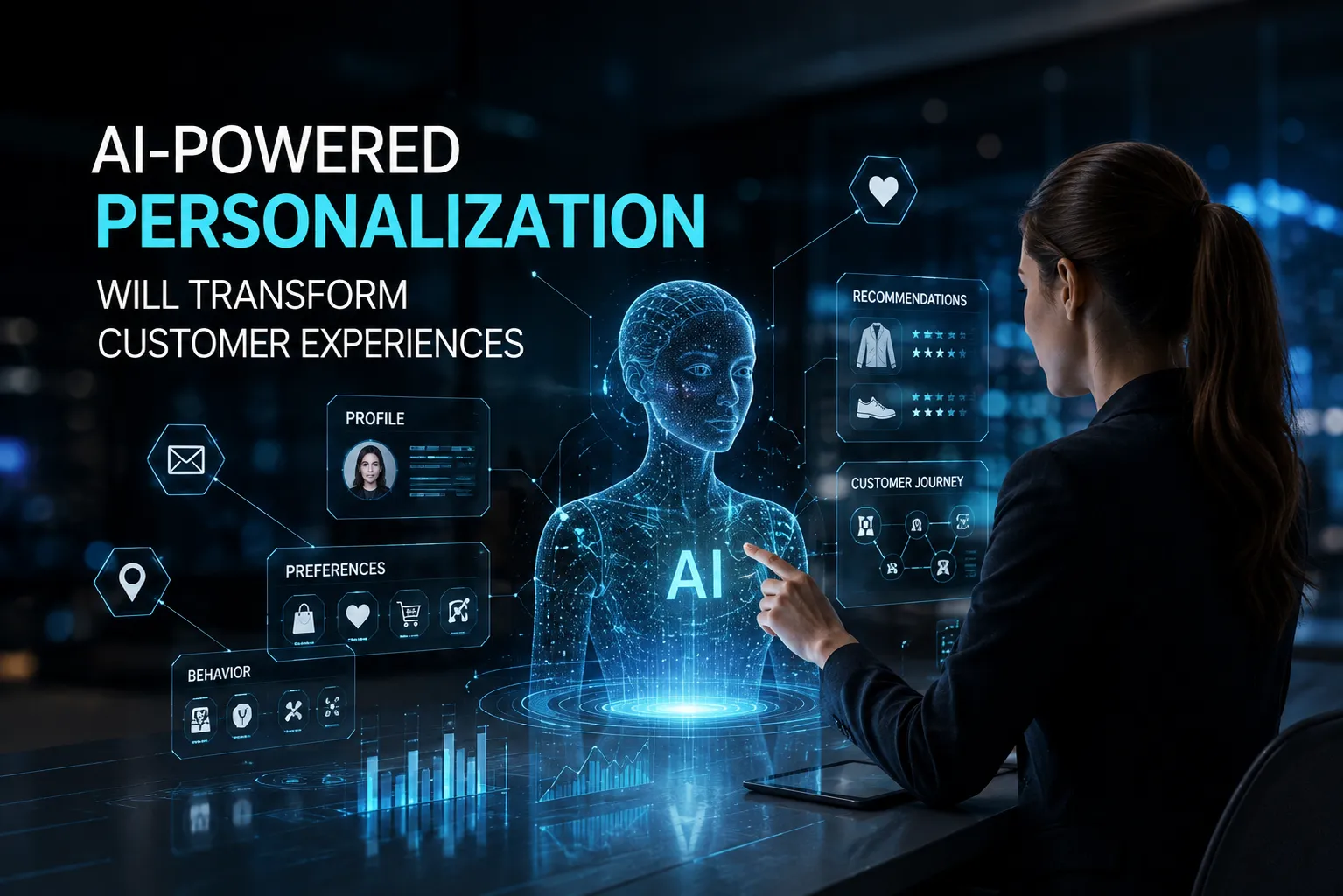
4. AI-powered personalization will transform customer experiences
Consumers increasingly expect personalized experiences across websites, apps, streaming services, online stores, and customer support channels.
Artificial intelligence enables organizations to analyze customer preferences, browsing behavior, purchasing history, and engagement patterns in real time.
Instead of delivering generic experiences, businesses can present highly relevant recommendations, customized offers, dynamic pricing, personalized learning paths, and intelligent product suggestions.
Advanced AI systems also adapt continuously as customer preferences change.
This level of personalization not only improves customer satisfaction but also increases conversion rates, customer loyalty, and lifetime value.
Organizations that balance personalization with responsible data practices will gain a significant competitive advantage.

5. Responsible AI and AI governance will become business priorities
As artificial intelligence becomes more powerful, organizations face increasing pressure to ensure that AI systems remain transparent, fair, secure, and accountable.
Governments around the world are introducing regulations addressing privacy, bias, intellectual property, explainability, and risk management.
Businesses are responding by creating AI governance frameworks that establish clear policies for development, deployment, monitoring, and compliance.
Responsible AI includes:
- Reducing algorithmic bias
- Protecting sensitive information
- Maintaining human oversight
- Improving model transparency
- Monitoring AI-generated outputs
- Ensuring regulatory compliance
Companies that prioritize responsible AI will build greater trust with customers, employees, investors, and regulators.
6. AI will reshape software development
Software engineering is experiencing one of the fastest AI-driven transformations.
Developers now use AI to generate code, detect bugs, create documentation, optimize performance, write automated tests, and explain unfamiliar programming languages.
Rather than replacing software engineers, AI is changing how development teams work.
Routine coding tasks are becoming automated, allowing developers to focus on architecture, problem-solving, security, and innovation.
Low-code and no-code platforms powered by AI are also enabling non-technical professionals to build applications without extensive programming knowledge.
As AI-assisted development matures, software creation will become faster, more accessible, and increasingly collaborative.
7. Edge AI will power smarter devices
Cloud computing has enabled tremendous AI growth, but many applications require faster responses, lower latency, improved privacy, and reduced bandwidth usage.
This is driving the adoption of Edge AI.
Instead of sending every request to cloud servers, AI models increasingly run directly on smartphones, laptops, vehicles, cameras, industrial equipment, medical devices, and Internet of Things (IoT) sensors.
Benefits include:
- Faster decision-making
- Improved privacy
- Lower operational costs
- Reduced internet dependency
- Enhanced reliability
Edge AI is expected to accelerate innovation in autonomous vehicles, smart factories, robotics, wearable devices, healthcare monitoring, and smart cities.
8. AI will revolutionize healthcare and scientific research
Healthcare continues to be one of the most promising areas for artificial intelligence.
Researchers are using AI to accelerate drug discovery, analyze medical imaging, predict disease progression, personalize treatments, and improve clinical decision-making.
Hospitals increasingly rely on AI-powered systems to optimize scheduling, identify high-risk patients, reduce administrative workloads, and improve diagnostic accuracy.
Scientific research is also benefiting from AI's ability to analyze massive datasets that would take humans years to process.
From climate modeling to genomics and materials science, artificial intelligence is helping researchers discover patterns, generate hypotheses, and accelerate innovation at an unprecedented pace.
Although human expertise remains essential, AI is becoming an indispensable research partner.
9. AI cybersecurity will become increasingly important
As artificial intelligence becomes more capable, both cybersecurity professionals and cybercriminals are using AI-powered tools.
Security teams employ AI to detect anomalies, identify threats, automate incident response, analyze malware, and predict potential attacks before significant damage occurs.
At the same time, attackers use AI to create more convincing phishing campaigns, automate vulnerability discovery, and generate sophisticated social engineering attacks.
This creates an ongoing technological arms race.
Organizations are investing heavily in AI-driven cybersecurity platforms that continuously monitor networks, identify suspicious behavior, and respond to threats in real time.
Cyber resilience will increasingly depend on intelligent automation combined with experienced security professionals.
10. Human-AI collaboration will define the future of work
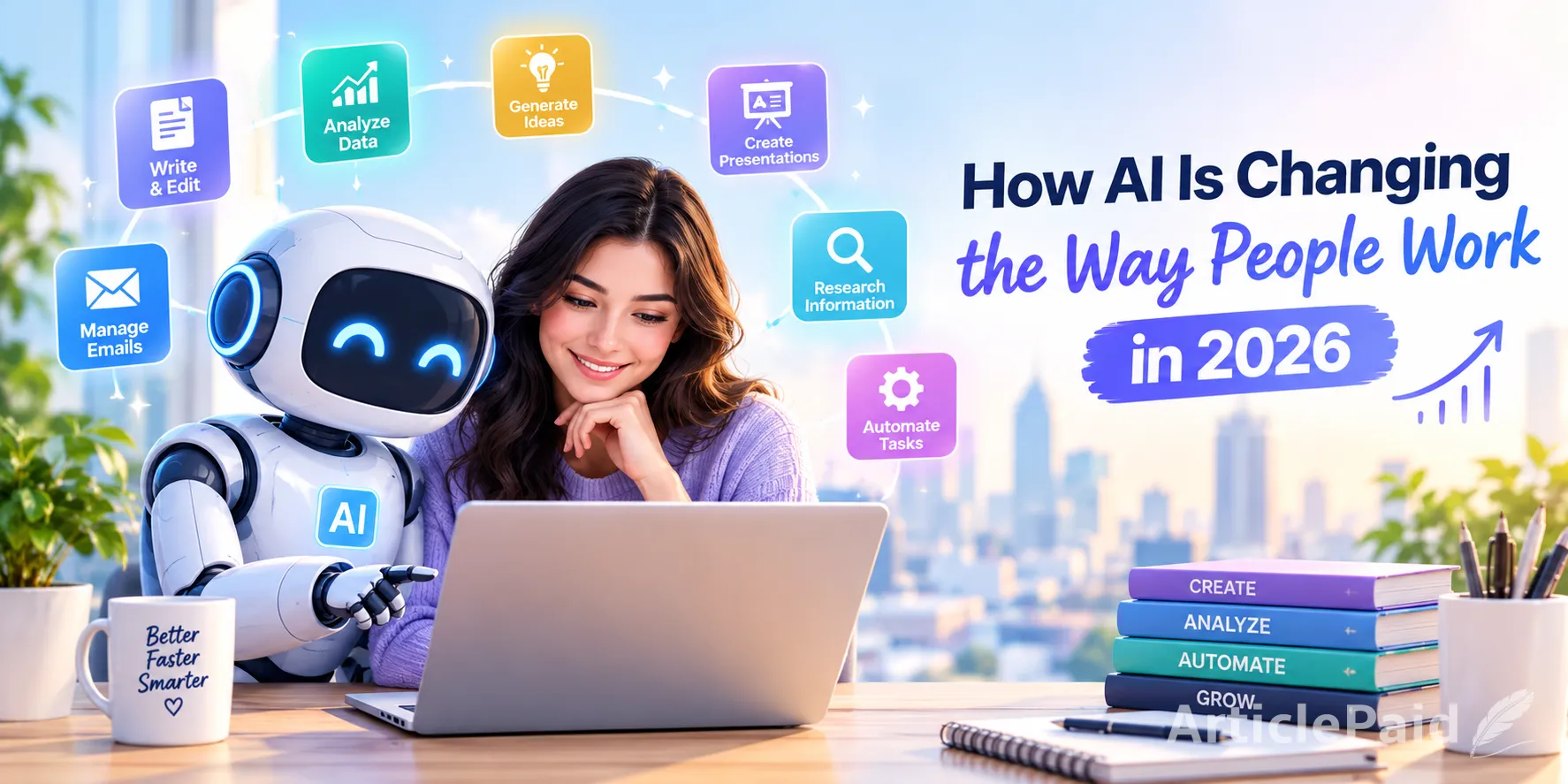
One of the most important artificial intelligence trends is not replacing people but enhancing human capabilities.
Across industries, AI is becoming a collaborative partner that supports decision-making, creativity, communication, research, and productivity.
Professionals who learn how to work effectively with AI tools will likely outperform those who ignore them.
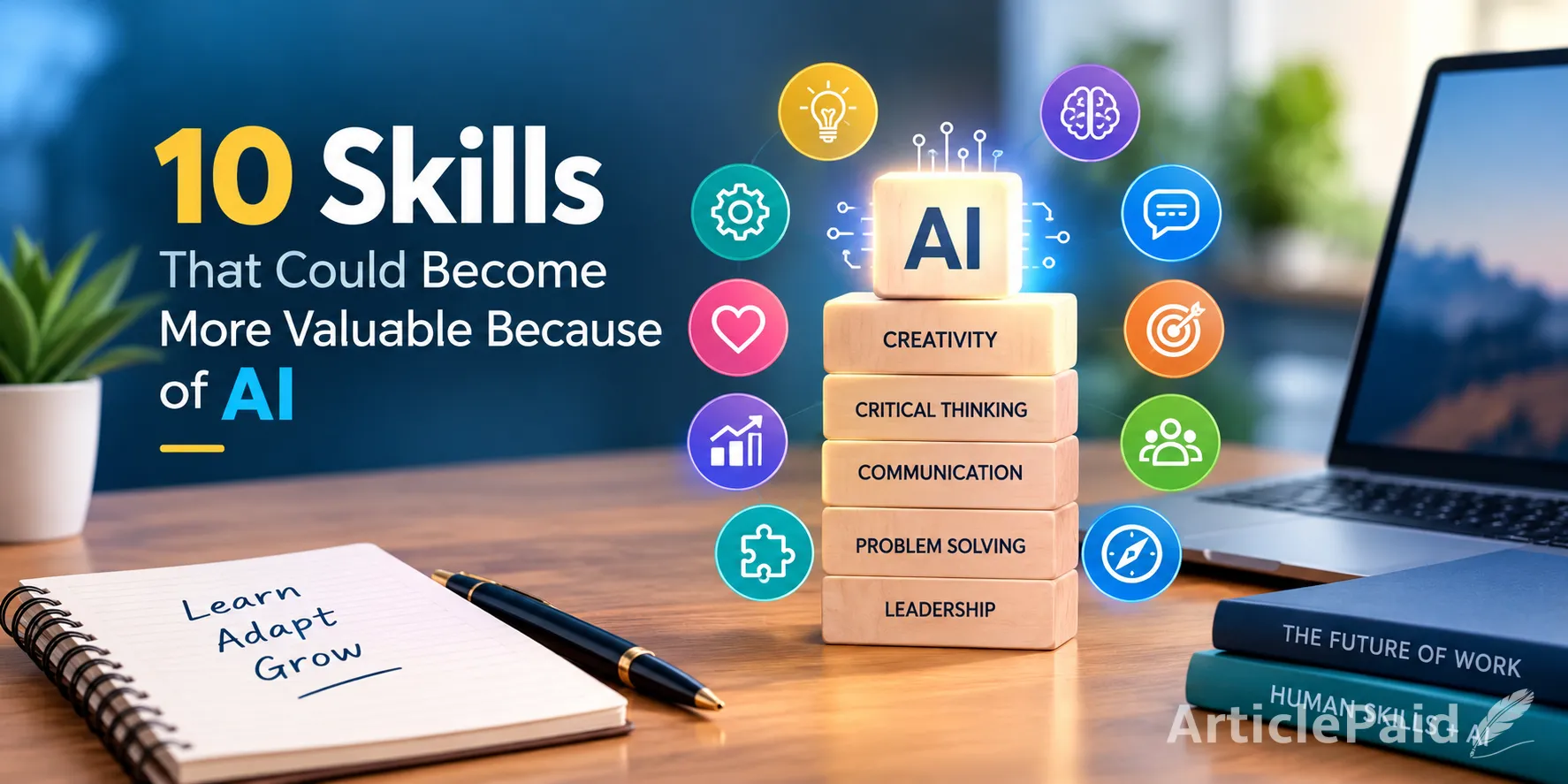
Future workplaces will emphasize skills such as:
- Critical thinking
- Prompt engineering
- Data literacy
- Creativity
- Emotional intelligence
- Strategic decision-making
- AI supervision
Organizations are investing in employee training to ensure workers can effectively integrate AI into daily operations.
The future belongs to teams where humans provide judgment, ethics, empathy, and creativity while AI handles repetitive analysis and execution.
Conclusion
Artificial intelligence is evolving from a specialized technology into a foundational layer of modern business and everyday life. The trends shaping the future extend far beyond chatbots and automation. They include intelligent agents capable of managing workflows, multimodal systems that understand diverse forms of information, AI-powered personalization, responsible governance, smarter software development, edge computing, healthcare innovation, advanced cybersecurity, and deeper collaboration between humans and machines.
For organizations, staying informed about these developments is no longer optional. Businesses that embrace AI strategically, invest in responsible implementation, and continuously adapt to emerging capabilities will be better equipped to compete in an increasingly digital economy.
Success with artificial intelligence is not simply about adopting the latest tools. It requires thoughtful integration, ongoing learning, and a commitment to balancing innovation with trust. As AI continues to mature, those who combine technological advancement with human expertise will be best positioned to shape the future rather than simply react to it.




















Responses (0)
Sign in to share your thoughts.
Sign in