
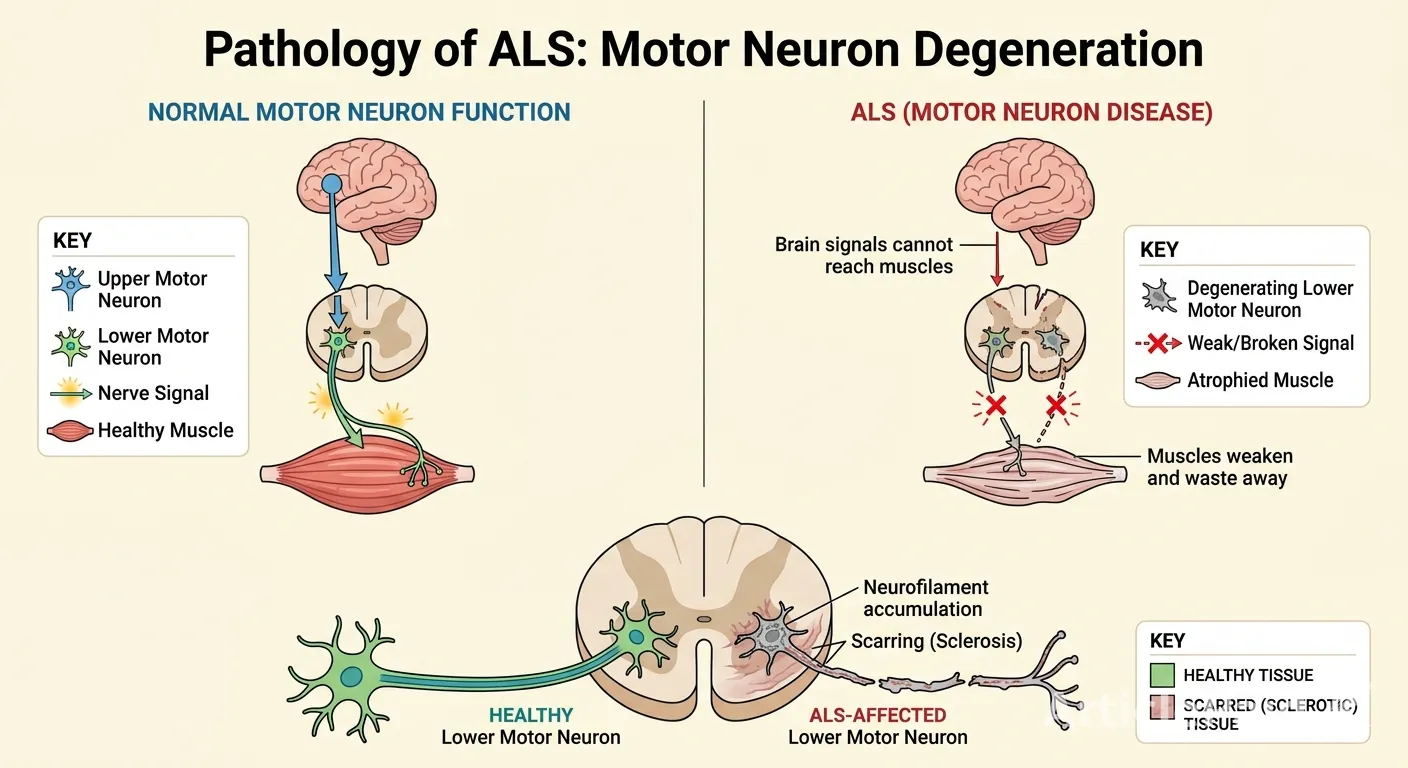
Amyotrophic Lateral Sclerosis (ALS)—often called Motor Neuron Disease (MND) or Lou Gehrig’s disease—is a complex condition that affects the nervous system. It damages the nerve cells responsible for voluntary muscle movement. While ALS is a severe medical diagnosis, the remarkable life of theoretical physicist Stephen Hawking shows how human determination and modern technology can push past physical limits.
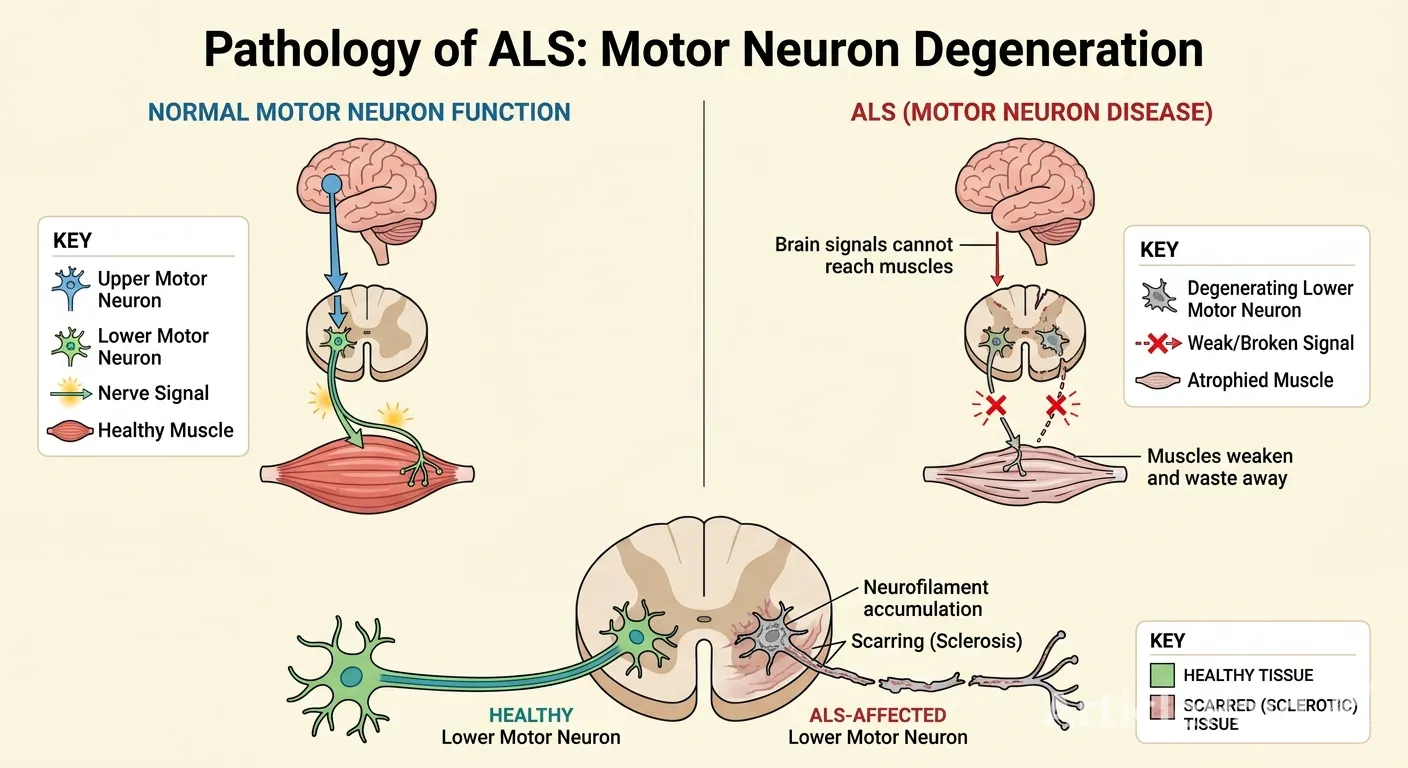
Understanding ALS and How It Affects the Body
To understand how ALS impacts the body, it helps to break down the medical name:
- Amyotrophic: Means "no muscle nourishment." When muscles stop receiving signals from nerve cells, they waste away (atrophy).
- Lateral: Identifies the specific areas in the spinal cord where nerve cells controlling muscle movement are located.
- Sclerosis: Means "hardening" or "scarring," which occurs as these nerve pathways degrade over time.
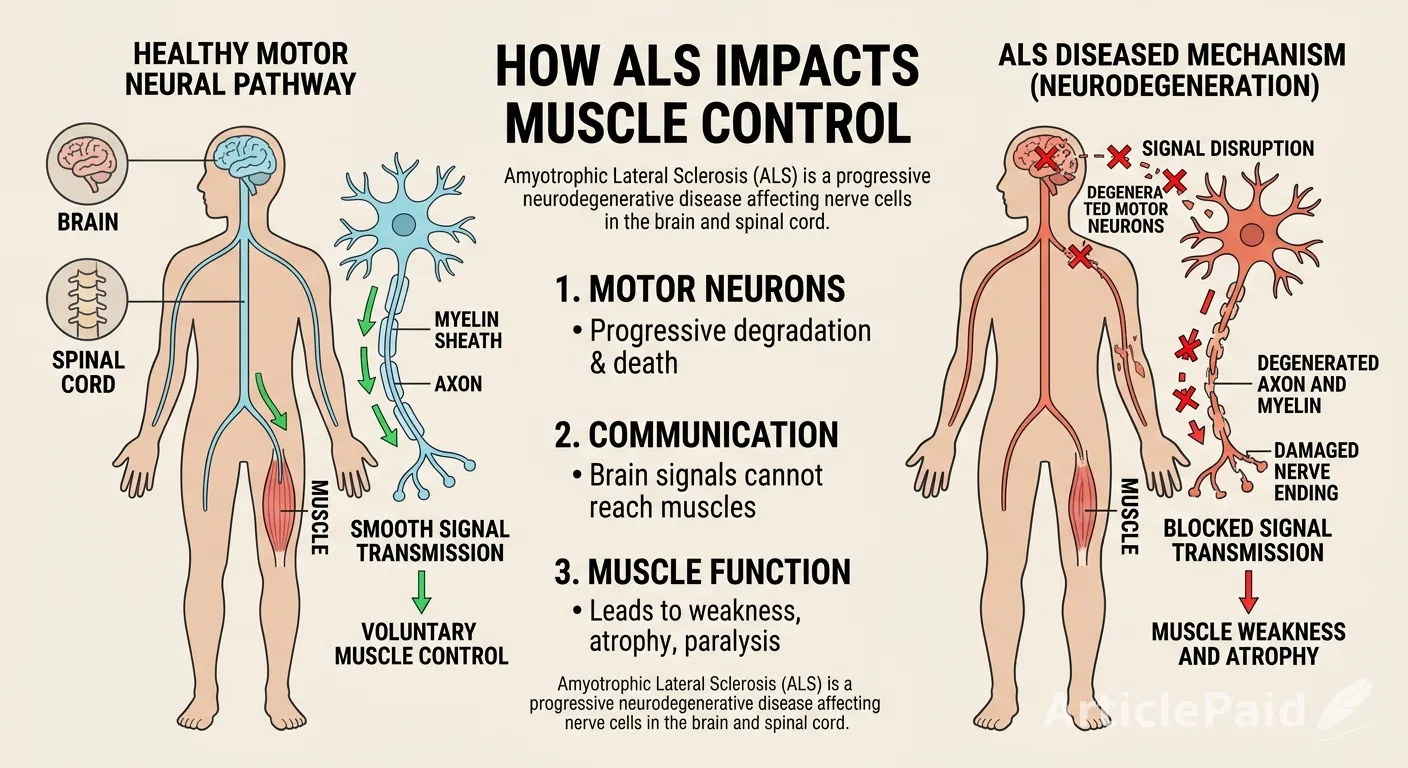
In a healthy nervous system, brain cells send signals down the spinal cord to tell muscles when to move—such as walking, raising an arm, or swallowing. In someone with ALS, these upper and lower motor neurons break down and die.
When nerve connections fail, the brain can no longer control voluntary muscle movement. Over time, individuals experience muscle weakness, loss of mobility, and difficulty speaking or breathing independently. However, ALS rarely affects cognitive abilities. A person's memory, reasoning, intellect, and senses usually stay completely clear and functional.
Key Facts About ALS
| Feature | What It Means |
| Early Symptoms | Muscle weakness, muscle twitches, stiffness, and frequent tripping |
| Progression | Gradual loss of movement, difficulty speaking (dysarthria), and difficulty swallowing (dysphagia) |
| Brain Function | Memory, thinking, and logic usually remain unaffected |
| Typical Timeline | Most individuals live 2 to 5 years after diagnosis, though outcomes vary |
Stephen Hawking’s Remarkable Medical Journey
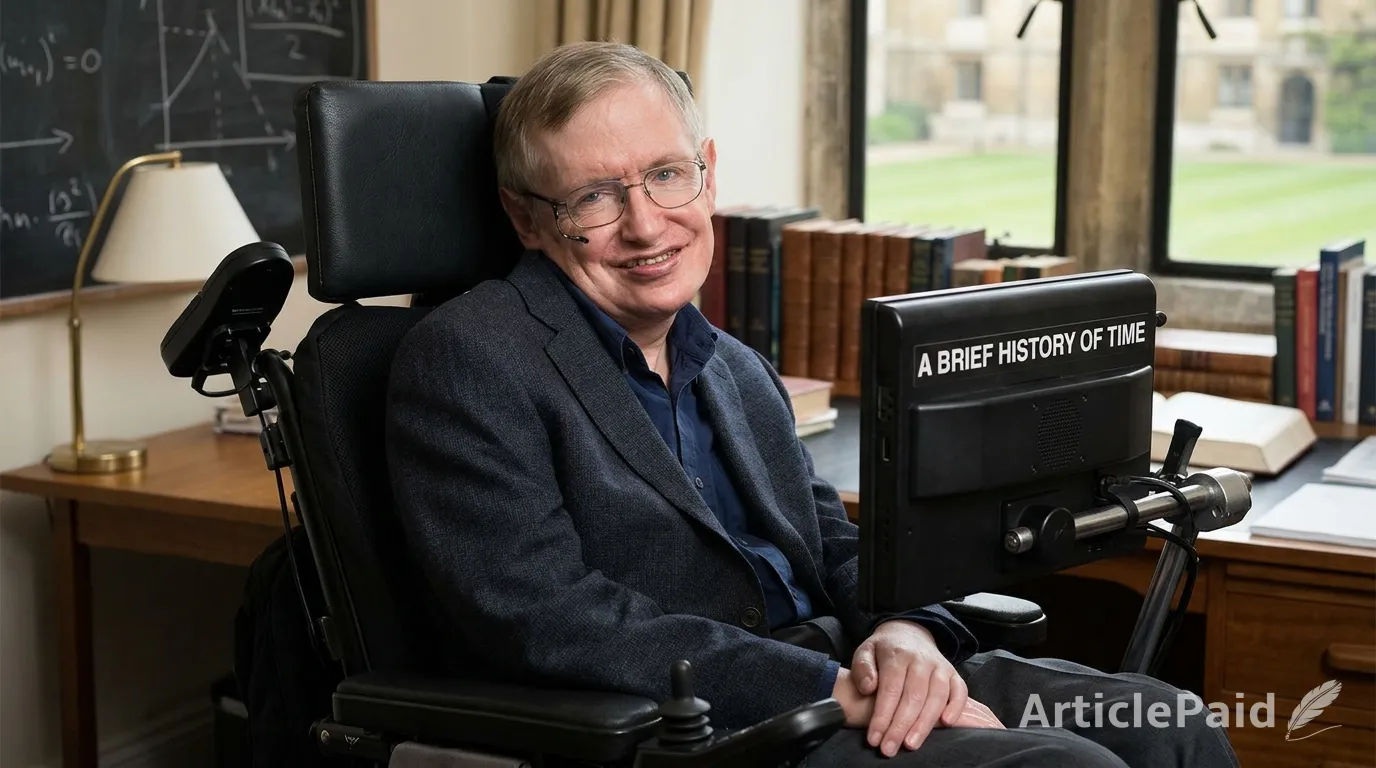
In 1963, at age 21, Stephen Hawking was a graduate student at the University of Cambridge when he began experiencing balance issues and unexplained falls. Following a series of medical tests, doctors diagnosed him with ALS and estimated he had only two to three years to live.
Hawking defied those medical predictions, living with the disease for 55 years until his death in 2018 at age 76. His case stands out as one of the most unusual long-term survival stories in modern neurology.
Key Factors in Hawking's Case
- A Rare, Slow-Progressing Form: Neurologists believe Hawking had an early-onset variant of ALS that progressed far more slowly than average. Instead of worsening continuously, his symptoms plateaued for long periods.
- Assistive Communication Technology: As Hawking lost muscle function and his ability to speak following a 1985 surgery, assistive tools helped him stay connected. He used an infrared sensor attached to his glasses that detected small movements in his cheek muscle. This allowed him to select words on a screen and speak using a computerized voice synthesizer.
- Focus on Theoretical Science: Because ALS left his cognitive abilities intact, Hawking continued his groundbreaking work in physics. He formulated major theories about black holes, developed the concept of "Hawking radiation," and wrote the global best-seller A Brief History of Time.Stephen Hawking’s life helped change public understanding of physical disabilities. His journey demonstrated that even when physical movement becomes restricted, the capacity for thought, discovery, and connection remains powerful.





















Responses (0)
Sign in to share your thoughts.
Sign in