
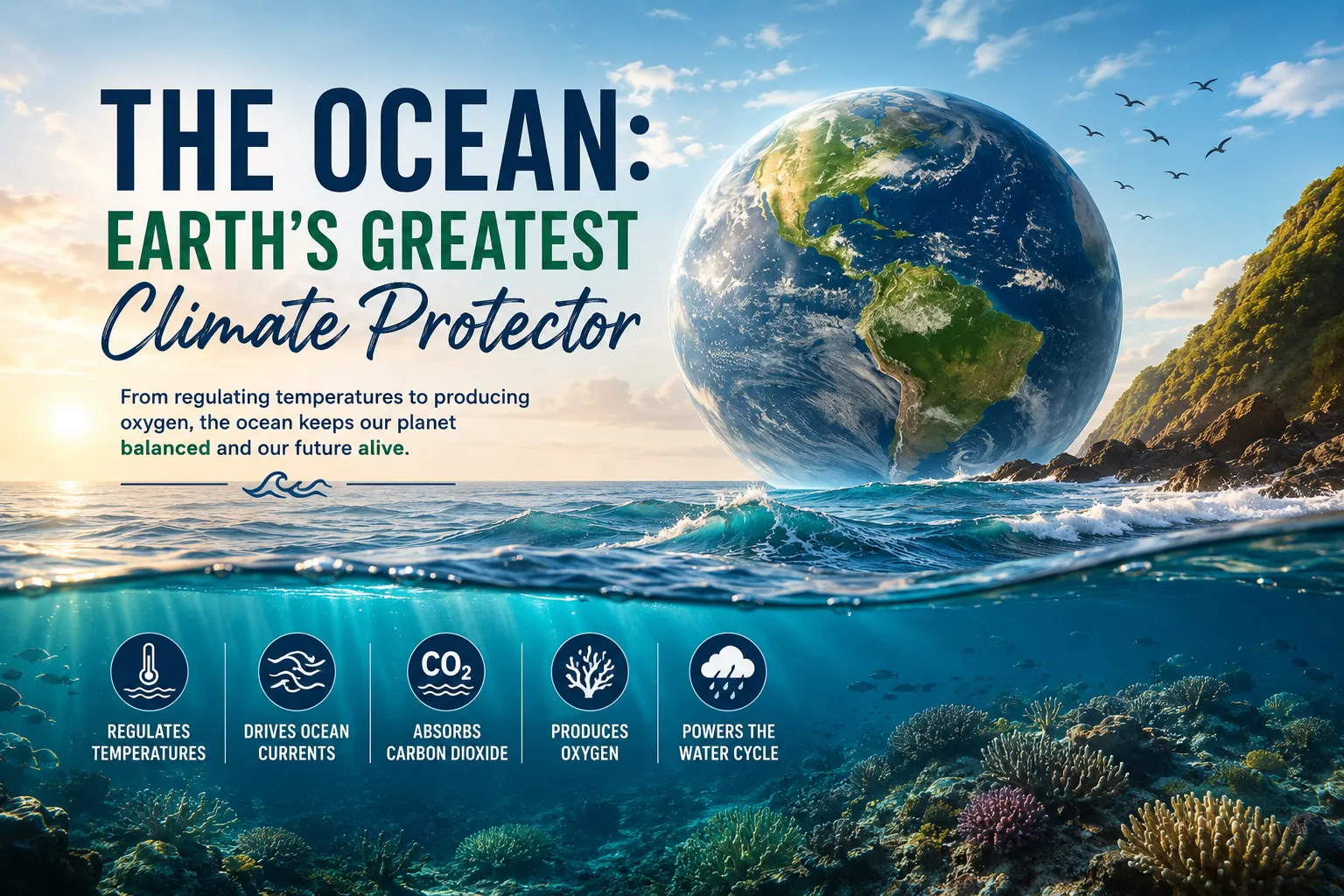
When we think about the ocean, we often imagine sandy beaches, crashing waves, colorful coral reefs, and fascinating marine animals. But did you know that the ocean is also one of Earth's greatest climate protectors? Covering about 71% of our planet's surface, the ocean quietly works every day to keep Earth's temperature stable, influence weather patterns, and support life. Without it, our planet would be far hotter, storms would be more extreme, and life as we know it would be very different.
Let's explore how this incredible natural system helps regulate Earth's climate.
A Natural Temperature Controller
One of the ocean's most important jobs is storing heat. Water can absorb much more heat than land without becoming extremely hot. During sunny days and warm seasons, the ocean absorbs large amounts of the Sun's energy. Instead of heating up quickly, it stores this warmth and releases it slowly over time.
This is why coastal cities usually have milder weather than places far inland. Summers are often cooler, while winters are less severe. The ocean acts like a giant thermostat, preventing dramatic temperature changes.
Ocean Currents Move Heat Around the World
The ocean is never still. Powerful currents constantly move warm and cold water across the globe. Scientists often compare these currents to a giant conveyor belt.
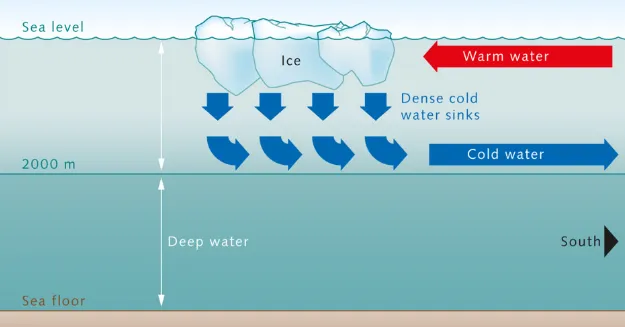
Warm water travels from the equator toward colder regions, while cold water flows back toward warmer areas. This movement spreads heat more evenly around the planet and helps shape the climate of different countries.
For example, the Gulf Stream carries warm water across the Atlantic Ocean, helping many parts of Western Europe stay much warmer than they otherwise would be.
The Ocean Absorbs Carbon Dioxide
Carbon dioxide (CO₂) is one of the main greenhouse gases responsible for global warming. Thankfully, the ocean acts as a huge carbon sink by absorbing around 25% of the carbon dioxide released into the atmosphere by human activities every year.
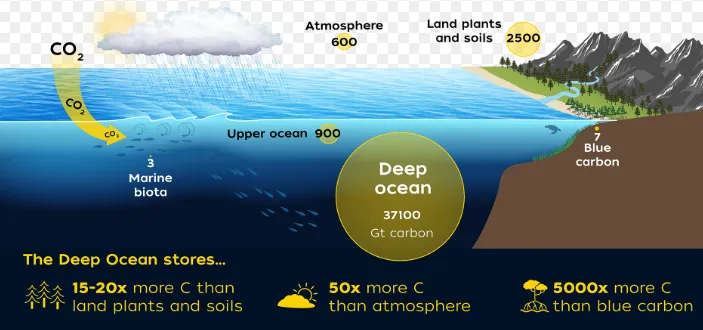
Tiny marine plants called phytoplankton use sunlight to absorb carbon dioxide during photosynthesis. When they die, much of the carbon they captured sinks deep into the ocean, where it can remain stored for hundreds or even thousands of years.
Without the ocean absorbing so much carbon dioxide, climate change would be happening even faster.
The Ocean Produces Oxygen
Many people think rainforests produce most of Earth's oxygen, but the ocean plays an equally important role. Tiny phytoplankton floating near the ocean's surface produce about half of the oxygen we breathe.
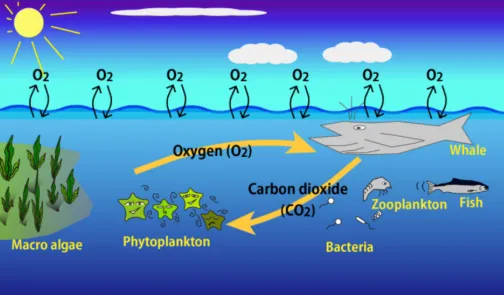
These microscopic organisms may be invisible to the naked eye, but they are among the most important living things on Earth. Every second breath you take is believed to come from the ocean.
The Ocean Powers the Water Cycle
Nearly all the rain that falls on land begins its journey in the ocean.
The Sun warms the ocean's surface, causing water to evaporate into the atmosphere. This water vapor forms clouds, which are carried by winds across continents. Eventually, the clouds release rain or snow, providing freshwater for rivers, lakes, farms, forests, and people.
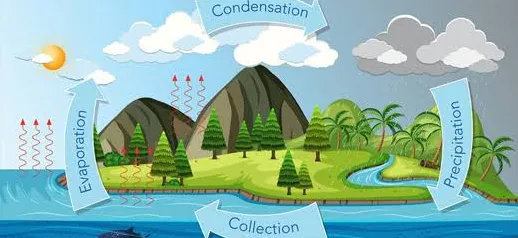
Without ocean evaporation, many regions would receive little or no rainfall.
Challenges Facing Our Oceans
Although the ocean helps protect us, it also needs our protection.
Climate change is warming ocean waters, causing coral reefs to bleach and sea levels to rise. Plastic pollution, oil spills, and overfishing are harming marine ecosystems and reducing the ocean's ability to stay healthy.
Protecting the ocean means protecting our own future. Simple actions such as reducing plastic waste, saving energy, recycling, and supporting marine conservation can make a real difference.
The ocean is much more than a beautiful place to visit. It is Earth's natural climate regulator, quietly working every day to absorb heat, store carbon dioxide, produce oxygen, drive the water cycle, and distribute warmth around the globe.
The next time you see the sea, remember that its waves are doing far more than reaching the shore—they are helping keep our entire planet alive and in balance. By caring for the ocean today, we help ensure a healthier, safer world for future generations.

















Responses (0)
Sign in to share your thoughts.
Sign in