Glaciers Hold Ancient Air Bubbles That Reveal Old Climates

In this article
I will be honest with you. When I first got this topic, I thought it was going to be boring. Ice, air, bubbles. What is there to write about?
But then I sat down and thought about it for a while. And it actually started to feel interesting. Like, really interesting.
Just imagine this. You are holding a piece of ice in your hand. Inside that ice, there is a tiny bit of air trapped. And that air is not from today. It is not from yesterday. It is from a time when there were no cars, no phones, no cities. Sometimes that air is so old that humans were not even around.
It is like the ice saved a little piece of old air and kept it safe for us. Like when you keep an old letter inside a book, and years later you open it and you remember everything about that time.
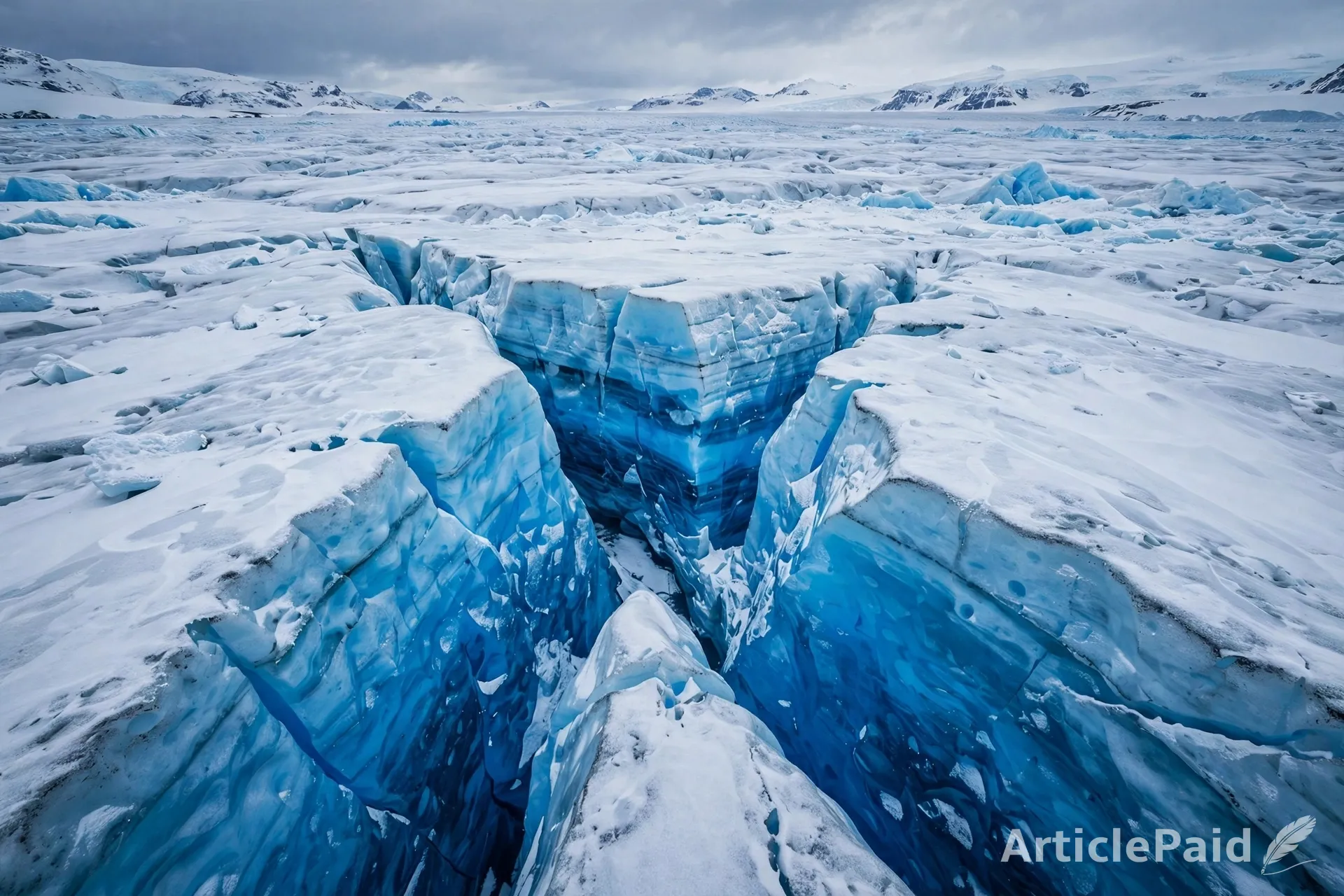
A glacier is kind of like that. A big frozen book, full of old air.
How Does Air Get Stuck Inside Ice?
This part is not hard to understand. I understood it like this.
Every year, snow falls on a glacier. That snow stays there. Next year, more snow falls on top of it. Then the next year, even more. After some time, all that weight presses the snow down. It becomes hard. It becomes solid ice.
Now fresh snow is not solid. It is soft. There's a lot of space between the snowflakes. And there is air in that space."
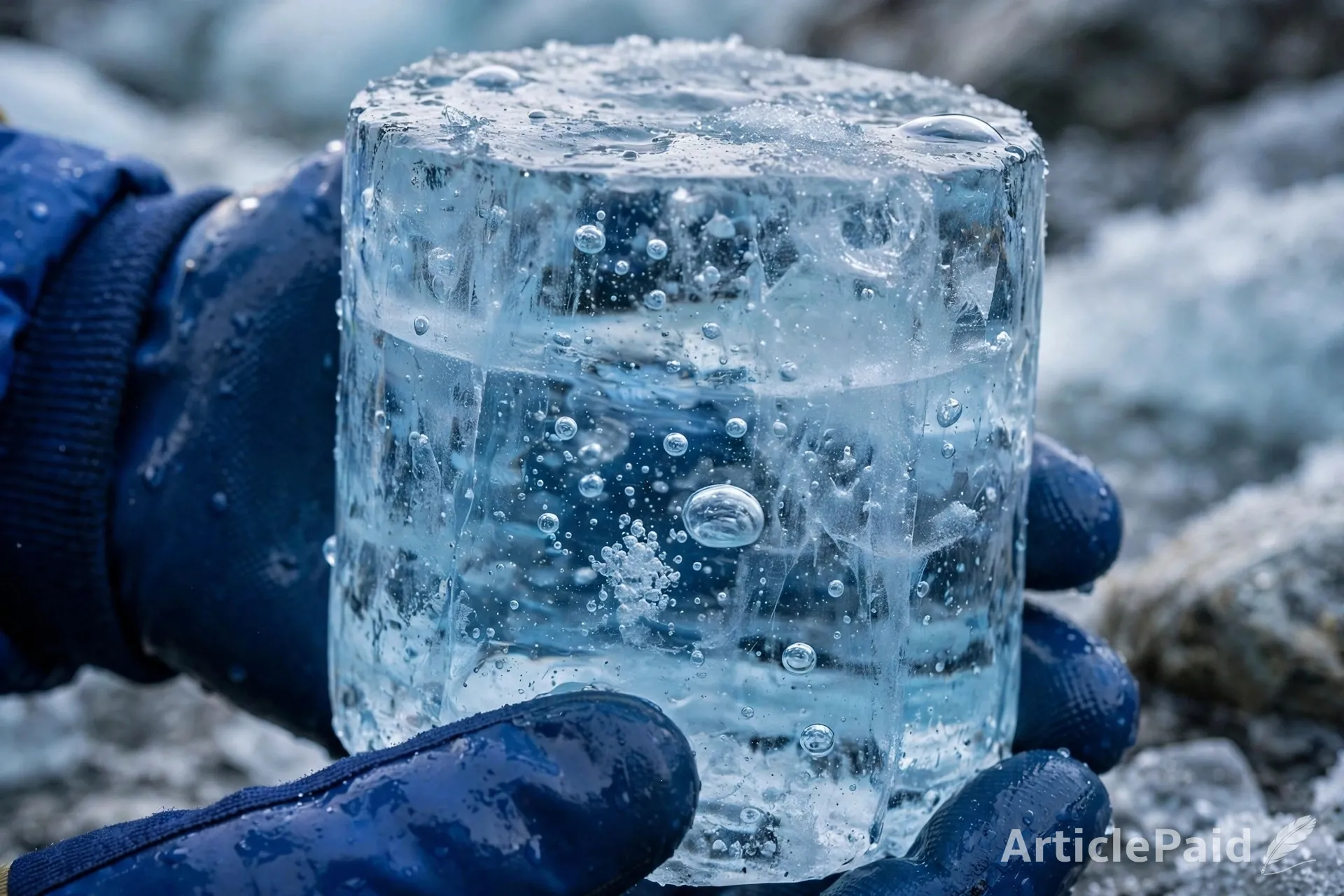
When the snow gets pressed down, that air cannot get out. It gets stuck. It turns into a tiny bubble. And it just stays there. For hundreds of years. Sometimes for thousands of years.
The ice on the top is new. The deeper you go, the older the ice gets. And the air inside it also gets older.
It is like the clothes in your cupboard. The ones you put at the bottom are the oldest ones. The ones on the top are the newest. Same idea.
What Can These Small Bubbles Tell Us?
This is where it gets really interesting.
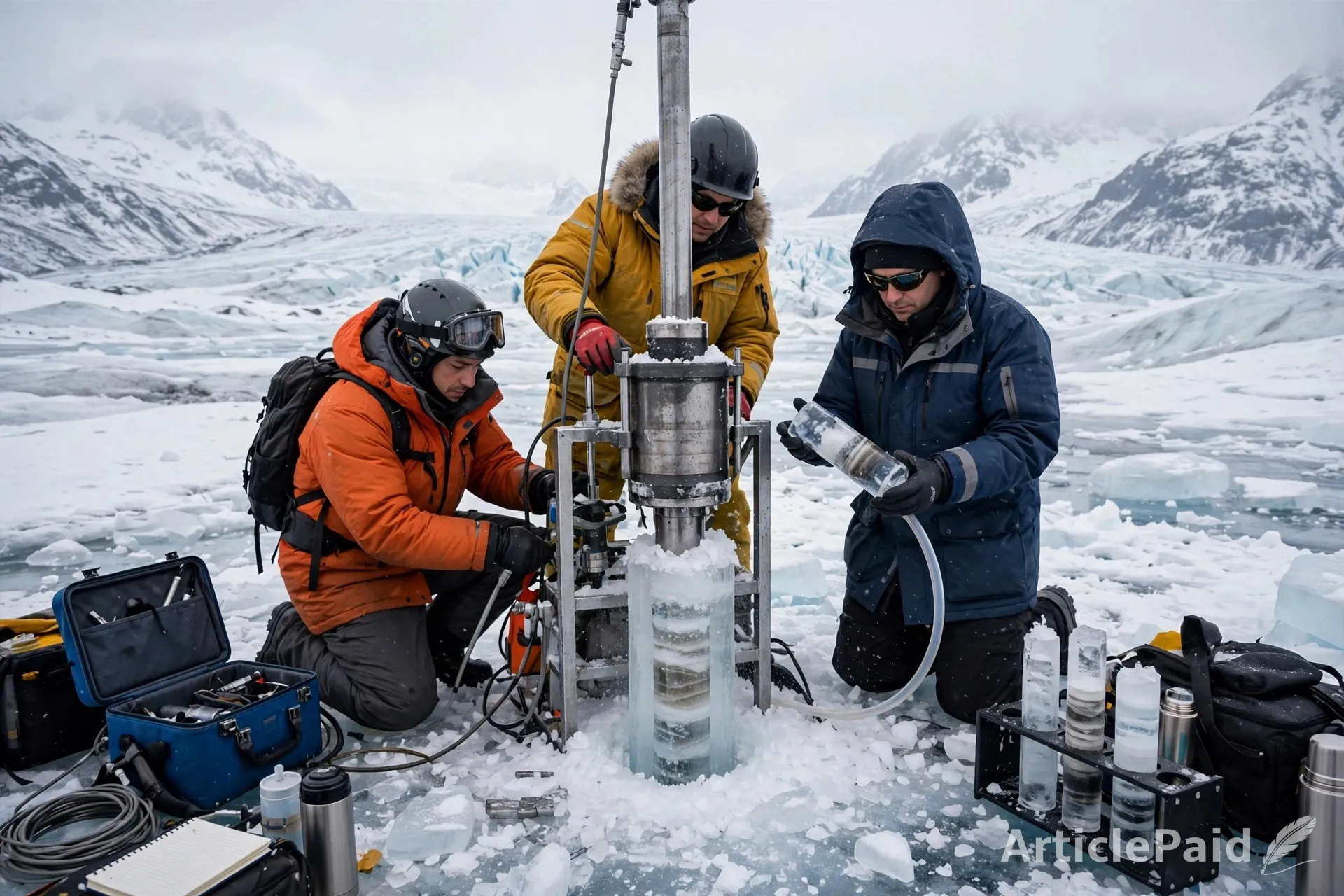
Scientists pull out a long tube of ice from a glacier. They call it an ice core. It looks like a long white stick. They take it to a lab. There they melt a very small part of it. When it melts, the old air trapped inside comes out.
Then they check that air. What was in it? Was the air clean? Was it warm back then or cold? How much carbon dioxide was there?
And what they found is something to think about.
In the past, the Earth became hot sometimes and cold sometimes. That kept happening. But the amount of carbon dioxide in the air today is more than it has been in the last 800,000 years. That number is so big I cannot even picture it in my mind.
So something different is happening now. And that something is us. Our cars, our factories, our smoke. All of it is changing the air faster than before.
I am not trying to scare you. I am just saying, the ice is not lying. It was there. It saw everything happen.
How Do Scientists Get This Ice Out?
This part I respect a lot. Because the work is not easy at all.
These scientists go to Antarctica. Or to Greenland. Places where it is minus 40, minus 50. I start feeling cold in Karachi when it is 18 degrees, so I cannot even imagine minus 50.
They take a big drill with them. They drill down and down. Sometimes they go down 2 kilometers. That is really deep.
Then they pull the ice out, piece by piece. And the hardest part is, they cannot let it melt. Not even a little bit. If it melts, the old air inside will be gone. All their hard work will be wasted.
So they pack it in special cold boxes and send it to labs. It is slow work. It is expensive work. And it is freezing cold work. But they do it. Because without that ice, we would have no idea what the old climate was like.
Honestly, those people are very brave.
Why Should We Care About Old Air?
I know what you are thinking. Because I thought the same thing at first. Why should I care about air from 10,000 years ago? I have my own problems today. I need to know if it will rain tomorrow, not what happened 10,000 years ago.
That is a fair question.
But think of it like this. When you go to a doctor, he asks you, when did the fever start? What did you eat? What happened before? He does not ask for fun. He needs your past to fix your present.
Climate is the same. If we do not know how the climate changed before, we will not understand what is happening now.
These bubbles show us a pattern. When carbon dioxide goes up, temperature also goes up. And right now, both are going up.
This is not just a bookish thing. It is connected to our daily life. Summers are getting longer. Rains are coming late. Winters feel different. All of this is part of the same story.
Conclusion
So next time you see a picture of a glacier, don’t just think oh nice, white ice, looks pretty.
Think of it as a time machine. Inside it, there is air from a time when the world was totally different.
Scientists are listening to that air. And I think we should listen too. Because sometimes, the old stories tell you the most about what is coming next.










Responses (0)