Human Eyes Can Detect a Single Particle of Light in Darkness

Human Eyes Can Detect a Single Particle of Light in Darkness
Have you ever stood outside on a pitch-black night, miles away from any city lights, waiting for your eyes to adjust, and wondered just how powerful your vision really is?
It turns out your eyes are even more astonishing than you probably give them credit for.
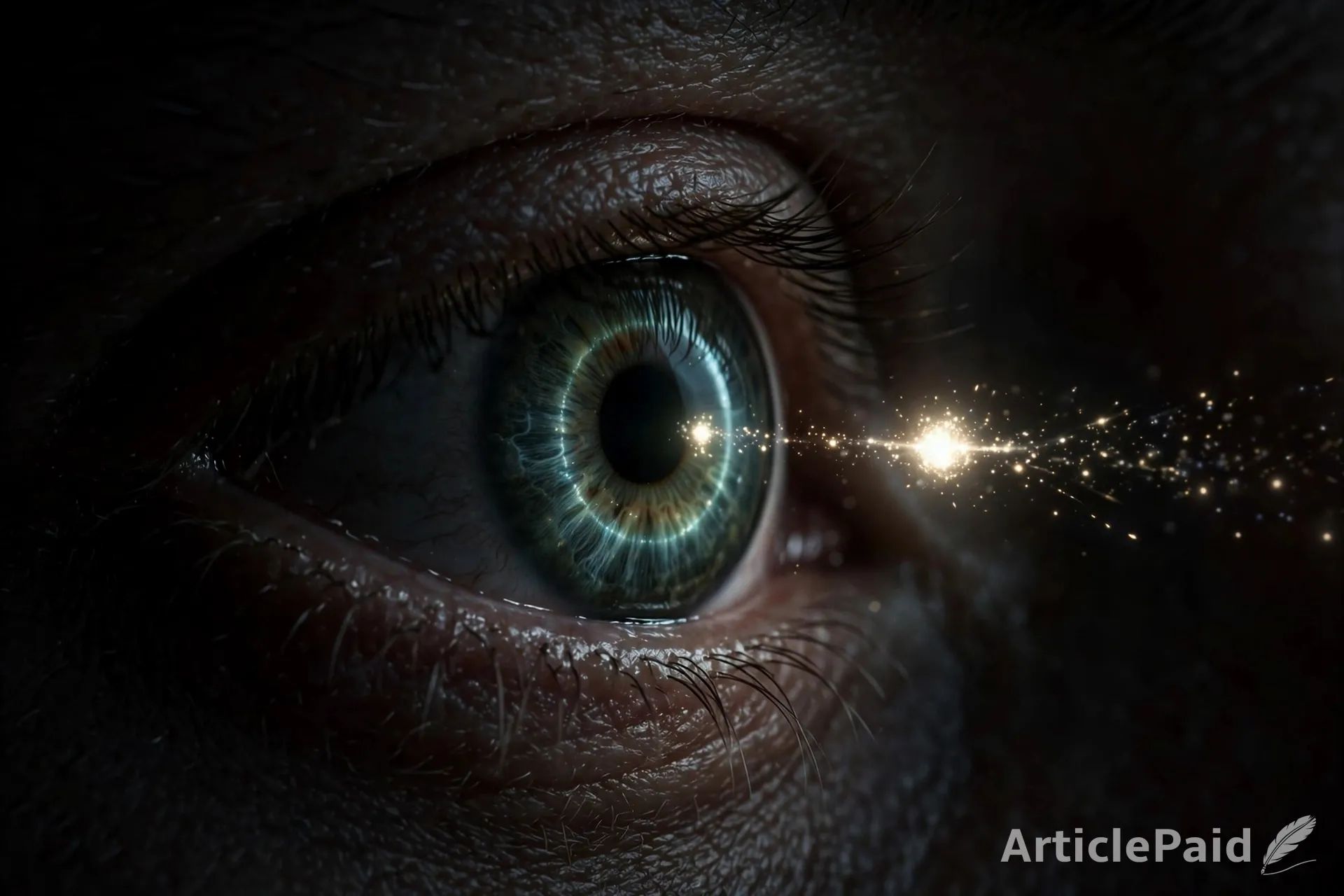
Scientists have discovered that the human eye is so unfathomably sensitive that it can actually detect a single, solitary particle of light—a single photon.
Let that sink in for a moment. One tiny packet of light, traveling across the vastness of the universe straight into your pupil, is enough for your biological machinery to register it.
It sounds like science fiction, or something straight out of a comic book, but it is a genuine biological marvel happening right behind your eyelids.
The Lab Test That Proved Our Secret Superpower

For a long time, researchers debated just how sensitive our eyes could be.
They knew we had incredible night vision, but proving the absolute physical limit—the bare minimum needed for the brain to say, "Hey, I saw a flash"—was notoriously difficult.
Back in the 1940s, scientists started running experiments by firing extremely faint pulses of light at people's eyes in total darkness.
They figured out that it took somewhere around 50 to 100 photons hitting the retina for a person to notice a flash. That was already mind-blowing.
But physicists and neuroscientists kept pushing the question further:
Could we do it with less? Was that limit set by the eye itself, or just by the limitations of the equipment they were using back then?
Fast forward to a few years ago.
A team of researchers in Vienna decided to run the ultimate test using modern quantum optics technology.
They used a specialized device that could fire single photons with absolute precision.
They placed volunteers in a pitch-black room for hours until their eyes were adapted to the dark to an extreme degree.
Then, they sent single photons straight into the volunteers' eyes.
When asked if they saw anything, the participants didn't just guess randomly—they reported seeing a faint, ghostly flash of light far more often than probability alone could account for.
Your eye isn't just an organ; it's practically a quantum detector.
Inside the Biological Machine: Microscopic Amplifiers at Work
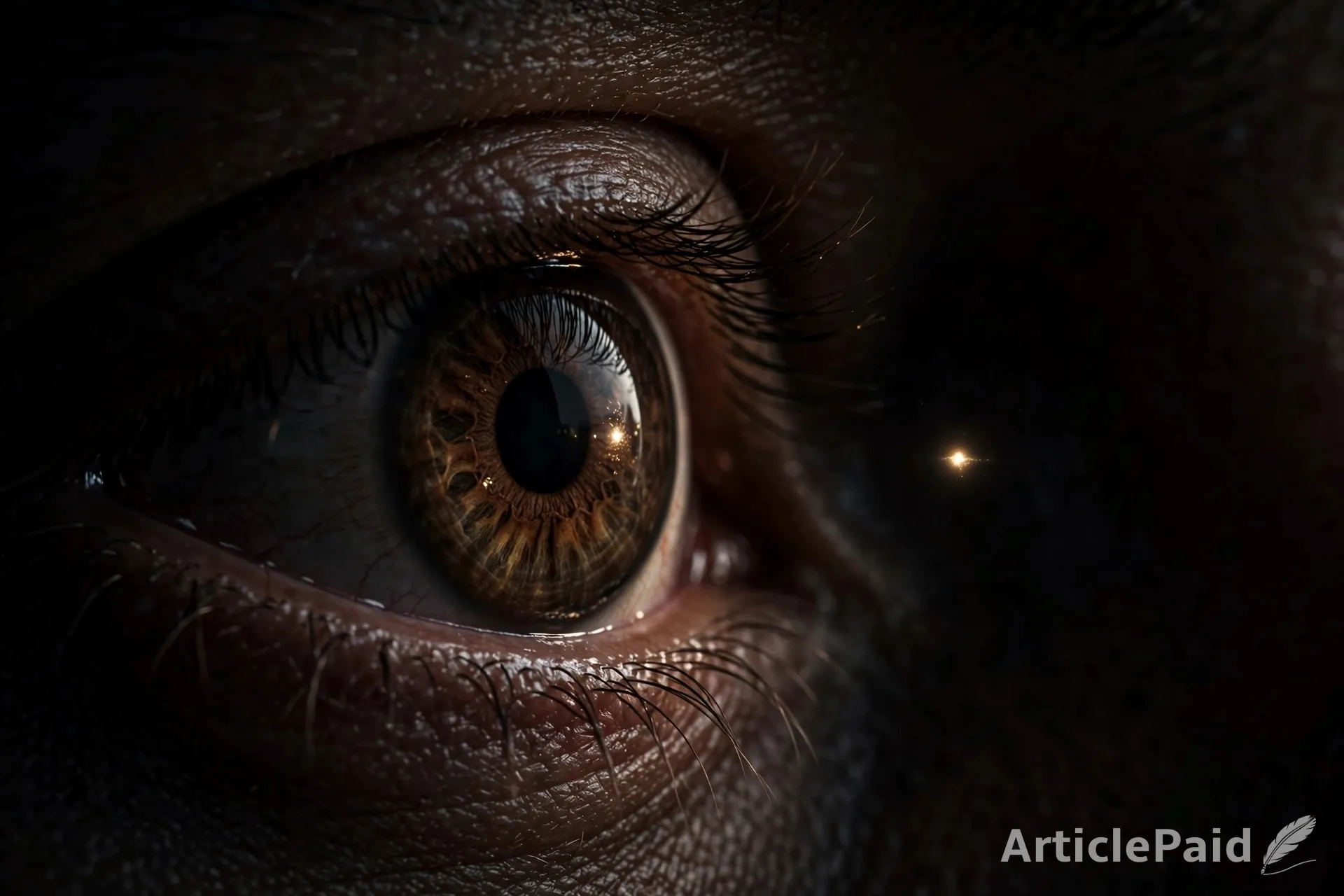
How on earth does this happen? The secret lies in a microscopic layer of cells at the back of your eye called the retina, specifically inside the cells known as rods.
While cone cells help us see color and sharp details in bright light during the day, rods are the night-shift workers. They are built for extreme sensitivity.
Inside these rod cells is a specialized protein molecule called rhodopsin. When even a single photon strikes rhodopsin, it changes its shape.
That tiny physical twist triggers a massive cascade of chemical and electrical signals that rush down your optic nerve to your brain.
It’s like dropping a single pebble into a completely still pond and watching a massive ripple spread across the water.
One microscopic photon hits a molecule, and your nervous system amplifies that signal enough for your conscious mind to perceive it.
Evolutionarily speaking, this makes total sense. Think about our ancestors.
In the deep dark of prehistoric nights, being able to spot the faint glimmer of a predator's eye reflecting starlight, or the movement of a shadow against a dark horizon, was the difference between surviving and becoming dinner.
We didn't need claws or sharp teeth because we had eyes that could catch the universe's smallest messengers.
The Noise Filter Keeping You Sane
If our eyes are sensitive enough to catch a single photon, why doesn't the world look constantly fuzzy, noisy, or glowing when we close our eyes in a dark room? Why aren't we blinded by random noise?
Your brain does some incredible heavy lifting to filter out the static.
If every stray chemical fluctuation or random thermal rattle inside a rod cell made it to your conscious awareness, you’d be trapped in a hallucinatory light show all day and night.
The neural circuitry in your retina is actually wired to ignore single-photon events most of the time, treating them as background noise.
It only sounds the alarm when a cluster of photons hits within a tight window—or, as the quantum tests proved, when a single photon happens to hit under deeply controlled, hyper-optimized conditions where your brain is tuned in to catch every whisper.
Catching Light Born Millions of Years Ago
The next time you find yourself out under a clear, starry sky, take a second to appreciate the sheer physics of what's happening.
The light from distant stars—photons that have been traveling across the vacuum of space for years, decades, or even millions of years—is finally ending its journey right on the surface of your eyeball.
Some of those stars are so faint that only a handful of photons from them reach your face every second.
And yet, your eye is capable of catching them, letting you peer across the gulf of space using nothing more than your own biology.
It’s a humbling reminder of how intimately connected we are to the physical universe.
We are walking, breathing collections of stardust equipped with sensors delicate enough to catch the individual building blocks of light itself.














Responses (0)