Mars Dust Storms Can Swallow the Entire Red Planet

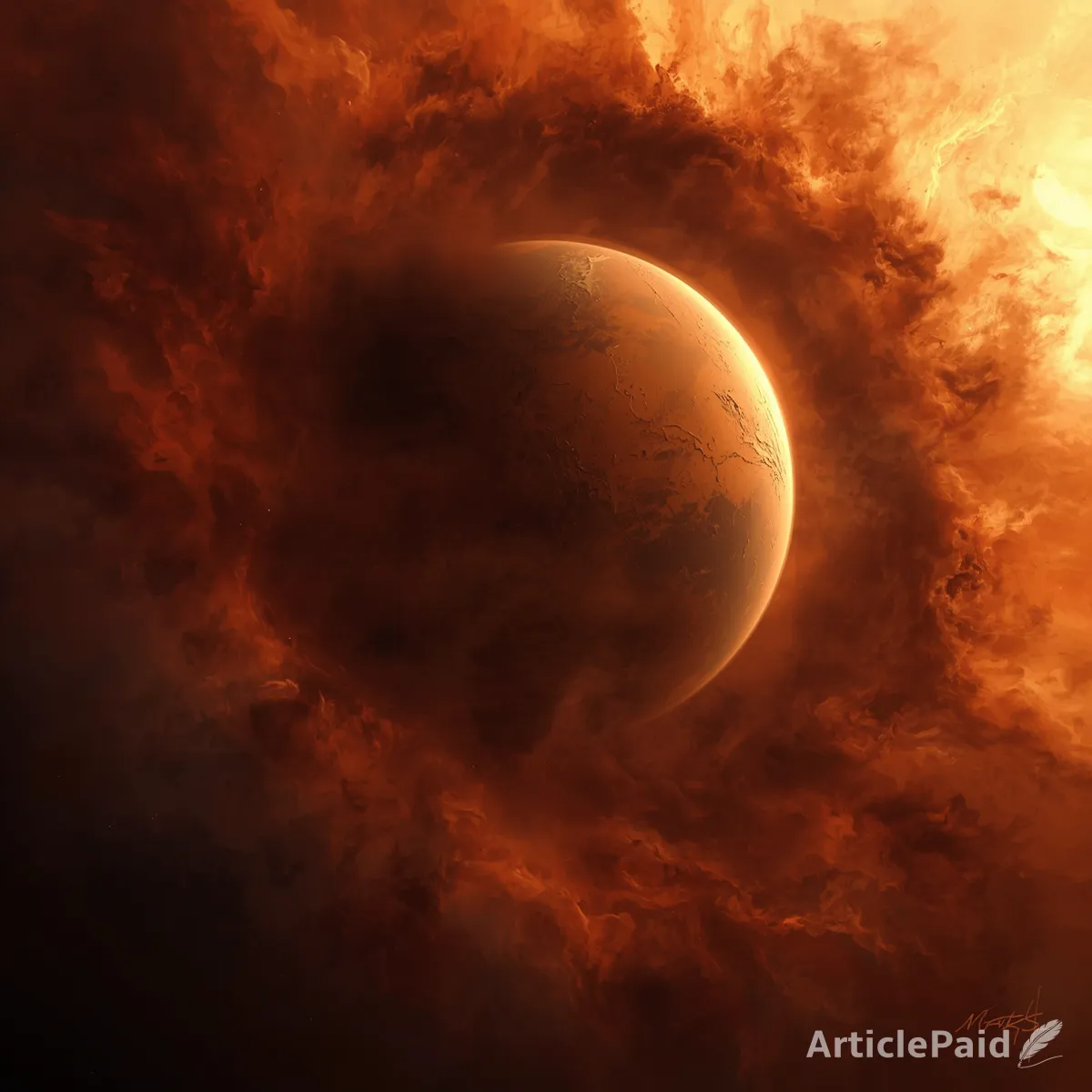
Mars Dust Storms Can Swallow the Entire Red Planet:
• Introduction:
One of the most interesting planets within our solar system is Mars, commonly known as the Red Planet. This planet has captured the interest of scientists, astronomers and space researchers for many years due to its mysterious terrain, strange weather conditions and potential for past life. One of the most interesting natural occurrences on this planet are the huge dust storms that can cover the whole planet. In some cases these dust storms can cover almost the entire planet with dust. These storms can be so big they can completely cover mountains, valleys, craters and other key geographical features with dense clouds of red dust.
Understanding Dust Storms on Mars One of the most incredible weather events in the solar system is dust storms on Mars. Due to the strong winds, iron-rich fine dust can be lifted off the surface of Mars and into the small atmosphere. Most dust storms are small and localised but some can become large and affect the whole planet. This causes the surface of the planet to become obscured from above and a murky atmosphere. During periods of change in temperature and sunlight, atmospheric circulation increases. Dust storms often happen during these periods. The dust will be lifted off the surface by the wind and the particles will absorb sunlight causing the atmosphere to warm. Scientists are still finding out why some storms increase in intensity whilst others decrease. However, the warming caused by the absorption can cause changes in wind patterns and help more dust to be lifted. Global dust storms can be unpredictable as they do not happen every Martian year. The appearance of Mars can be affected by dust storms. Dust storms can reduce solar radiation received at the surface but can warm areas of the atmosphere. The small dust particles move around Mars, causing minerals to be spread around the planet gradually. By monitoring the dust, temperature and wind, scientists can experiment with climate models and understand how the atmosphere works on Mars. However, having lots of dust around can cause issues for spacecraft. The dust can settle onto the panels causing issues. Haze in the atmosphere will reduce the amount of solar energy received by solar powered landers and rovers. NASA’s Opportunity rover stopped communicating due to a large global dust storm in 2018 as there was a large decrease in solar energy being received by it’s solar panels. Nuclear powered rovers are less affected by solar energy but dust can still cause problems. Understanding dust storms on Mars is important for future research. Having better predictions can help with planning missions and keeping equipment safe. Dust can cause issues for astronauts working outside, their power and visibility. Dust storms are an important part of the climate system on the Red Planet. By studying them, scientists can better understand Mars today, investigate the environment in the past and prepare for human exploration.
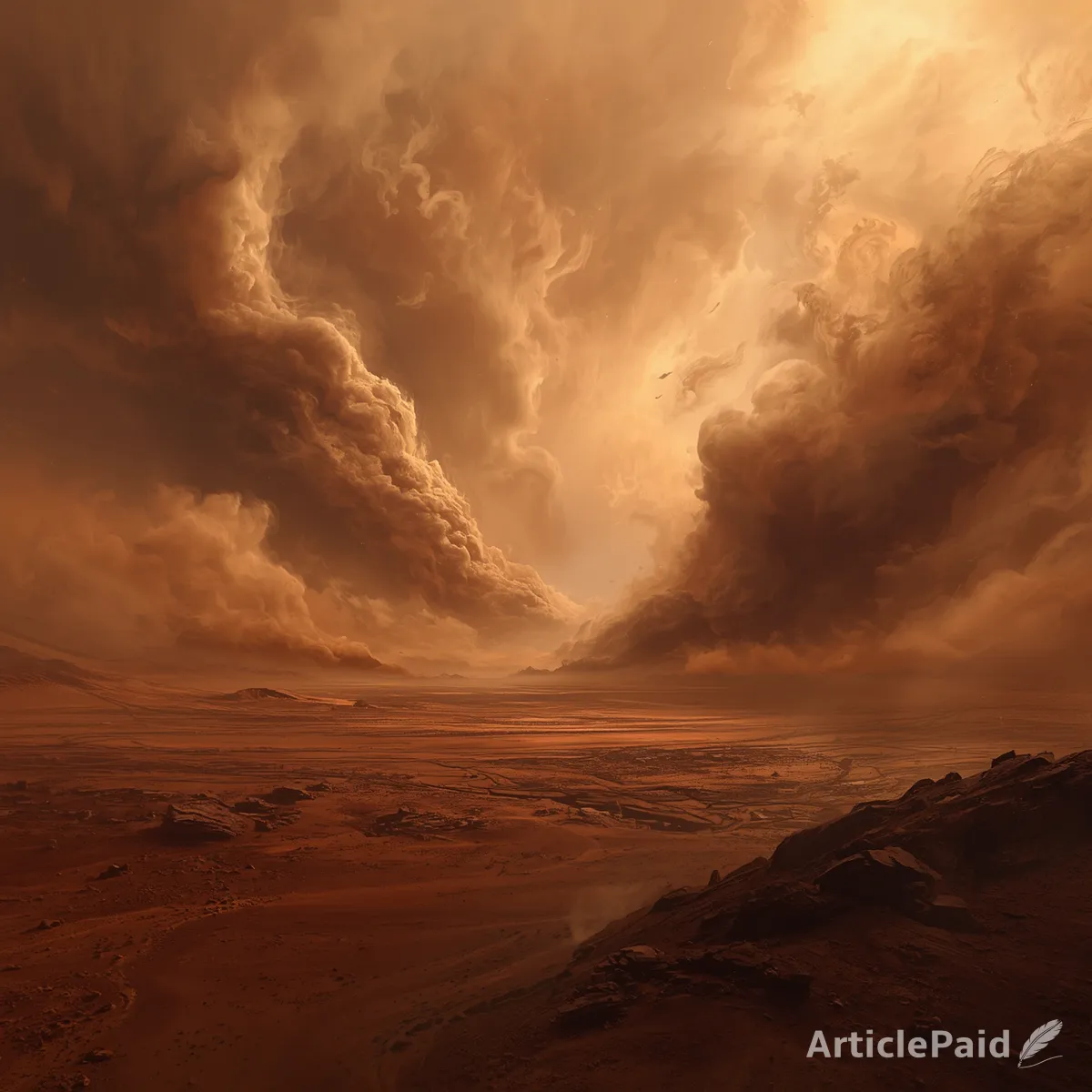
• The Role of Strong Winds in Creating Massive Storms:
Mars has powerful winds which cause the surface dust to become airborne creating large storms. There is a large amount of fine dry particles on the surface of mars which can be blown up by the gusty winds. In areas where the ground is warm there is more easily available dust. Once it has been lifted by the winds it gets transported and mixed by turbulence. The sunlight also plays an important role. The dust becomes airborne and absorbs sunlight causing the atmosphere to heat up. This causes changes in temperature and circulation. This can cause the winds to become stronger or change direction causing even more dust to become airborne. Sometimes this can lead to a larger storm forming from a smaller one. If there are favorable conditions for storms during certain times of year, multiple storm systems can merge and/or become larger creating a planet wide dust storm. However, just because there are strong winds on Mars does not mean that it will create a planet wide storm. How much free dust is available, what time of year it is and how the atmosphere is circulating around the planet will all affect how big the storm will get. Even though there can be high wind speeds on Mars, it has a very thin atmosphere meaning that the winds aren’t as powerful as we would see here on earth. Their main effect is to lift the fine dust. This can cause a reduction in sunlight reaching the surface, cause warming of sections of the atmosphere and reduce the power of solar powered spacecraft. Scientists can study the wind patterns and dust to gain by forming large storms . This helps increase our knowledge of the climate on Mars. Knowing this can help future missions prepare for dusty conditions and protect their equipment during long lasting storms.
• Conclusion:
Mars dust storms are some of the most incredible weather events in our solar system. They can cover nearly the whole planet, unlike normal dust storms on earth. These huge dust storms can cause a lot of problems for robotic exploration by causing a thick atmospheric haze around the whole of the Red Planet, lessening sunlight, changing temperatures.







Responses (0)