
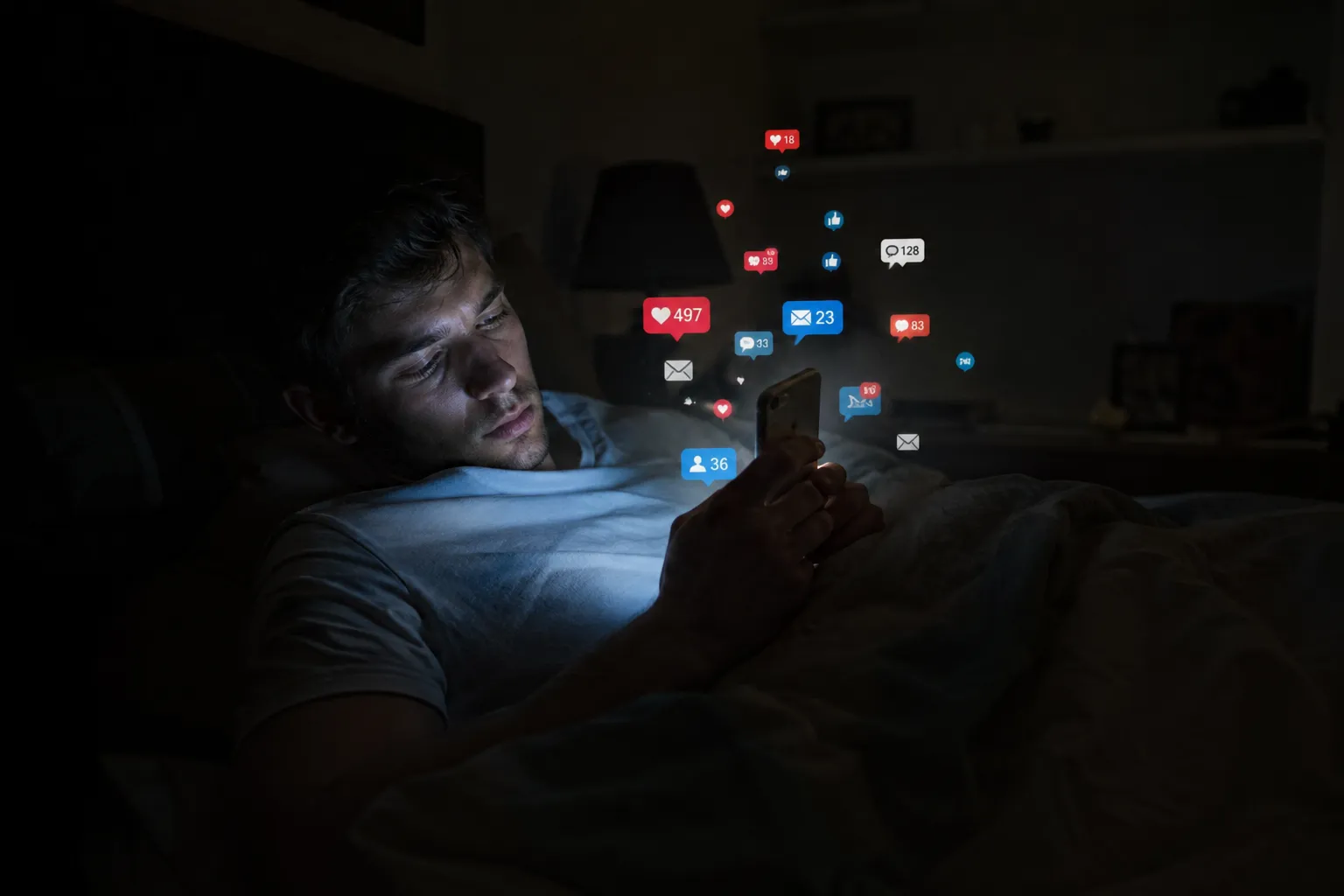
You tell yourself you'll check the news for just a minute. A few moments later, you're still scrolling through stories about economic uncertainty, natural disasters, political conflict, and alarming headlines from around the world. Time seems to disappear, yet instead of feeling informed or reassured, you feel mentally exhausted. This behavior has become so common that it has earned its own name: doomscrolling.
Although it may seem like a simple lack of self-control, doomscrolling is driven by several powerful psychological and neurological mechanisms. Social media platforms and news feeds are designed to capture attention, while the human brain is naturally drawn toward information that may signal danger. Combined with the chemistry of dopamine, the development of habits, and anxiety-driven thinking, the result is a cycle that can be difficult to escape.
Understanding why doomscrolling happens is the first step toward changing the behavior. Rather than relying solely on willpower, it is more effective to recognize the psychological forces involved and adopt strategies that work with the brain instead of against it.
Why the brain is attracted to negative information
Human beings did not evolve in a world of smartphones or endless news feeds. Our ancestors survived because they paid close attention to threats in their environment. Missing signs of danger could have serious consequences, while paying attention to potential risks often improved the chances of survival.
Psychologists refer to this tendency as the negativity bias. Research has consistently shown that negative information captures our attention more quickly and remains in memory longer than positive information. Bad news feels more urgent because the brain treats it as potentially important for survival.
Modern media takes advantage of this natural tendency. News organizations compete for attention, and headlines that trigger fear, outrage, or uncertainty are often more likely to generate clicks than positive stories. Social media algorithms also learn what keeps users engaged, and emotionally charged content frequently receives more interaction.
As a result, every swipe may reveal another alarming headline or emotionally intense post. The brain interprets each piece of information as something worth investigating, even when it offers no practical benefit. Instead of feeling informed, people often become trapped in an endless search for updates that never provide real closure.
This cycle becomes even stronger during periods of uncertainty. When people experience stress about their health, finances, relationships, or the state of the world, they often believe that gathering more information will reduce anxiety. Ironically, consuming an endless stream of negative content usually has the opposite effect, reinforcing feelings of helplessness and emotional overload.
Dopamine and the reward system behind endless scrolling
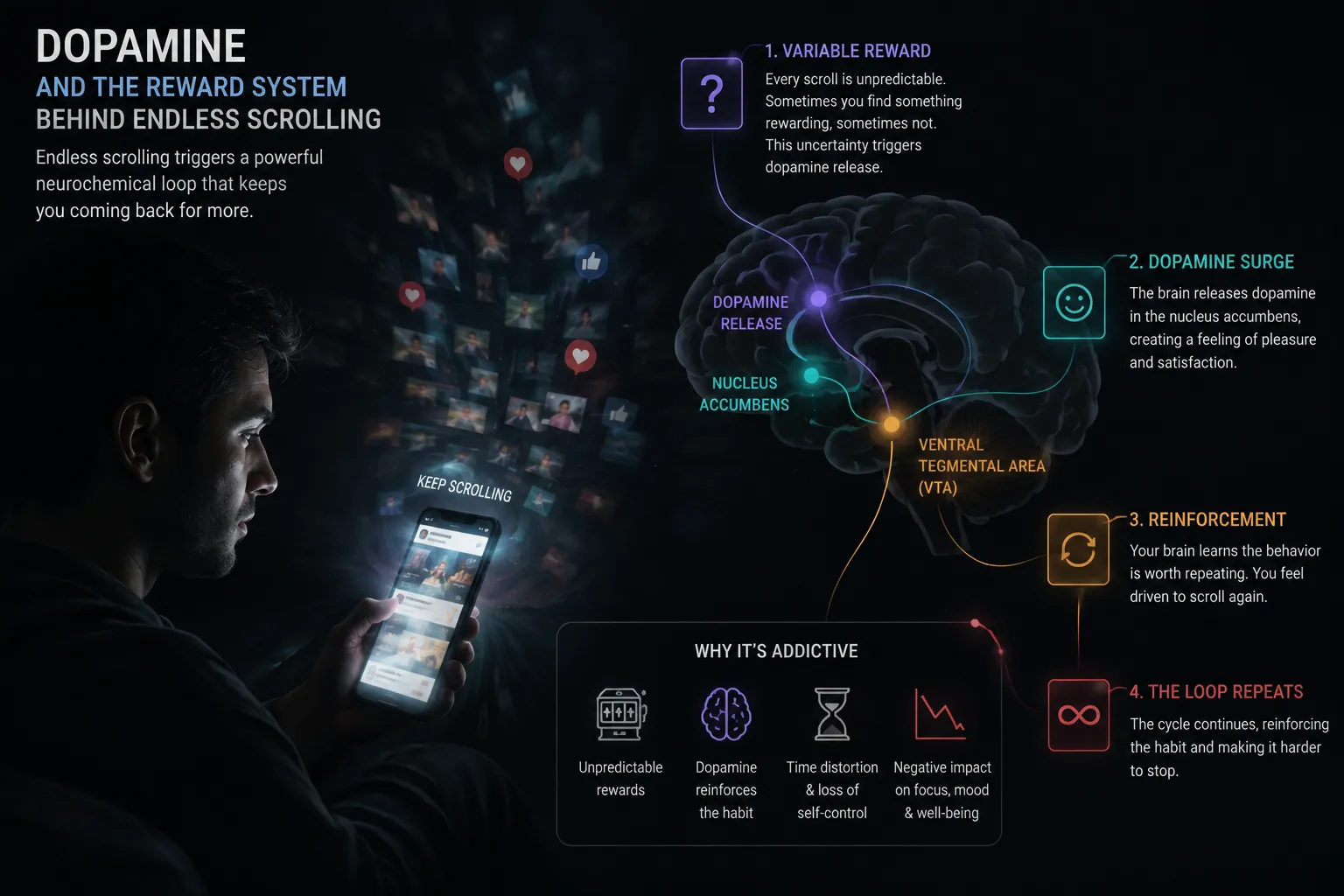
Many people associate dopamine with pleasure, but neuroscientists describe it more accurately as a chemical involved in motivation, anticipation, and learning. Dopamine encourages people to pursue rewards and repeat behaviors that might produce something valuable.
Every time someone refreshes a social media feed or news app, the brain faces uncertainty. The next post could be shocking, entertaining, inspiring, or personally relevant. This unpredictability is especially powerful because the brain responds strongly to what psychologists call variable rewards.
Variable rewards occur when outcomes are inconsistent rather than guaranteed. Slot machines are one well-known example, but social media operates according to similar principles. Most posts may be unremarkable, yet every so often users encounter breaking news, a fascinating story, an emotional video, or an exciting personal update.
Each unexpected reward reinforces the behavior of scrolling.
Importantly, dopamine spikes are often greatest before receiving a reward rather than after it. The anticipation itself encourages continued searching. This helps explain why people continue scrolling even when they are no longer enjoying the experience.
Notifications strengthen the process even further. Every vibration, badge, or alert signals the possibility of something important waiting to be discovered. Over time, simply seeing a phone or hearing a notification tone may trigger the expectation of reward, making it increasingly difficult to resist checking the device.
This does not mean dopamine is inherently harmful. The same system supports healthy motivation, learning, curiosity, and goal achievement. Problems arise when digital environments repeatedly stimulate the reward system in ways that encourage excessive, automatic behavior.
How doomscrolling becomes a habit
Many people assume habits develop through conscious decisions, but most habits operate automatically. Once established, they require very little mental effort and can continue without deliberate intention.
Habit researchers often describe behavior as a loop consisting of three main components:
- A cue that triggers the behavior.
- A routine or action.
- A reward that reinforces repetition.
Doomscrolling follows this pattern remarkably well.
The cue might be boredom, loneliness, stress, waking up in the morning, waiting in line, or hearing a phone notification. The routine is opening a news app or social media platform and scrolling through content. The reward may be temporary distraction, curiosity satisfaction, social connection, or simply relief from uncertainty.
Repeated often enough, these steps become automatic.
Eventually, people may unlock their phones without consciously deciding to do so. Some find themselves opening the same applications only seconds after closing them. Others instinctively reach for their phones during brief moments of silence or discomfort.
The brain favors habits because they conserve mental energy. Automatic behaviors require fewer cognitive resources than conscious decision-making. Unfortunately, this efficiency means unhealthy habits can become deeply ingrained alongside beneficial ones.
Environmental cues play an especially important role. Keeping a phone within constant reach increases the likelihood of automatic checking. Likewise, receiving frequent notifications or leaving social media tabs permanently open creates repeated triggers that strengthen the scrolling habit.
Breaking these patterns requires more than simply deciding to stop. It often involves changing the cues that initiate the behavior in the first place.
The relationship between anxiety and excessive scrolling
One of the most paradoxical aspects of doomscrolling is that anxious people often scroll to feel better but end up feeling worse.
Anxiety thrives on uncertainty. The brain constantly asks questions such as:
"What if something important happens?"
"What if I miss critical information?"
"What if everyone else knows something I don't?"
Checking the news temporarily reduces uncertainty by providing new information. This creates a brief sense of relief, which the brain interprets as rewarding.
However, the relief rarely lasts.
Instead, new questions immediately emerge. Another headline appears. Another breaking update arrives. Another alarming prediction circulates online. Rather than satisfying curiosity, the information increases awareness of additional threats.
Psychologists describe this as a feedback loop:
Anxiety encourages checking.
Checking briefly reduces anxiety.
Negative content increases anxiety again.
Higher anxiety leads to even more checking.
The cycle repeats.
Fear of missing out, commonly known as FOMO, also contributes to doomscrolling. People worry that failing to monitor current events or social conversations may leave them uninformed or disconnected.
During major global events, this fear becomes particularly intense. Many individuals feel morally obligated to stay informed, even when continuous exposure begins harming their mental health.
Remaining informed is certainly valuable. The challenge lies in distinguishing between purposeful information gathering and compulsive monitoring that provides diminishing returns.
The emotional and cognitive effects of constant negative content
Extended periods of doomscrolling can influence both emotional well-being and cognitive functioning.
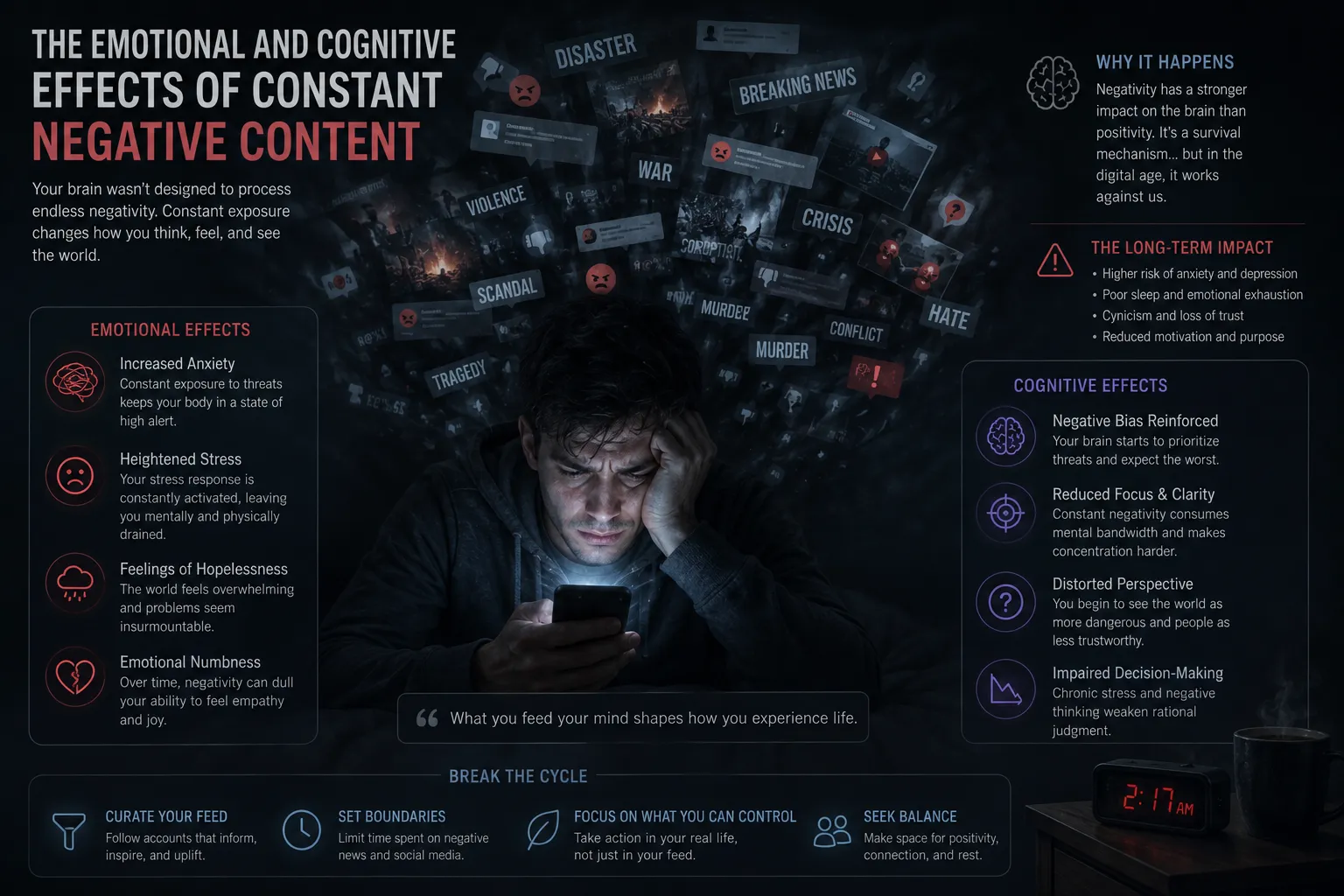
Many people report feeling emotionally drained after long scrolling sessions. Constant exposure to distressing stories activates stress responses, making the brain remain alert even when there is no immediate personal danger.
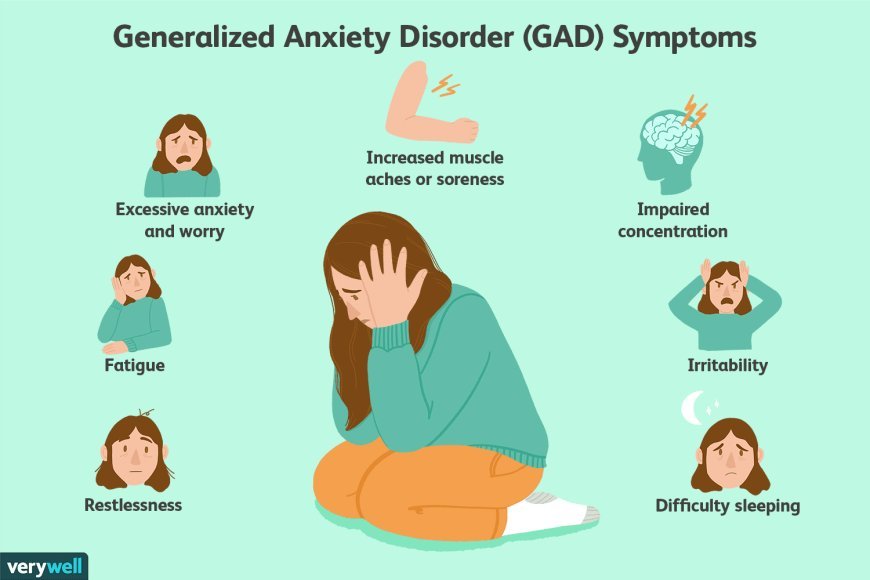
This heightened state of vigilance can contribute to:
- Increased stress.
- Irritability.
- Difficulty concentrating.
- Reduced productivity.
- Sleep disturbances.
- Mental fatigue.
Attention also becomes fragmented. Switching rapidly between headlines, videos, comments, and notifications trains the brain to expect continuous novelty.
As a result, sustained focus on slower activities—such as reading a book, completing deep work, or having uninterrupted conversations—may become more difficult.
Sleep deserves special attention. Many people doomscroll immediately before bedtime, exposing themselves to emotionally stimulating content when the brain should be preparing for rest. Combined with blue light exposure and heightened emotional arousal, this habit can delay sleep onset and reduce sleep quality.
Importantly, doomscrolling does not affect everyone equally. Individuals experiencing chronic stress, anxiety disorders, depression, or high uncertainty may be especially vulnerable because the behavior temporarily feels like an attempt to regain control.
Recognizing these effects helps people approach the issue with greater self-awareness rather than self-criticism.
Practical ways to reduce excessive scrolling
Breaking the doomscrolling cycle rarely requires eliminating technology altogether. Instead, the goal is to redesign digital habits so that technology serves personal well-being rather than constantly demanding attention.
One effective strategy is limiting exposure to specific times of day. Instead of checking news whenever curiosity arises, designate one or two scheduled periods for reading reliable updates. This reduces the constant interruption of attention while still keeping you informed.
Removing unnecessary notifications can also produce immediate benefits. Every alert acts as a potential cue for habitual scrolling. By disabling non-essential notifications, you reduce opportunities for automatic engagement.
Creating physical distance from your phone is another surprisingly effective technique. Leaving the device in another room while working, eating, or preparing for sleep interrupts automatic checking behaviors. Even small increases in effort can significantly reduce habitual phone use.
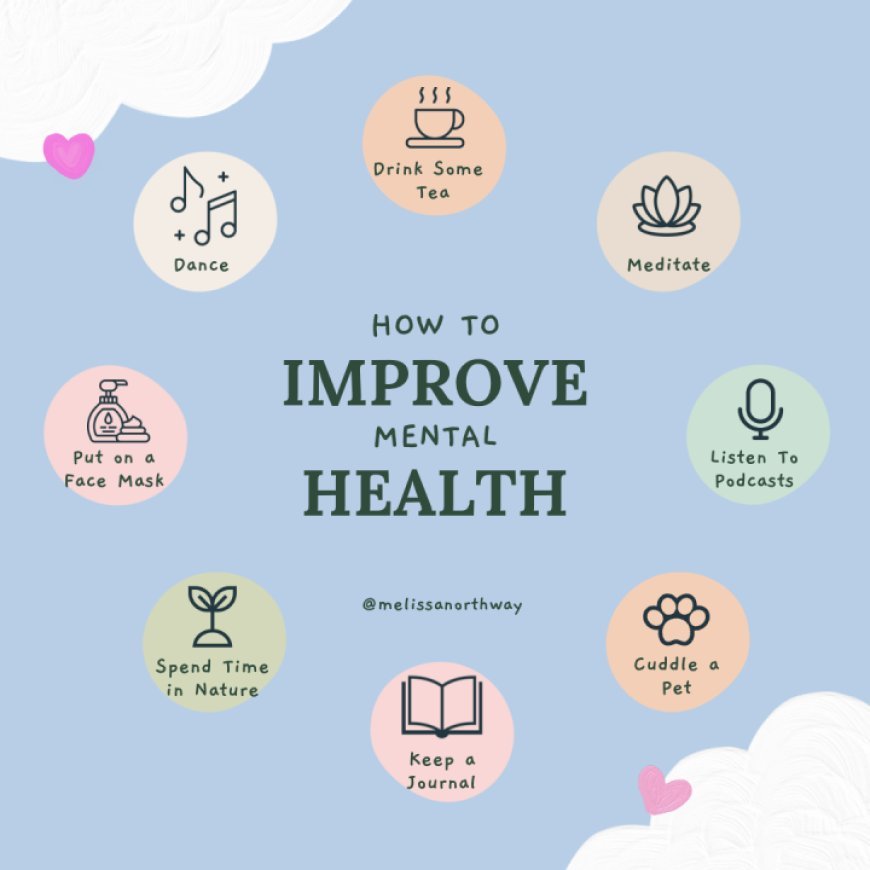
Replacing scrolling with alternative activities is equally important. Habits are easier to replace than eliminate. During moments of boredom or stress, consider alternatives such as taking a short walk, stretching, reading a few pages of a book, practicing deep breathing, listening to music, or having a brief conversation with someone.
Mindfulness can also help interrupt automatic behavior. Before opening a social media app, pause for a few seconds and ask yourself a simple question:
"What am I looking for right now?"
Sometimes the answer is information. Other times it is distraction, reassurance, or relief from uncomfortable emotions. Identifying the underlying need makes it easier to choose a healthier response.
Setting app time limits may also support behavior change. While determined users can override these limits, they introduce a valuable moment of awareness that interrupts automatic scrolling and encourages conscious decision-making.
Curating digital environments is another practical step. Following reliable news sources instead of sensational accounts, reducing exposure to outrage-driven content, and unfollowing pages that consistently increase stress can create a healthier online experience.
Finally, prioritizing activities that naturally support emotional well-being reduces the urge to seek constant digital stimulation. Regular exercise, adequate sleep, face-to-face social interaction, creative hobbies, and time outdoors all contribute to improved emotional regulation, making compulsive scrolling less appealing.
The objective is not to ignore reality or avoid important information. Rather, it is to consume information intentionally instead of reactively.
Finding a healthier relationship with information
Doomscrolling is not simply the result of weak willpower. It emerges from the interaction between ancient survival instincts, the brain's dopamine-based reward system, automatic habit formation, and the human desire to reduce uncertainty. Modern digital platforms amplify these natural tendencies by providing endless streams of emotionally engaging content that continually encourage users to keep scrolling.
Understanding these psychological mechanisms changes the conversation from self-blame to self-awareness. When people recognize that their brains are responding to carefully designed digital environments, they are better equipped to make deliberate choices about how they engage with technology.
Staying informed remains an important part of modern life, but more information is not always better information. Purposeful consumption, healthy boundaries, and intentional habits allow people to remain connected to the world without becoming overwhelmed by it.
Ultimately, the goal is not to eliminate curiosity or avoid difficult news. It is to develop a relationship with technology that supports mental well-being, preserves attention, and allows people to engage with information on their own terms rather than being endlessly pulled into the next swipe.



















Responses (0)
Sign in to share your thoughts.
Sign in