Crows Remember Human Faces for Years and Hold Grudges

In this article
Crows really do remember human faces. This ability has been confirmed through controlled experiments and subsequently explained at the level of brain function. American crows can distinguish a familiar face from an unfamiliar one—even within a crowd—remember those who have wronged them for years, and pass this information on to other crows. We take a look at how this works and where the line lies between hard evidence and speculation.
The mask experiment that changed our understanding of birds
In 2006, zoologist John Marzluff from the University of Washington noticed that crows his team had banded (tagged) became increasingly aggressive during subsequent encounters. The birds remembered specific human faces, while clothing and gait proved irrelevant.
To test this hypothesis, the researchers donned rubber masks while capturing crows with nets. A mask with a crude, "caveman-like" appearance was used during the captures, while a mask depicting Dick Cheney (the former U.S. Vice President) was worn when the researchers simply walked by without causing any harm.
Within a few weeks, the crows would begin squawking loudly at the sight of the "caveman" mask, whereas the Cheney mask elicited no such reaction. In control trials, the scientists wore the masks upside down or positioned them on the back of their heads—yet the birds still recognized the "dangerous" face. The conclusion: crows specifically remember the face; the person as a whole does not matter to them.
Observations of the tagged crows in Seattle continued for nearly three years after the initial capture. The birds remembered the "caveman," and their reaction intensified over time: while only a few individuals responded to the mask in the first few months, more than two years later, two-thirds of the crows encountered would react with aggressive squawking. According to later studies, the Seattle crows retained their animosity toward a specific face for up to 17 years—a duration comparable to the bird's entire lifespan in the wild.
How information is transmitted to other crows
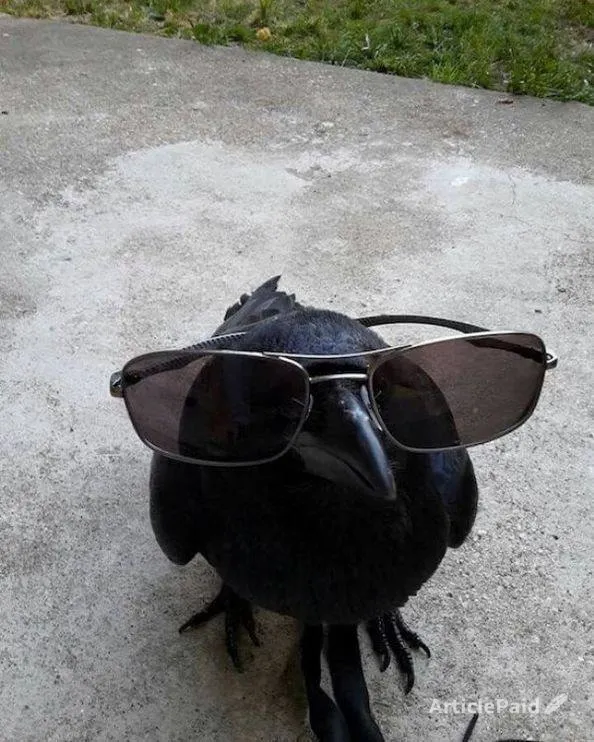
The most intriguing aspect of the mask experiment is the scale of the reaction. Even crows that had never been captured themselves would begin to squawk at the "caveman." Chicks that hatched after the experiment concluded behaved just like the adult birds that had personal experience with being caught. Marzluff and his colleagues hypothesized that crows learn to fear specific individuals by observing the reactions of their parents and other members of the flock.
The transmission mechanism works as follows: a crow captured by people wearing masks remembers the face and associates it with fear. When it encounters that "dangerous" person again, it begins to squawk loudly. Other birds hear the alarm, see who it is directed at, and commit that face to memory as a threat. This is how the flock’s collective memory is formed.
What goes on inside a crow’s head
Neurobiologists at the University of Washington went a step further and peered into the brains of birds. They used positron emission tomography (PET)—a technique that reveals which areas of the brain are consuming the most glucose. The crows looked at human faces wearing masks while the scanner recorded their brain activity.
The results were telling. Upon seeing a "threatening" face, brain regions associated with fear and learning from negative experiences—such as the amygdala, thalamus, and brainstem—became active. Conversely, seeing a "caring" face—one associated with providing food—triggered areas linked to motivation and reward. Ravens follow the same logic as mammals: a face is linked to an emotion, and that emotion dictates behavior.
What this means for us
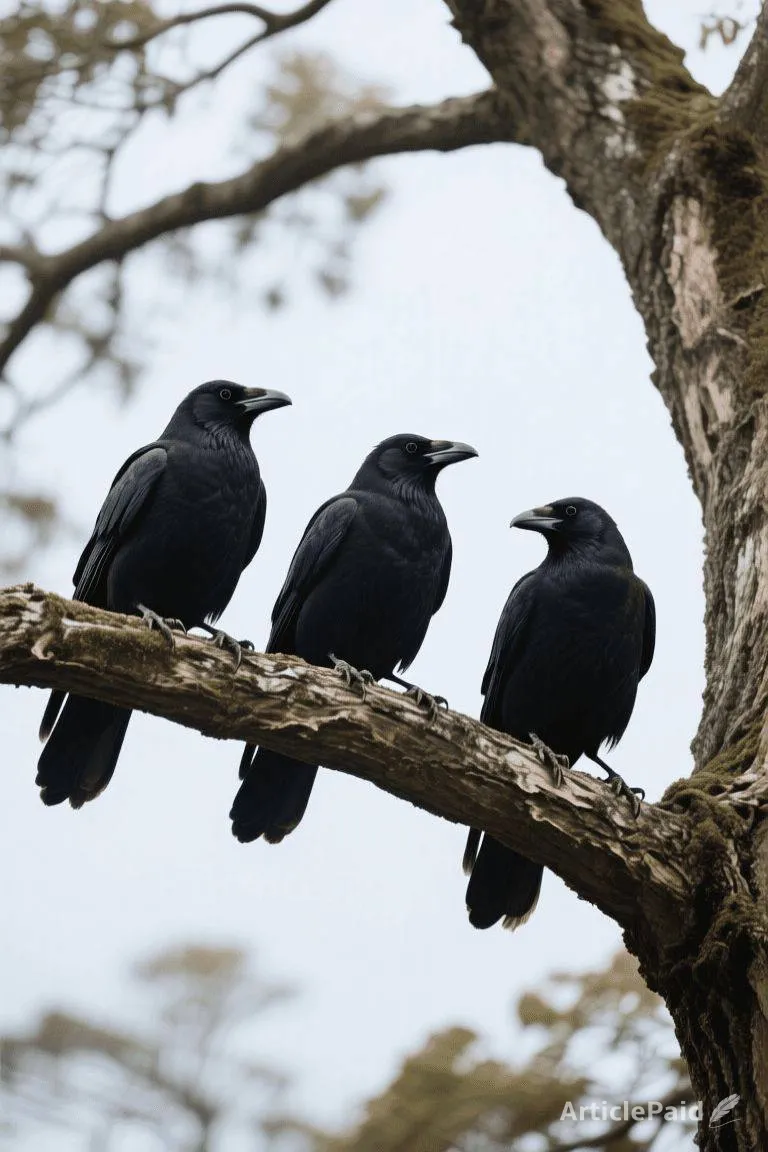
Recognizing faces is a characteristic trait of the corvid family, and ravens are no exception. Having lived alongside humans for millennia, these birds have learned to distinguish between those who pose a threat and those who do not. For an urban raven, this memory offers a distinct advantage: it avoids wasting energy on every person it encounters, reacting instead only to specific individuals.
For humans, this means that ravens also remember negative actions. If you have destroyed a nest, thrown a stone at a bird, or captured one in a net, there is a high probability that you, specifically, will be remembered for a long time. Ravens can identify a face even within a crowd, and even years later.
Conclusions
Ravens truly do recognize human faces—a fact confirmed by experiments, observations of tagged birds, and neuroimaging data. After just one negative encounter, a raven will remember the offender, retain that information for years, and even communicate it to other members of its flock.
There are, however, limits to this ability. Ravens remember faces, not the person as a whole. They become confused if a face is obscured—for instance, by a mask and glasses worn simultaneously—and they cannot recognize a person from behind. This is not some mystical power, but rather a standard function of memory, honed by evolution to suit life in an urban environment.











Responses (0)