Chameleons Change Color for a Reason Few People Expect

In this article
I'll be honest with you. For years, I thought the same thing everyone else thinks about chameleons.
I thought they change color to hide. Green leaf? Turn green. Brown branch? Turn brown. Simple, right?
Turns out, I was wrong. And honestly, most of us are.
Camouflage is part of it, sure. But it's not the main reason. Not even close. The real reason is way more interesting - and a little bit weird.
A chameleon doesn't change color to disappear. Most of the time, it changes color to be noticed.
It Is Not Hiding. It Is Talking
Think about it for a second.
A chameleon can't talk. It can't make a facial expression. It just sits there on a branch, alone, all day. So how does it tell another chameleon to back off? Or that it's interested? Or that it's stressed?
It uses its skin.
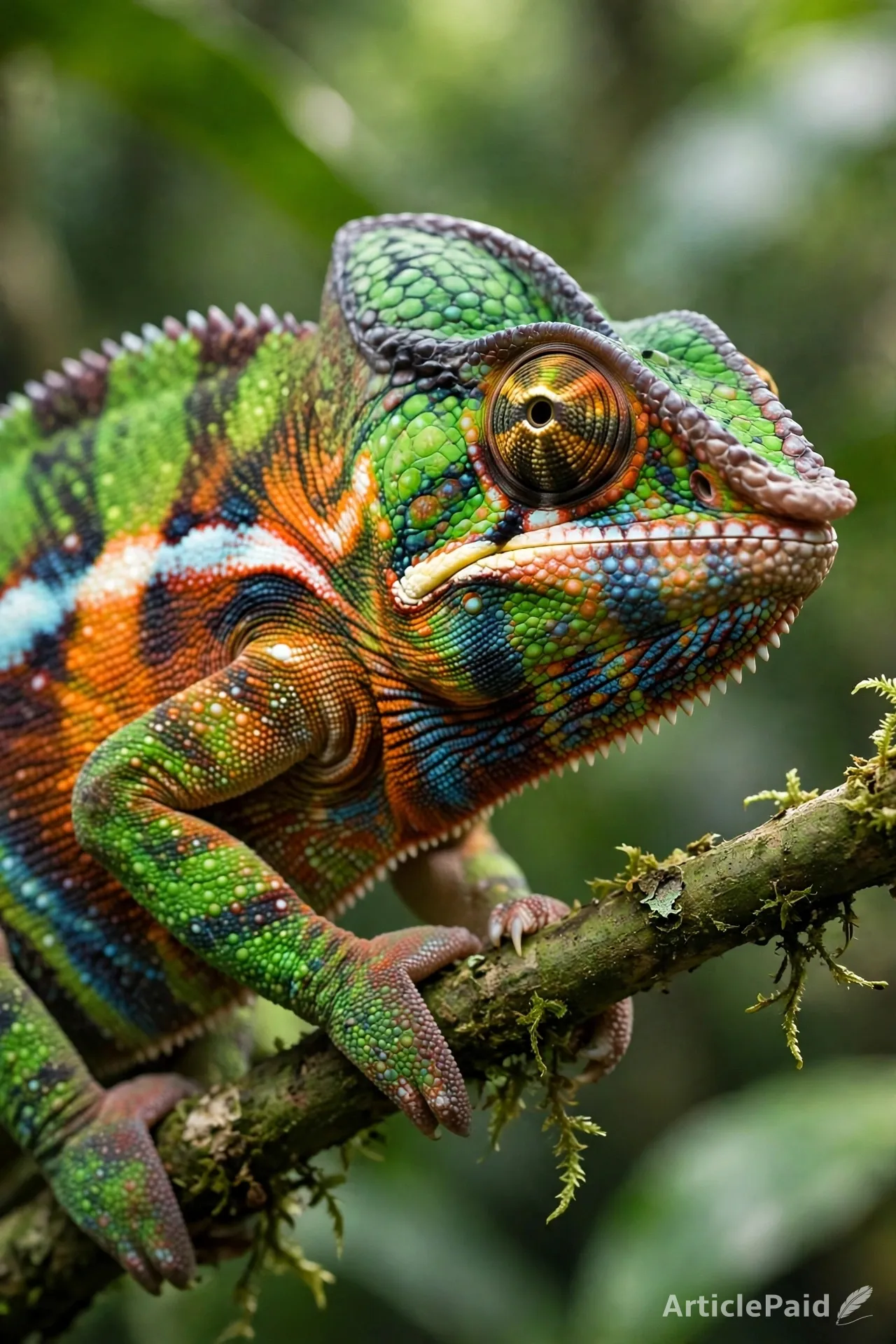
I saw a video once of two male panther chameleons meeting on the same branch. The first one didn't run. He puffed himself up, went bright red and orange, and just... flashed. Like he was saying, "Don't even try it, this is my spot."
And guess what? The other one just left. No fight. No drama. Just color.
Females do the same thing, just in a quieter way. If she's not interested, she'll go dark with bright spots. That's a clear no. If she is interested, her colors stay soft and calm. No confusion. No guessing.
For them, color is faster than words.
It's Also About Temperature
This part blew my mind when I first read about it.
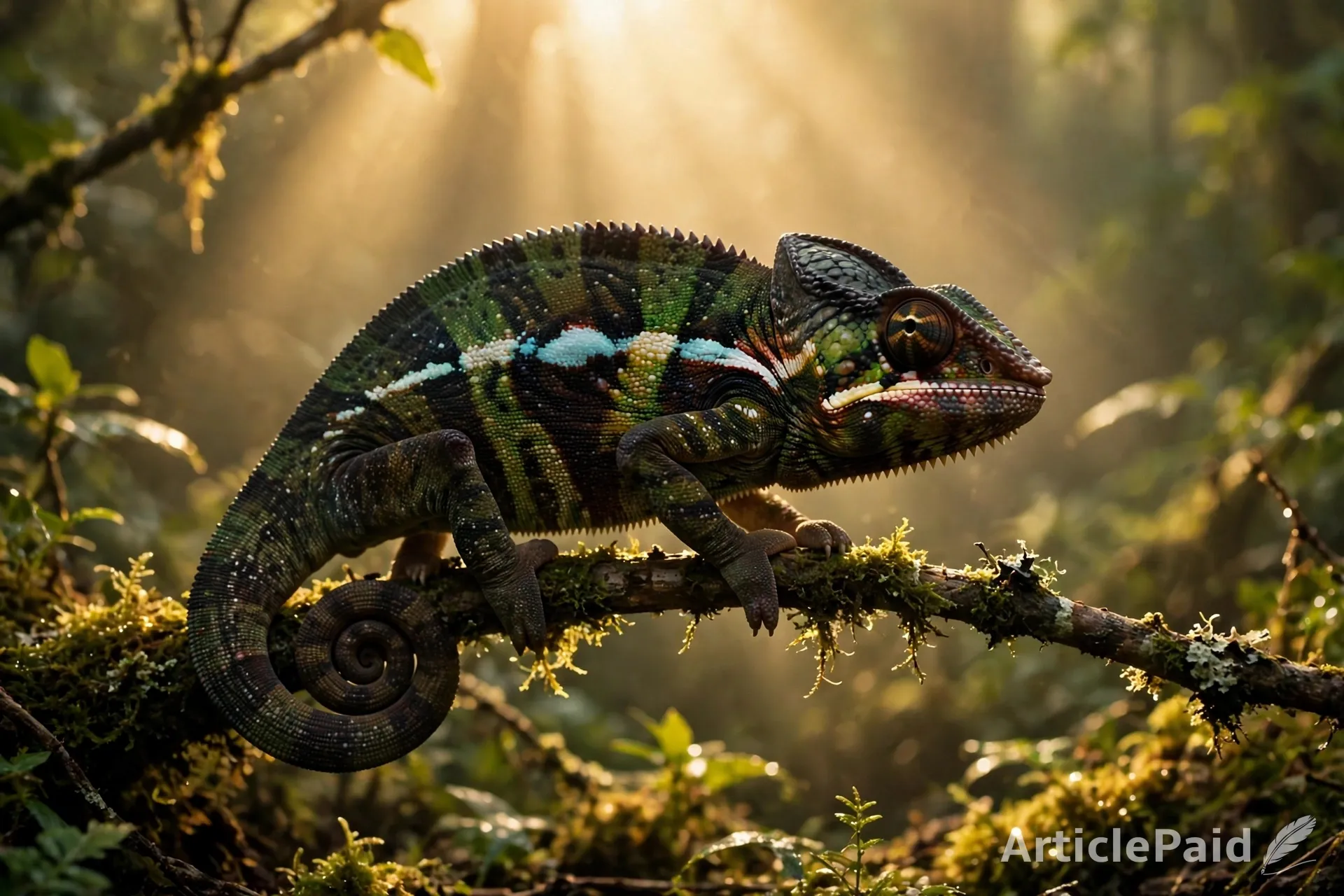
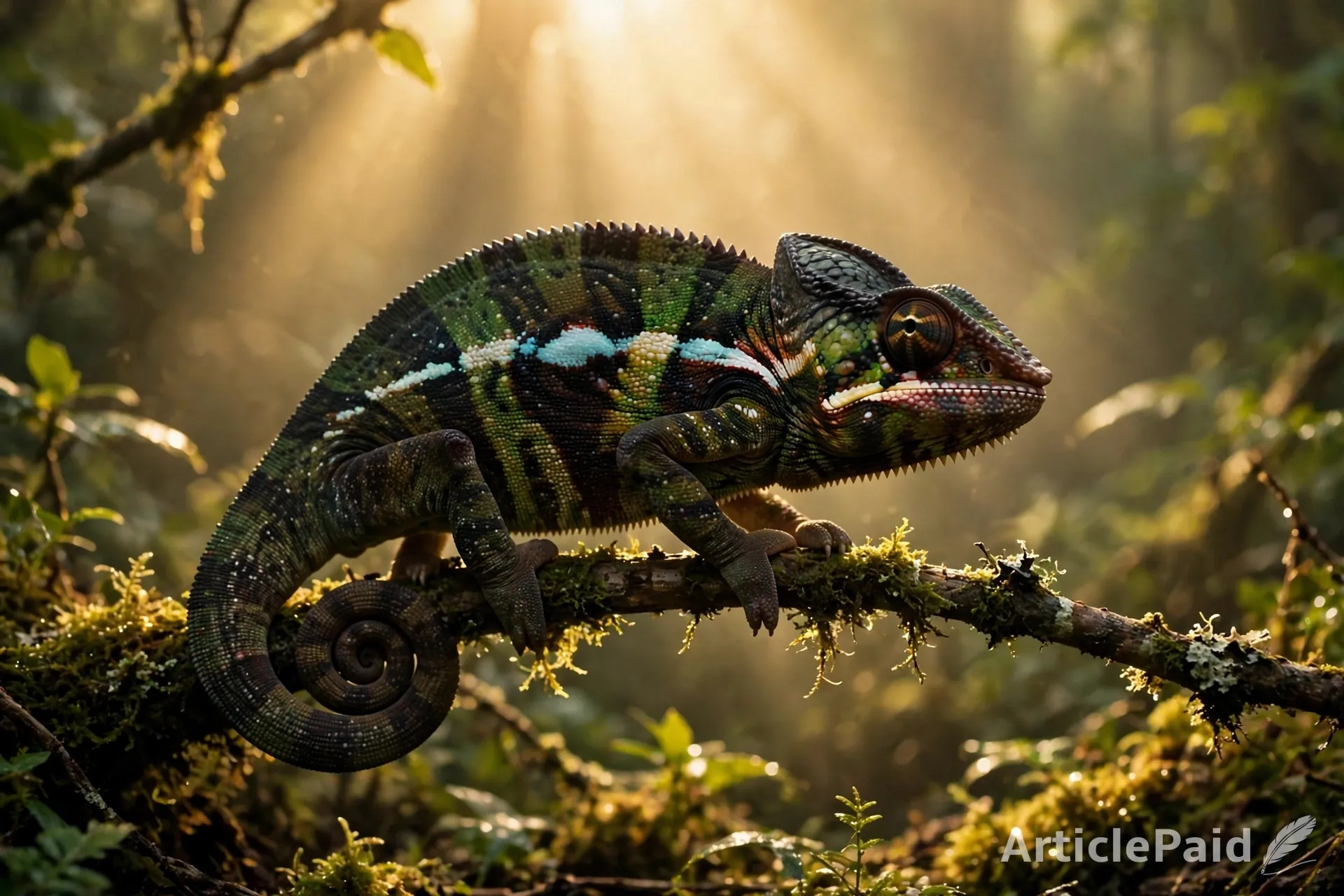
Chameleons are cold-blooded. They can't make their own heat. So in the morning, when it's still cool in the forest, a lot of them will go darker. Dark absorbs heat. It's like wearing a black hoodie in winter.
Then, once they're warm and moving around, they'll go lighter. Light reflects heat. Same idea as wearing a white t-shirt in summer in Karachi or Lahore when the sun is blazing.
They're not trying to look pretty. They're just trying to stay comfortable. Their skin is basically a thermostat that they wear.
And Mood? Yeah, That Too.
Here's something pet owners will tell you straight away.
A happy, relaxed chameleon is usually green or light brown. Nothing fancy. Just chill.
But a stressed one? Totally different. It might go really dark. Or really pale. Or it gets these weird patterns that just look... off.
And when they sleep? Their colors fade out completely. Almost ghostly. Like they've switched themselves off for the night.
So when scientists say color change is about communication, temperature, and mood - not just hiding - it starts to make sense.
Okay, But How Do They Actually Do It?
This is my favourite part, because it's not what you'd expect.
They don't have paint under their skin. They have these tiny cells called chromatophores. Imagine them like layers, stacked one on top of the other.
The top layer has yellow and red pigments. Underneath that, there's a layer of tiny crystals. And those crystals are the real magic.
When the chameleon is calm, the crystals sit close together and they bounce back blue light. When it gets excited or stressed, the skin stretches a little, the crystals move apart, and suddenly you're seeing yellows, oranges, and reds.
It's not like changing clothes. It's more like tilting a mirror and watching the reflection change. And it happens in seconds. Seconds!
So Is Camouflage a Total Lie?
No, not totally. Let's be fair.
A chameleon sitting still on a branch, in its normal green or brown, is already pretty hard to spot. It doesn't need to match every single leaf perfectly. It just moves really, really slowly. Sometimes it even sways a little, like a leaf moving in the wind. That's clever enough.
But here's the proof that hiding isn't the main job: when a male wants to show off, he will go BRIGHT. Like, impossible-to-miss bright. If hiding was the goal, why would he do that?
Because he wants to be seen. The brightest ones are usually the healthiest, strongest males. They're not hiding. They're advertising.
What I Learned From This
I think that's why I like chameleons so much now.
We all thought they were masters of hiding. Turns out they're masters of expressing. Their skin is their voice. Their mood. Their temperature control. All in one.
It makes you wonder how many other things we get wrong just because we assumed the obvious answer was the right one.
So next time you see a chameleon go from calm green to fiery orange in a video, don't ask, "What is it hiding from?"
Ask, "What is it trying to say?"
Chances are, it's saying a lot.












Responses (0)