
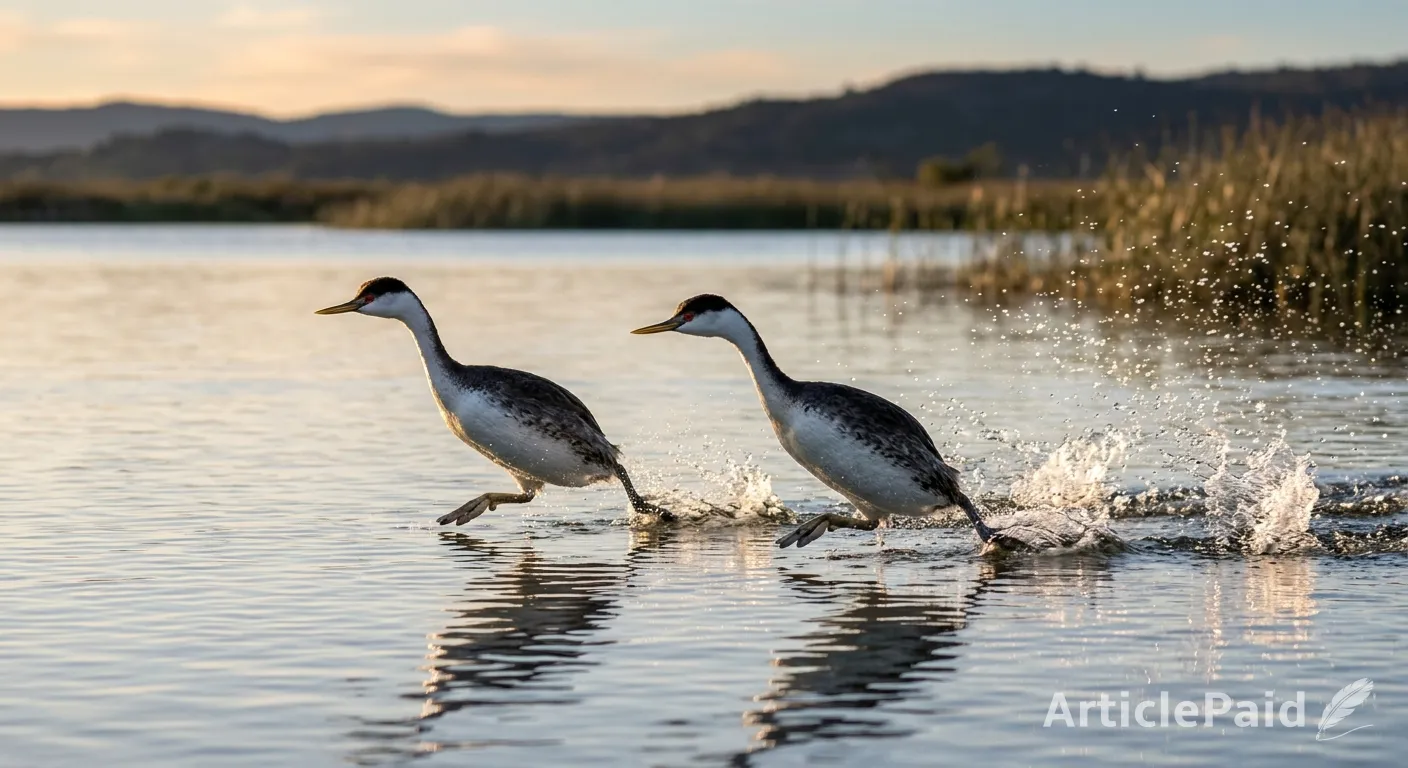
When we think of animals that walk on water, small insects like water striders or the famous basilisk lizard often come to mind. Yet across the avian world, several species have evolved remarkable adaptations that allow them to sprint, stroll, or skim across liquid surfaces.
The Speed Demons: Western and Clark's Grebes
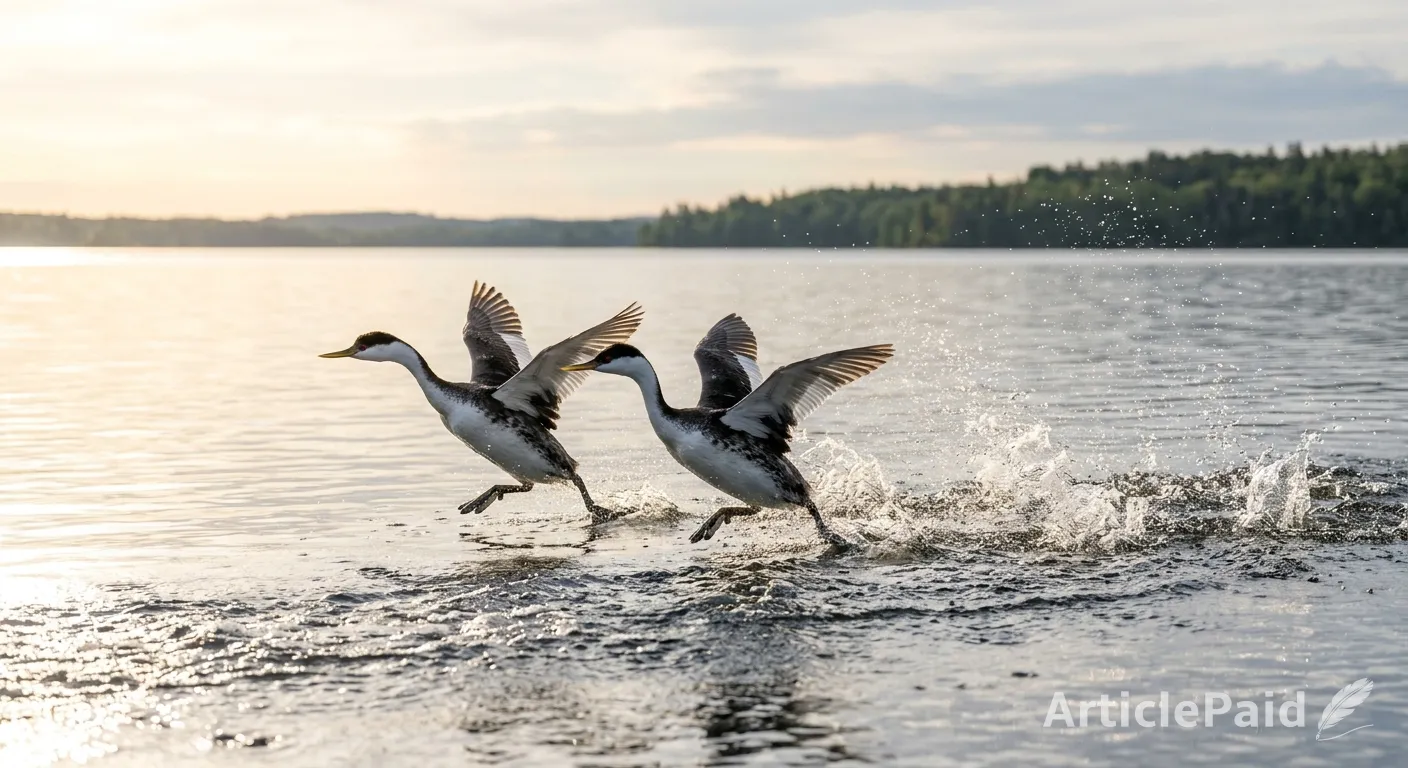
Among all water-walking species, the Western and Clark’s grebes perform perhaps the most dramatic display.
What makes this feat extraordinary is the birds' weight.
The Weight-Distributors: The Jacana Family
While grebes rely on velocity, the tropical Jacana uses surface geometry. Often referred to as the "Jesus bird," the jacana appears to wander effortlessly over lakes, rivers, and marshes.
However, unlike grebes, jacanas do not walk on liquid water itself. Instead, they navigate dense carpets of floating vegetation, such as water lilies.
The Ocean Dancers: Storm Petrels
Far out at sea, Wilson’s storm petrels demonstrate a different form of aquatic navigation.
This foot-pattering serves dual purposes:
Stabilization: Touching the water helps them hover steadily in strong coastal winds.
Foraging: The movement disturbs small crustaceans and plankton near the surface, allowing the bird to snatch prey without fully landing or dipping underwater.
Early mariners noted this constant walking motion on the sea, naming the birds "petrels" after Saint Peter.
Summary of Avian Aquatic Strategies
Species Primary Method Key Adaptation Evolutionary Purpose Western / Clark's Grebe High-speed rushing Lobed feet & 20 steps/sec pace Courtship displays Jacana Weight distribution Enormously long toes and claws Feeding on floating plants Storm Petrel Wind-assisted pattering Webbed feet & low-wing loading Pelagic surface feeding 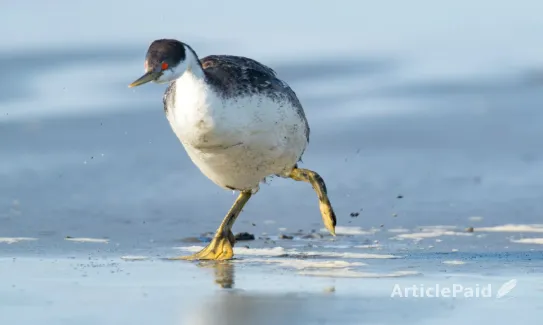
Nature's Engineering
Whether through sheer explosive speed, specialized weight-spreading anatomy, or wind-assisted hovering, these birds demonstrate the remarkable variety of evolutionary engineering.
Each approach solves the challenge of aquatic mobility, allowing these species to thrive in environments where most other animals would simply sink.



















Responses (0)
Sign in to share your thoughts.
Sign in